Pisa: A Rainy Adventure
Cold, gloomy, and rainy is the only way to accurately describe the weather on Friday, May 15th when we had our first group trip for our Social History of Art in Italy course. This trip was a day in Pisa to learn about the city and see the way that the architecture changes from area to area. When we arrived at the main train station in Pisa, everyone quickly realized that umbrellas would be needed for our day. So, we pulled out our umbrellas, put on jackets and set out to learn what it is that Pisa has to share.
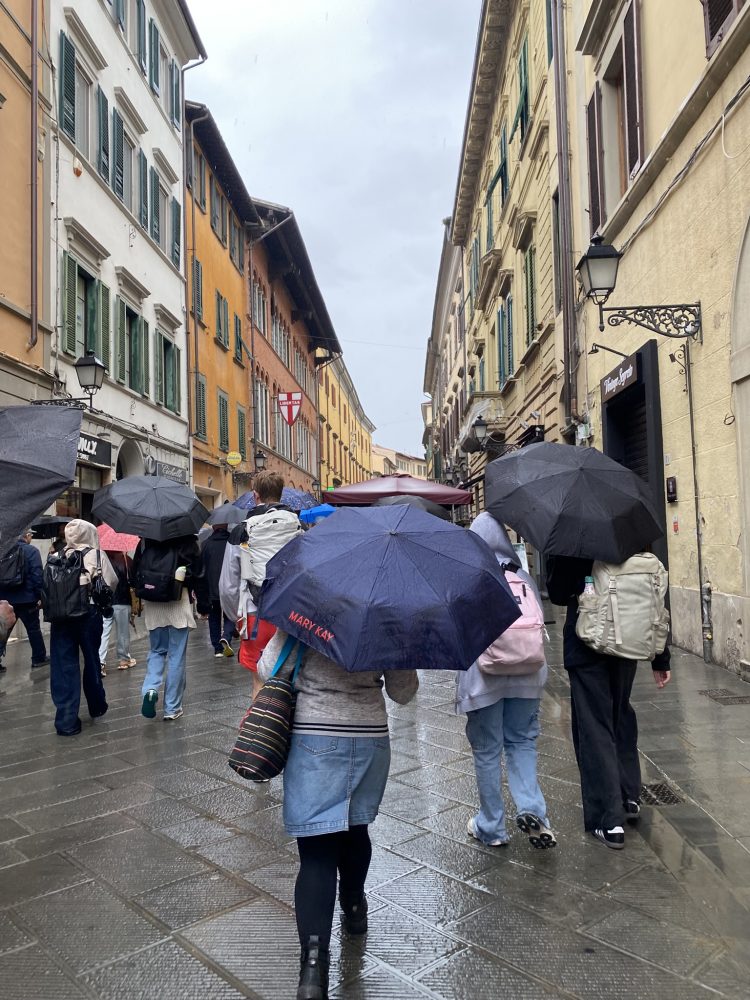
As we started our discovering of Pisa, we walked through some very interesting areas where there was a lot of significant historical buildings being repurposed for casual use today. One building was previously a palace, but is now an H&M, with some original doors in the upstairs and beautiful preserved architecture, while using the space for something new. This was very fascinating because the beginning of our walk took us through the neighbourhoods of Pisa where the history was rich, but people had no care to see it.
Pisa is not all about the leaning tower and its surrounding buildings. Yes, those are what tourists visit for but there is so much more to know and see. In the past, Pisa was a prominent point for sea trade in Italy with extensive connections to Arabia and China which brought in much wealth. This wealth played a big role in the development and significance of Pisa as a city.
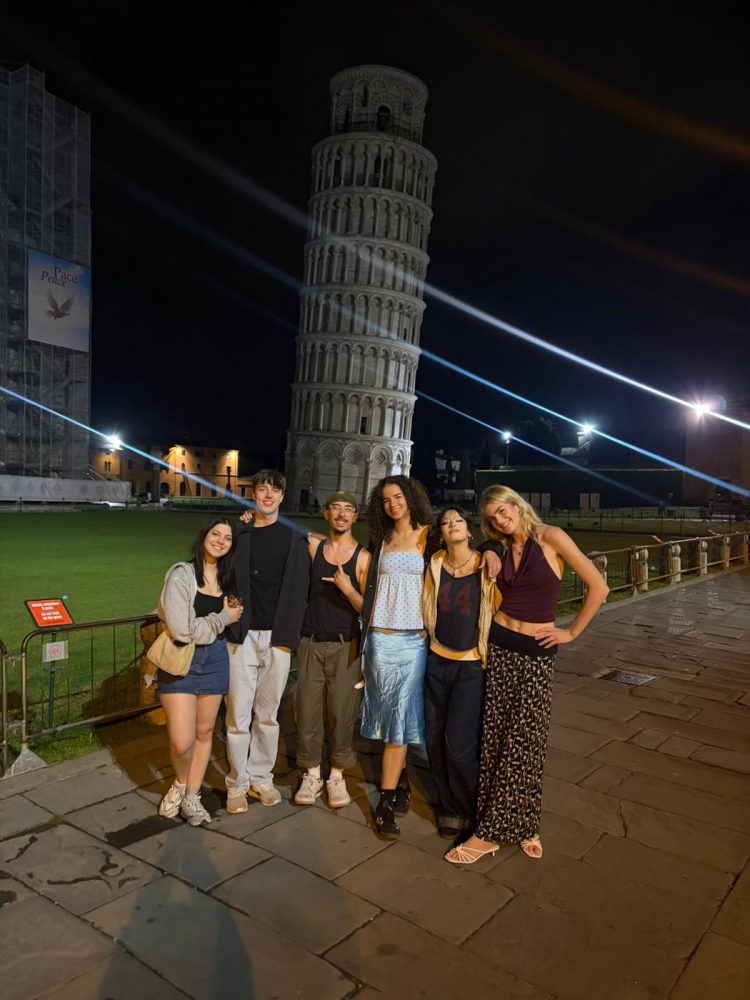
During our trip here, we made our way from the train station to the center of the city to see the leaning tower, baptistry, main cathedral, and the Camposanto monumentale. The leaning tower was the first sight that we spent time at, taking photos and admiring the building but we did not go up it. Once everyone was satisfied with their Instagram worthy photos, we made our way to the baptistry. The baptistry here started to be constructed after the cathedral, which would have been around 1170 and the cathedral in 1050. This baptistry has Romanesque style architecture on the outside with Baroque style architecture on the inside due to how long it used to take to build these sorts of structures. So much work and craft would go into them that it would take hundreds of years to finish and the architecture style of the time would change and develop as it got built. The baptistries were also always dedicated to John the Baptist and so this one had a statue of him in the middle.
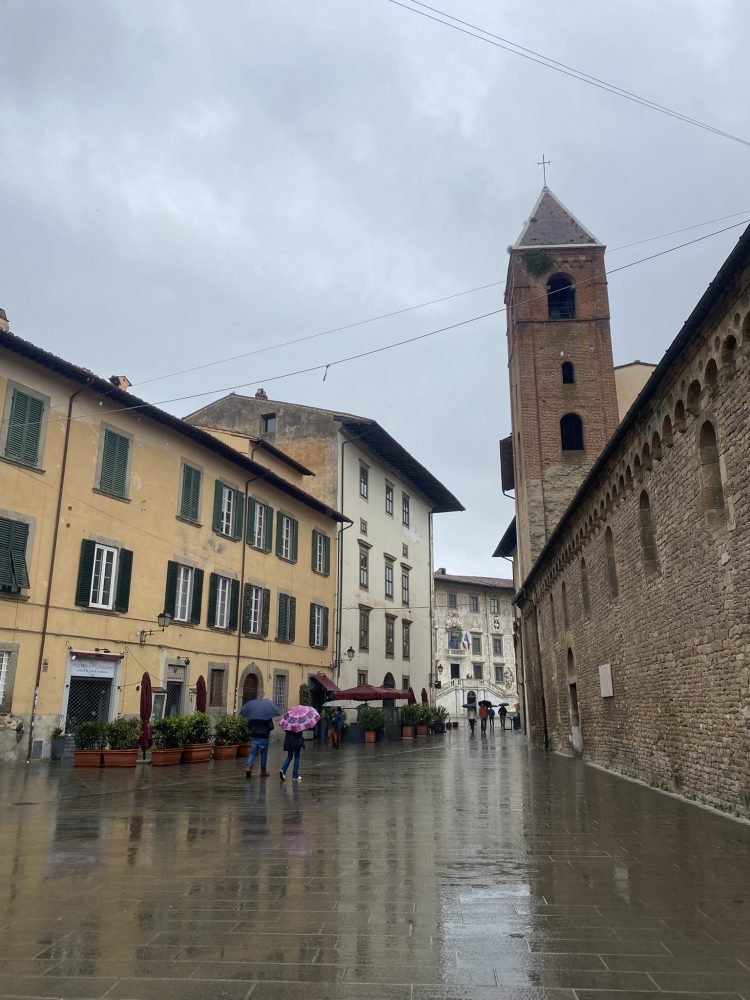
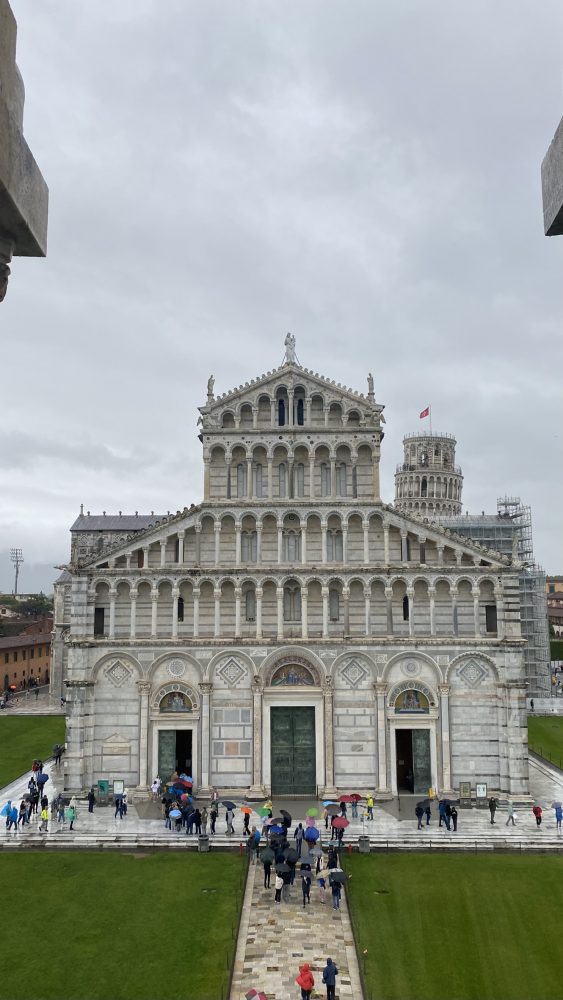
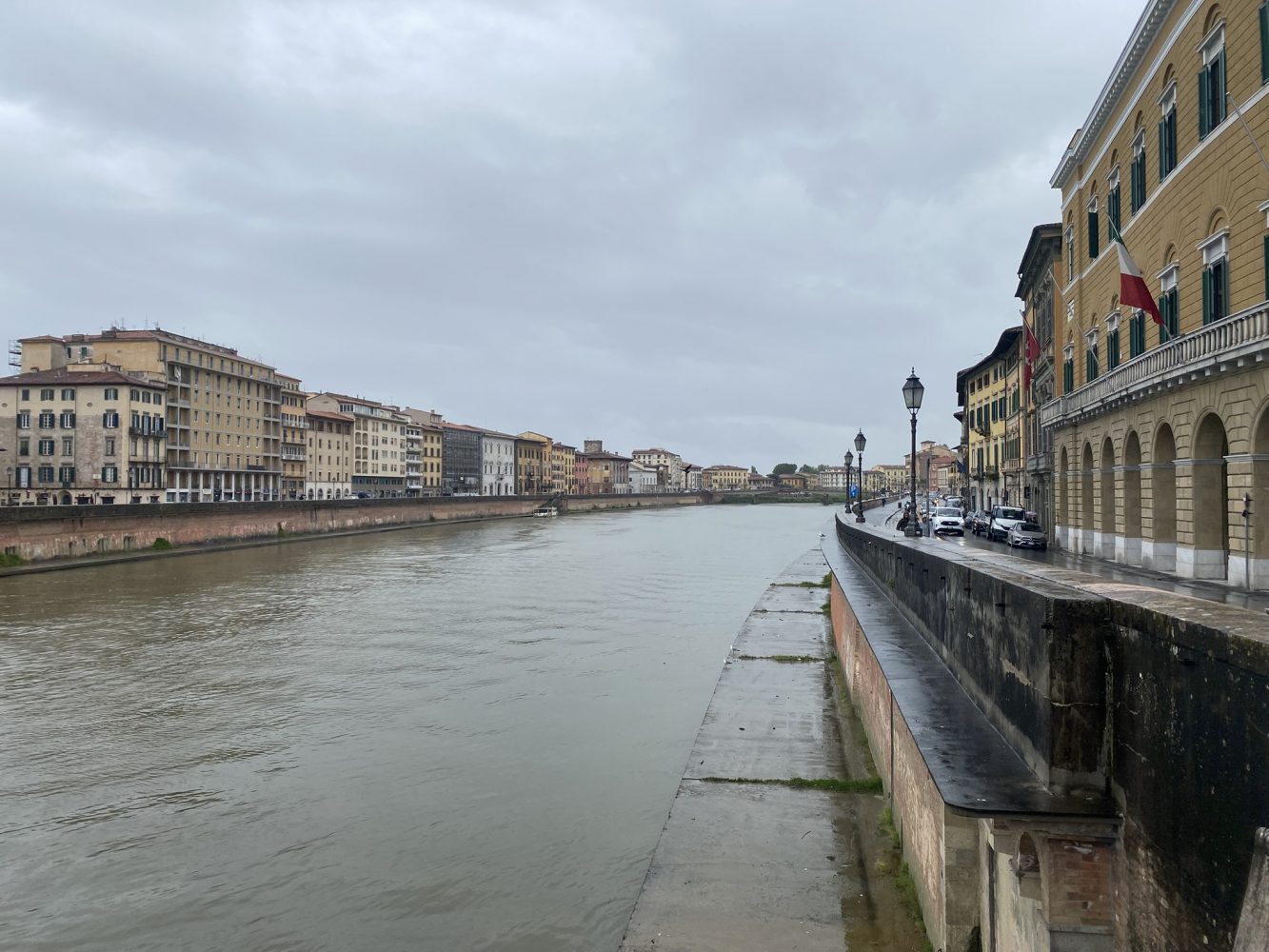
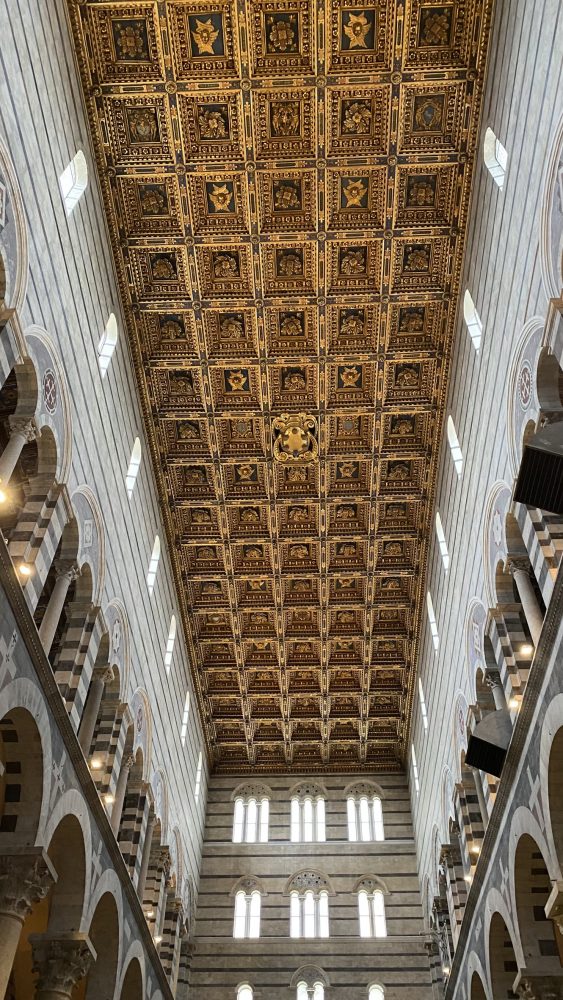
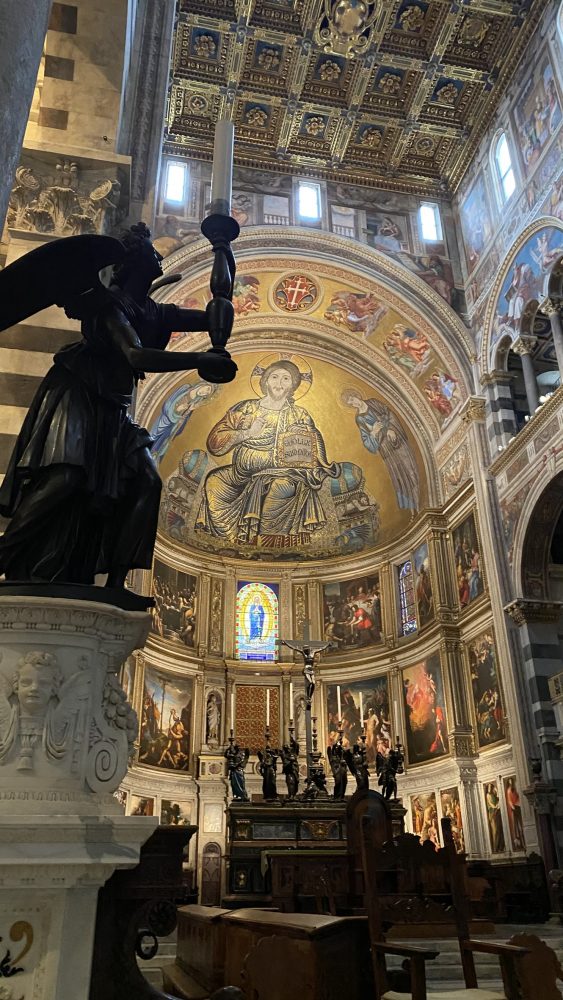
After the baptistry, we made our way to the cathedral while fighting against the rain and failing. Many of us even with our umbrellas were being soaked in the downpour of rain and getting wet feet in puddles. Nevertheless, we continued on our journey to learn while being as positive as possible. The cathedral along with many other buildings in Pisa had the Medici family crest all over it since the family was so powerful and wealthy. The interior was richly decorated with gold, endless ornamentation and white and black marble for most walls.
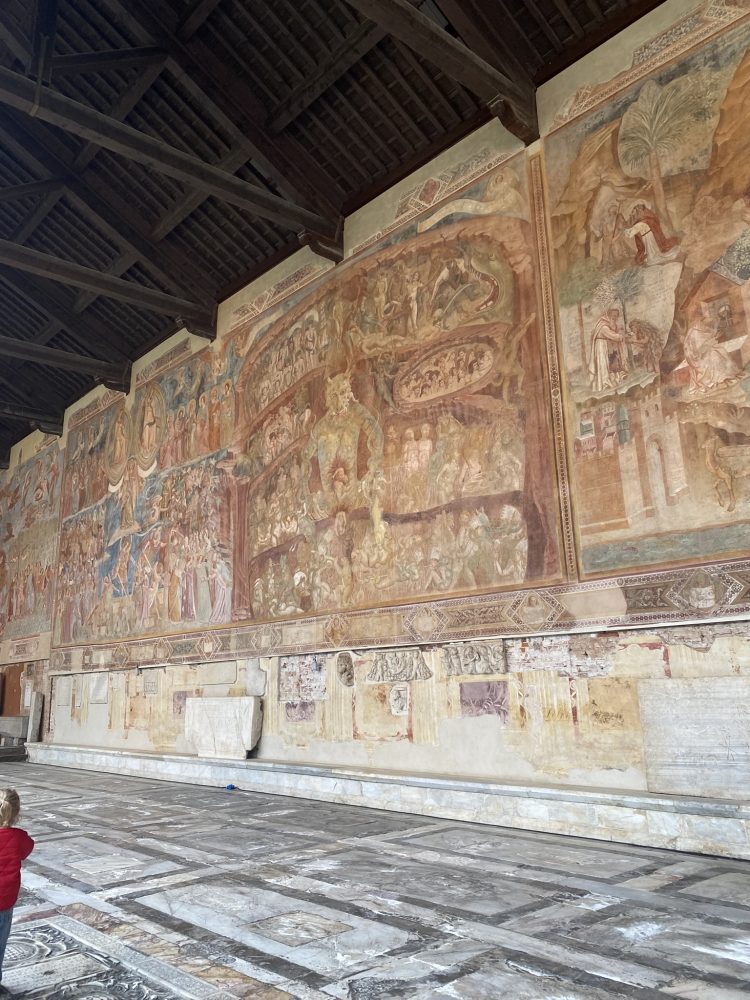
Our final stop was the Camposanto monumentale which is one of the oldest Christian Medieval burial architectures. Inside you walk over many tombs and also see old Roman urns along the walls as well. This building first started because of the extensive sea trade that Pisa was involved in and a large shipload of dirt from the Holy Land was brought over. This dirt was brought because many people believed that being buried in it would give them a sure way into heaven, and that they were being buried right next to God.
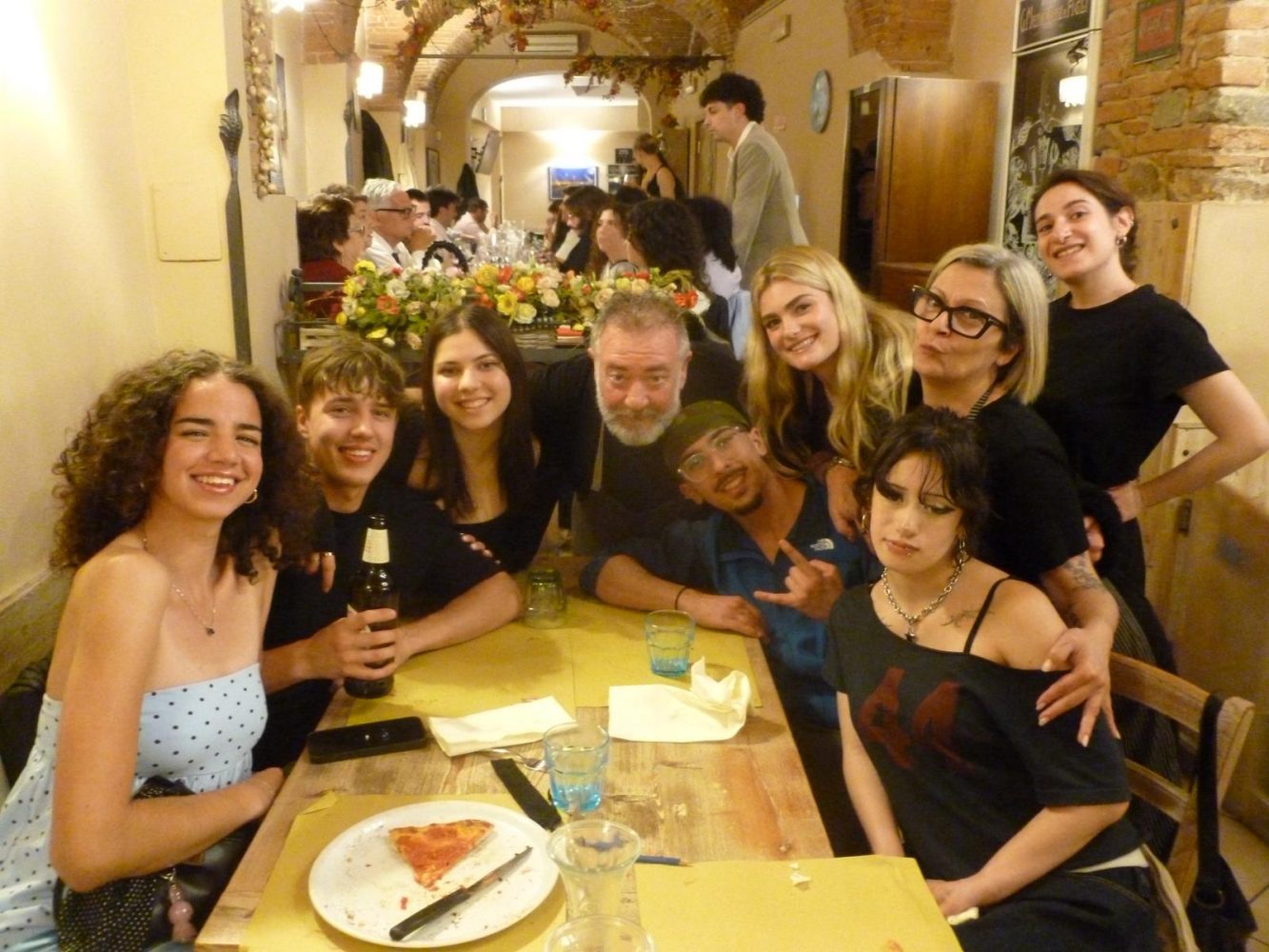
As we finished up our group activities some people split up. One group of us had lunch and then returned to Volterra, and the other group stayed in Pisa for the night and went to Lucca the next day. In the end all of us students made memories that will not be forgotten and learned so much more than we might have on our own!
Until next time, ciao!
– Scarlett Ambedian