
Steps and Studying- Volterra Class Excursions
Throughout our time in Volterra, our classes were very unique, with many of them taking place outside the classroom. This made the experience much more engaging, and we really appreciated this hands-on way of learning.
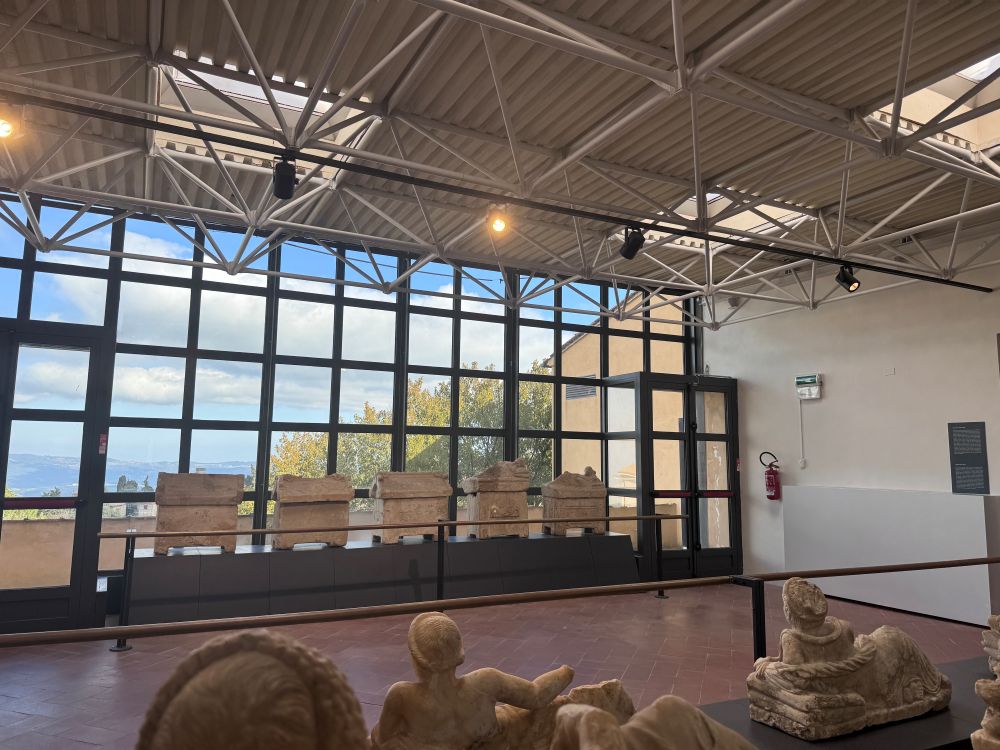
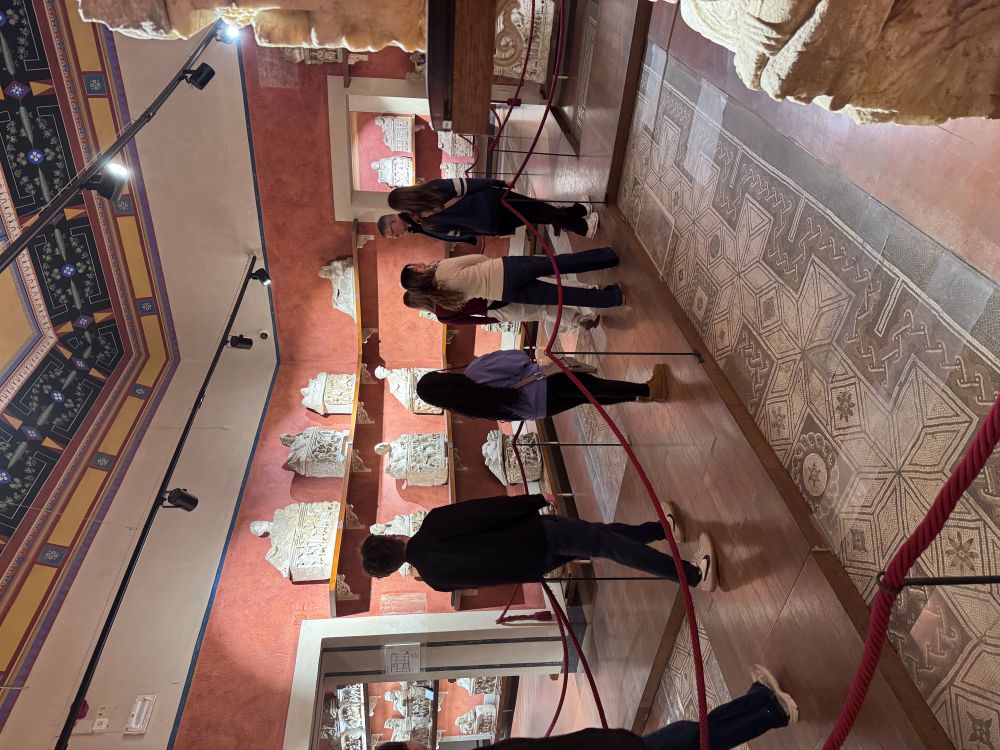
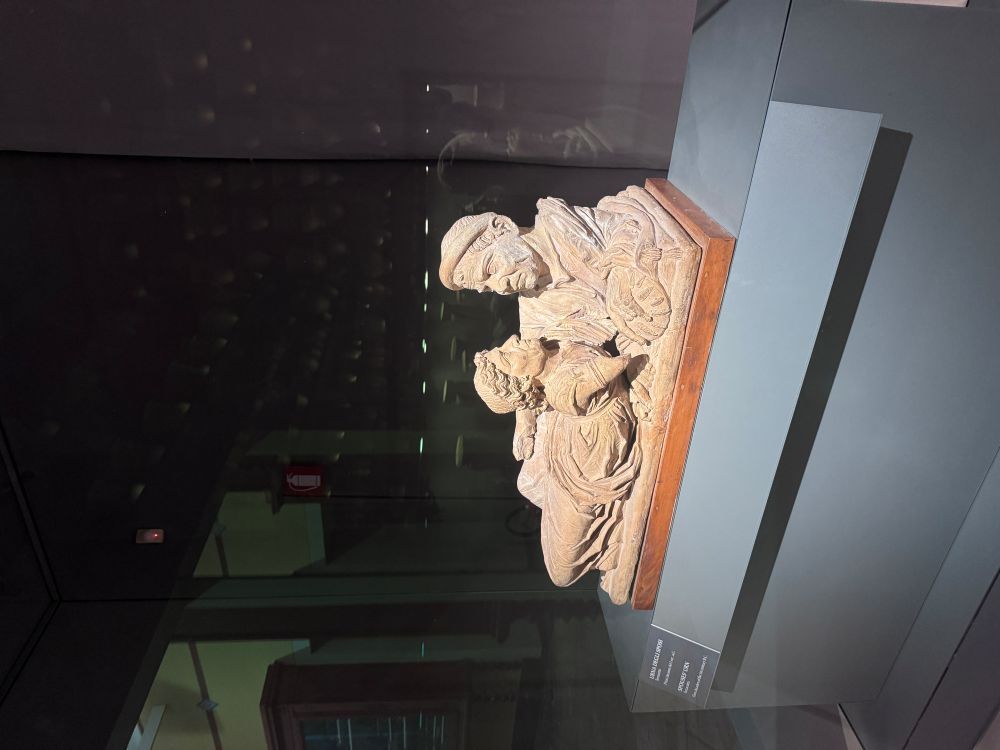
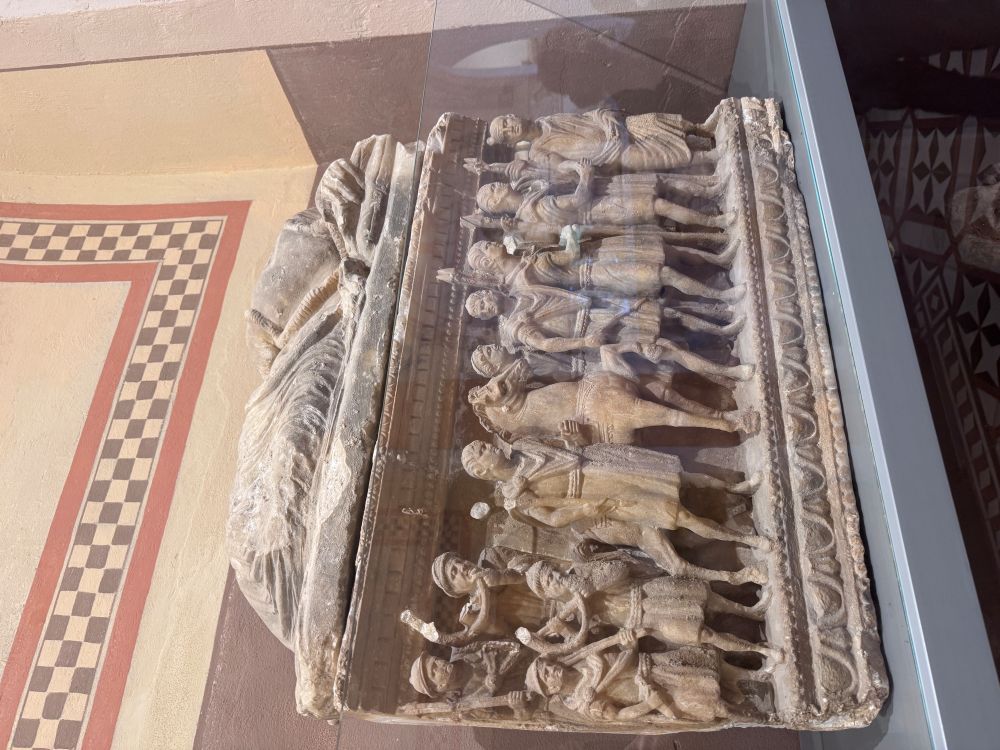
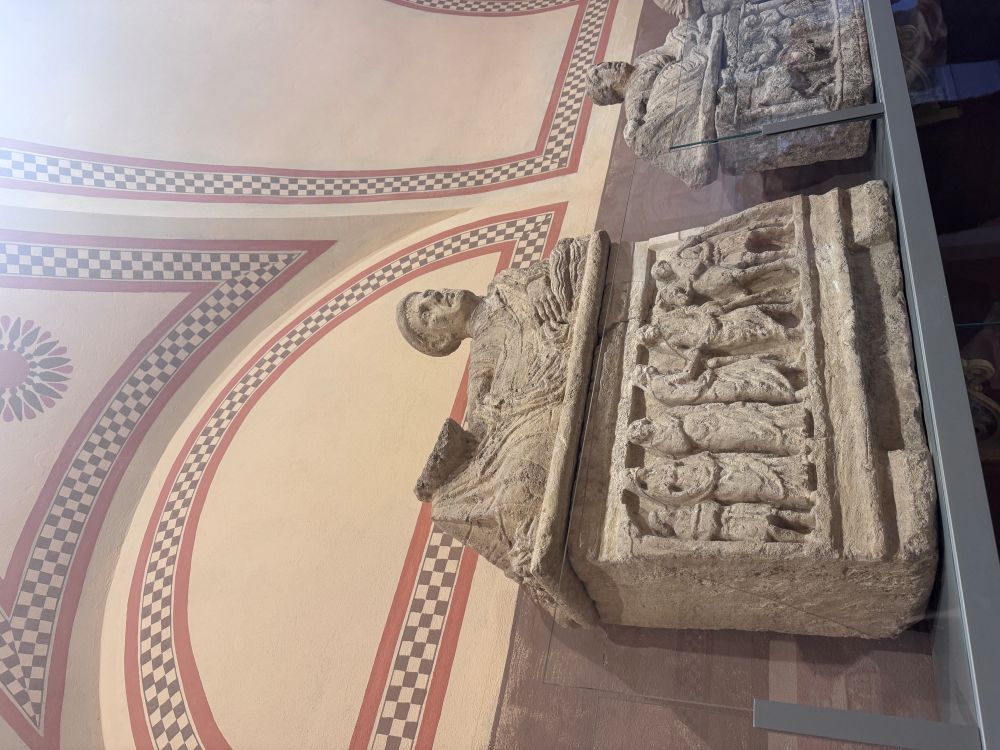
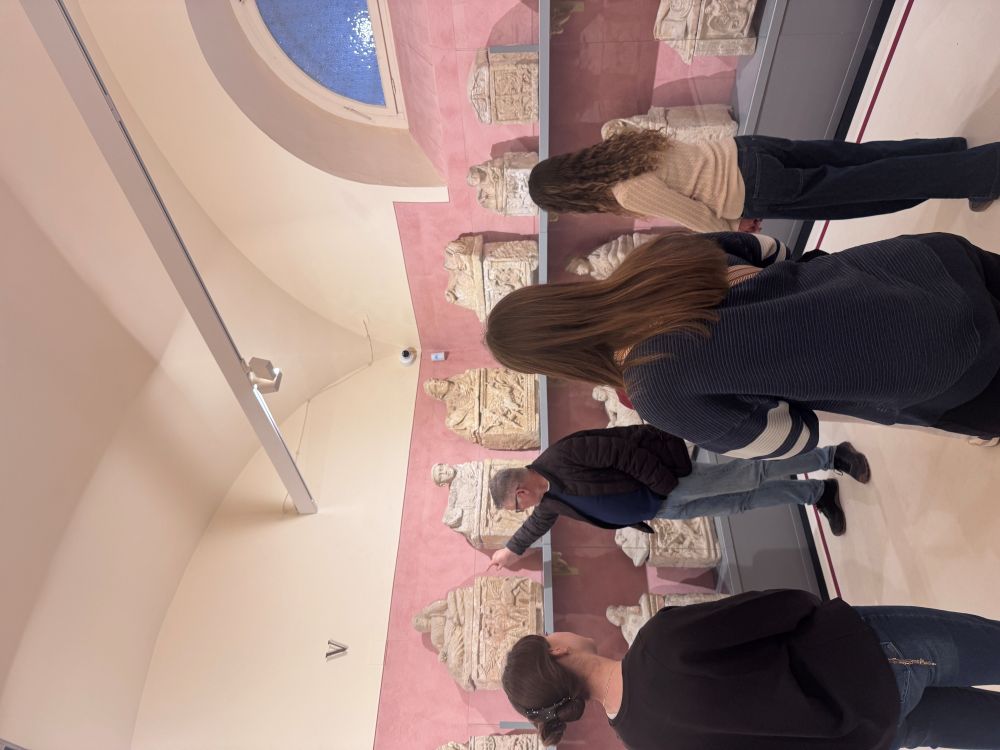
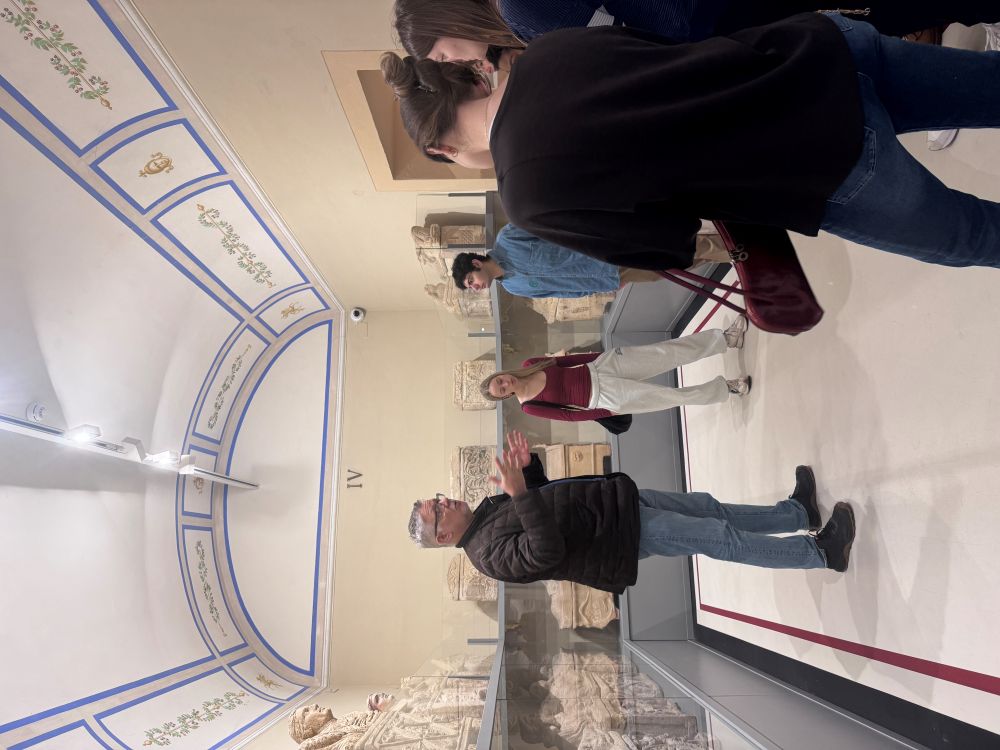
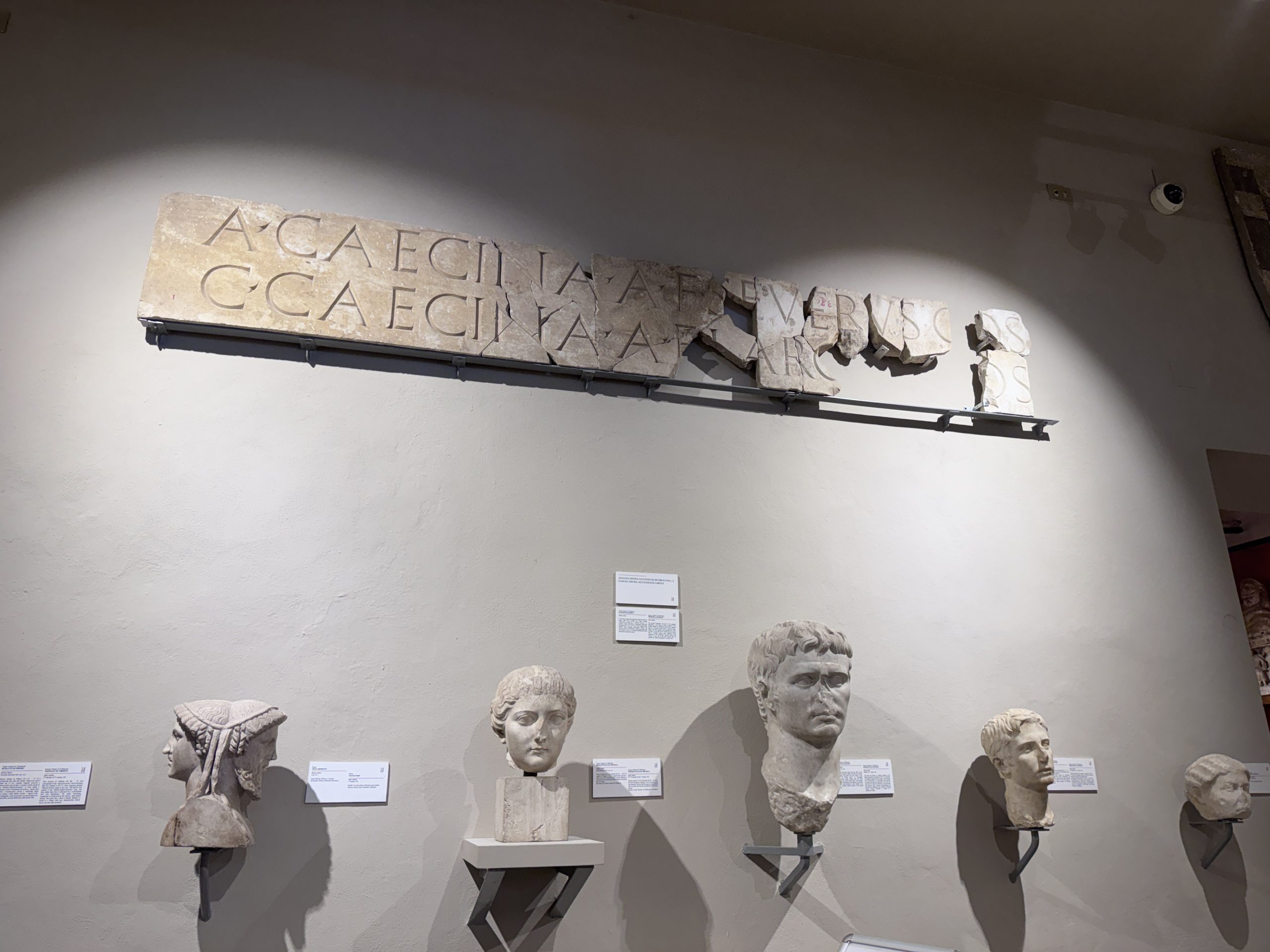
Our Social History and Art in Italy class brought us to the Museo Etrusco Mario Guarnacci, which houses one of the most important collections of Etruscan artifacts in Italy. The museum showcases a large collection of Etruscan urns, especially important because they are some of the only remains from the Etruscan era. Materials like metals, fabrics, and wood have largely disintegrated over time. Much of what we know comes from the detailed carvings and depictions on the urns themselves.
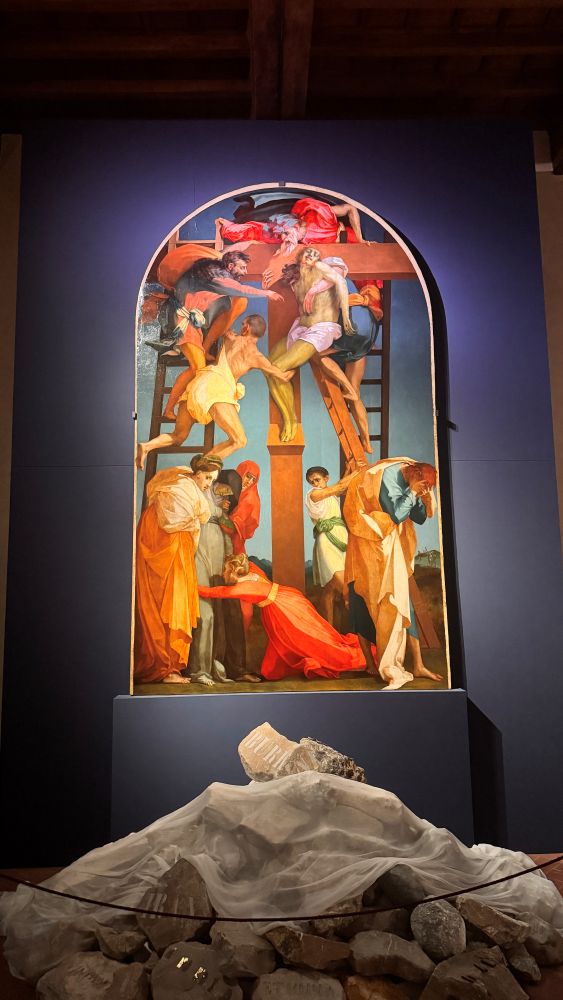
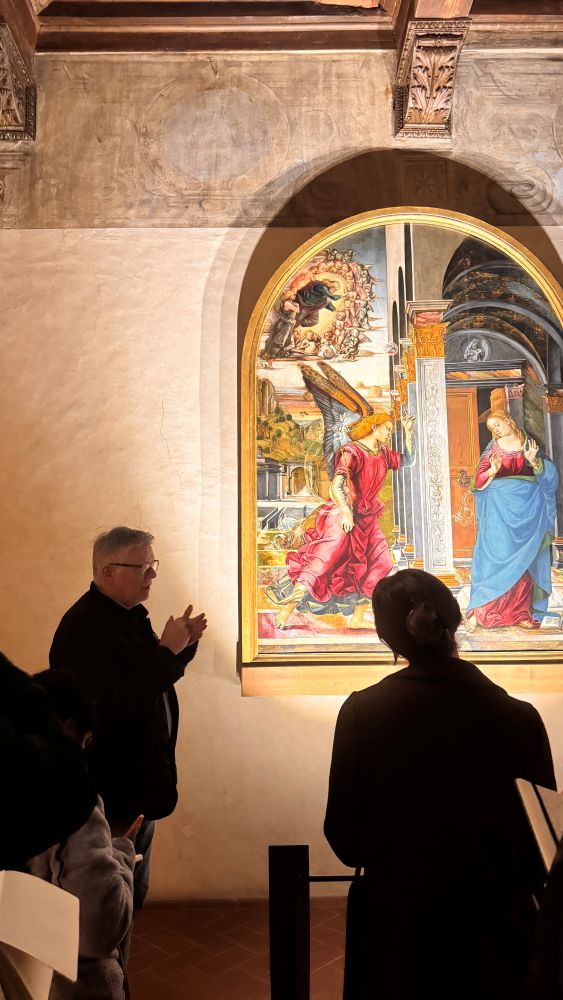
We also visited the Volterra City Museum and Art Gallery, which contains a wide range of artworks from the Middle Ages to the Baroque period. One of the works we saw was Deposition from the Cross by Rosso Fiorentino, a painting we had studied as a key example of Mannerism. We also saw Annunciation by Luca Signorelli, where we were especially struck by the delicate white details around the Archangel Gabriel, something you can’t fully appreciate from a photo alone.
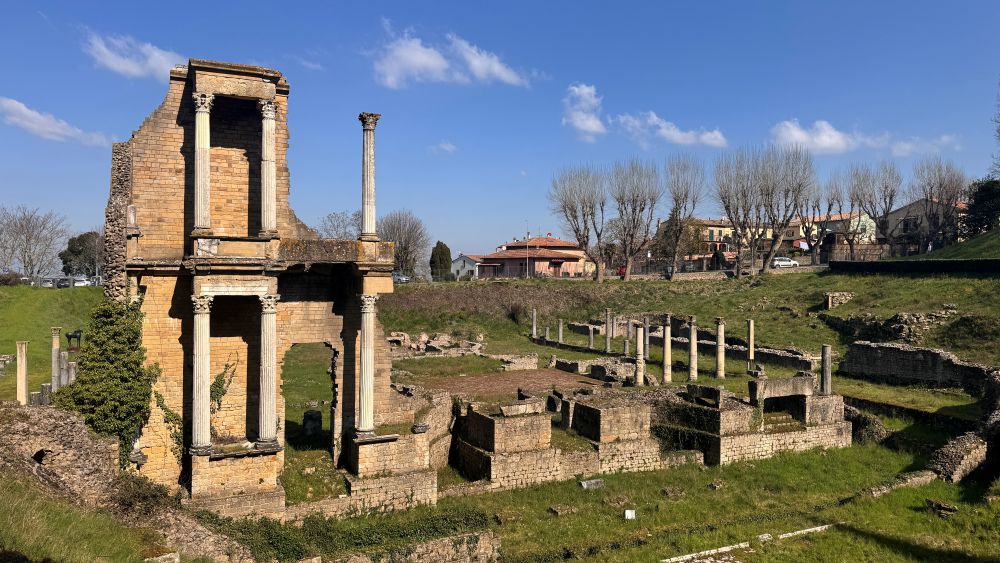
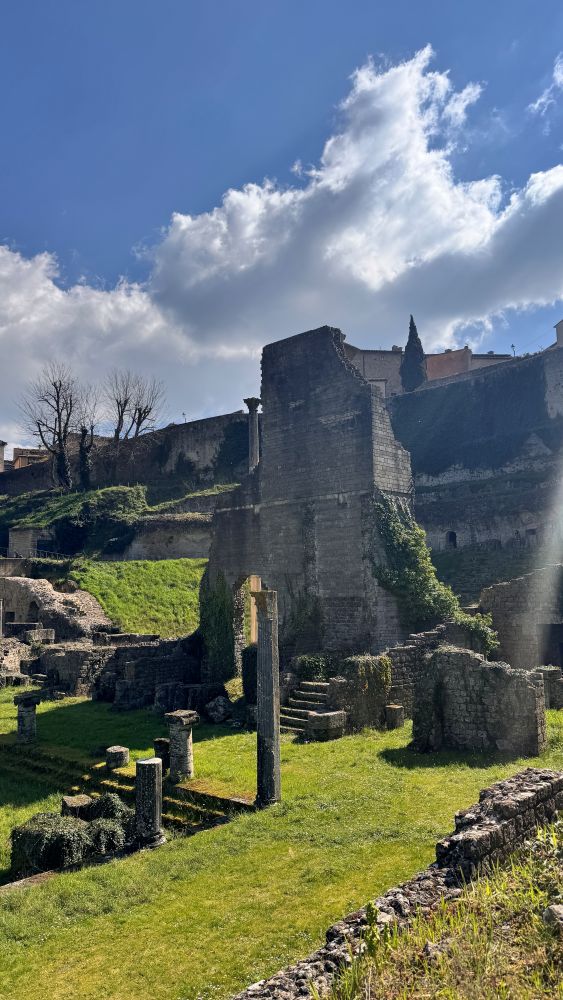
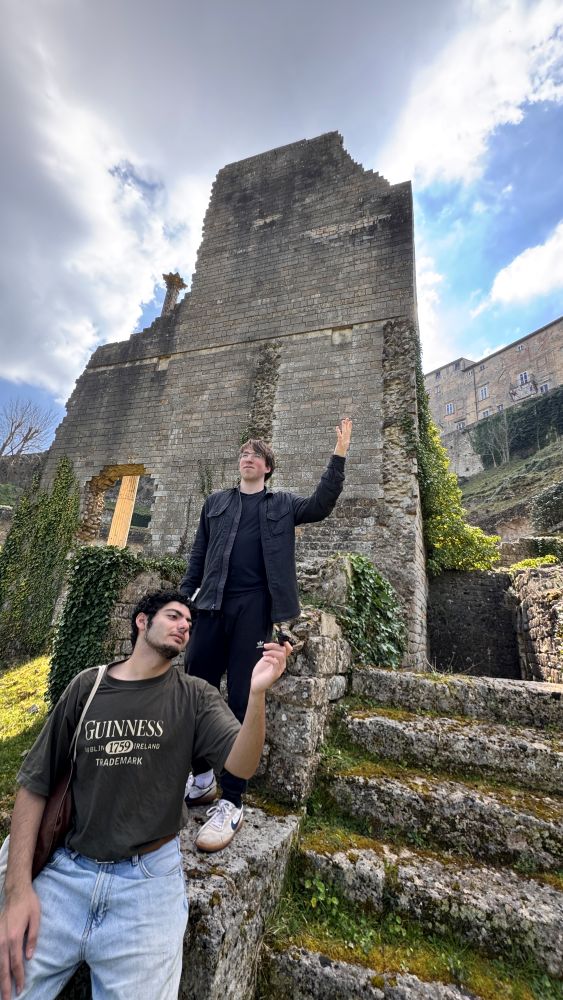
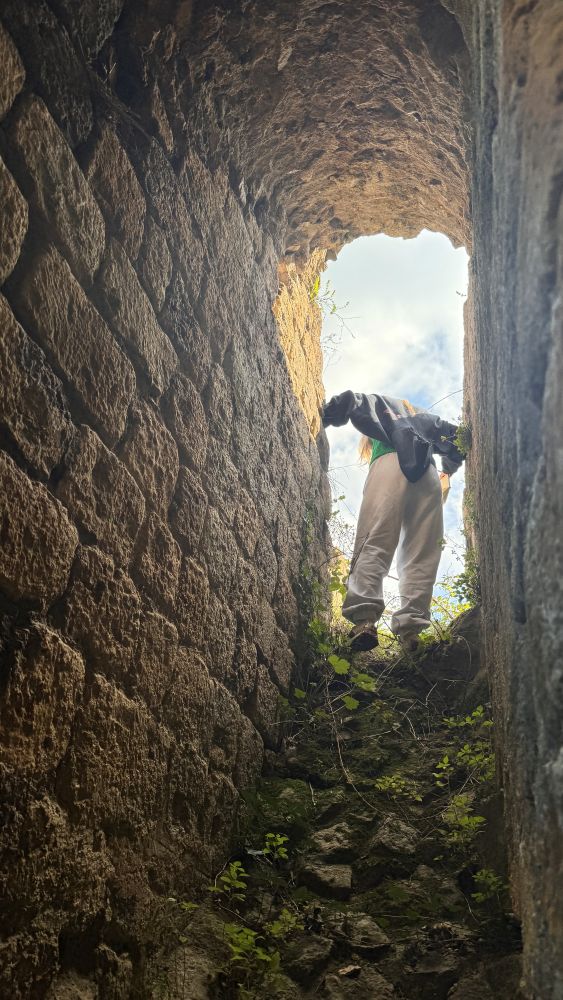
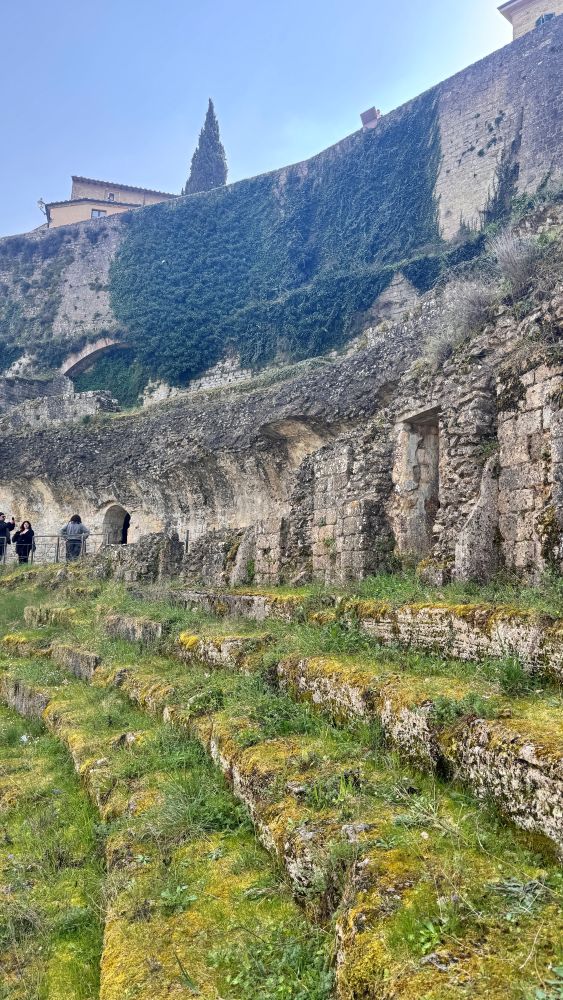
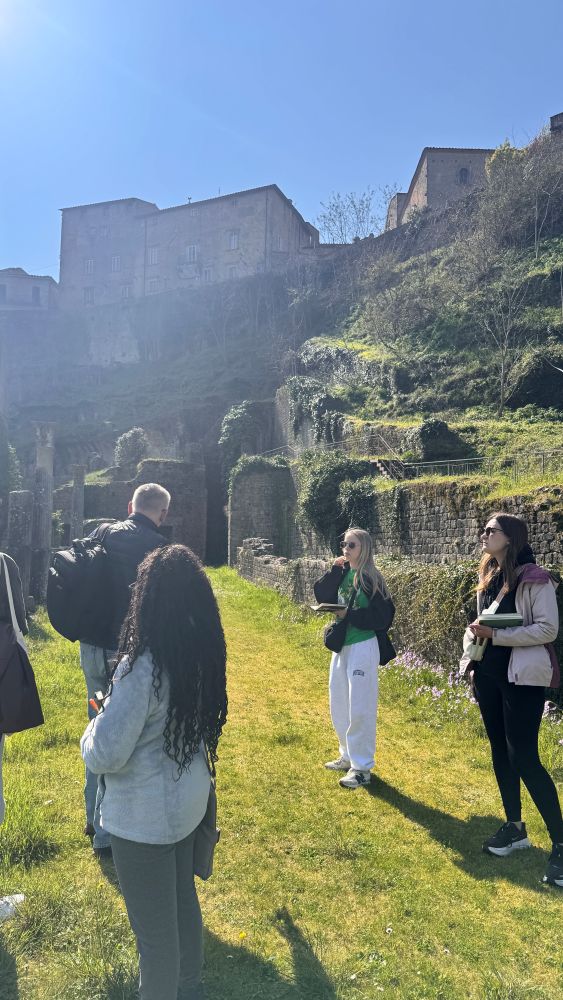
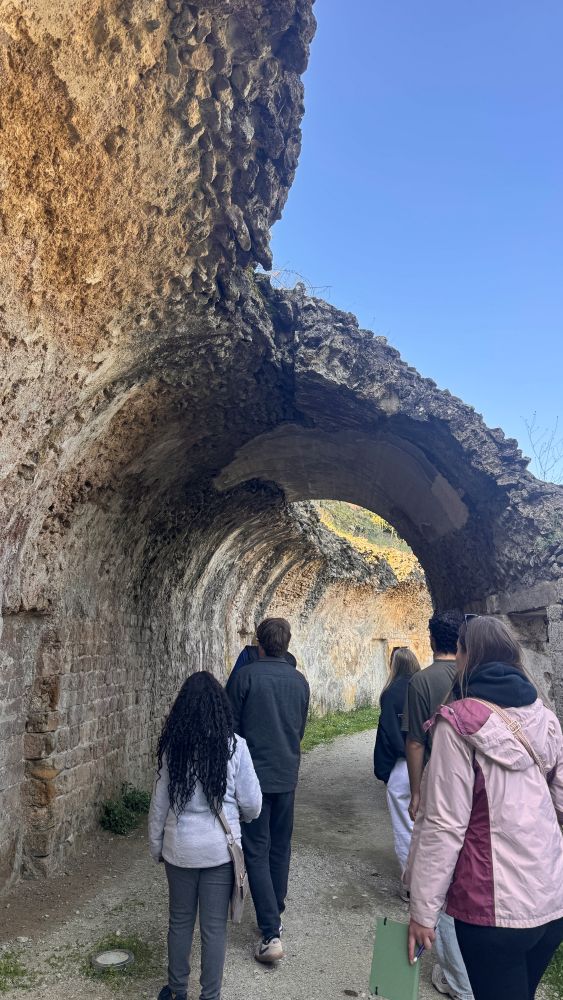
We also had the opportunity to visit the Roman Theatre of Volterra, where we were able to walk inside the site. Some reconstruction has been done to help visitors understand the scale of the original structure.
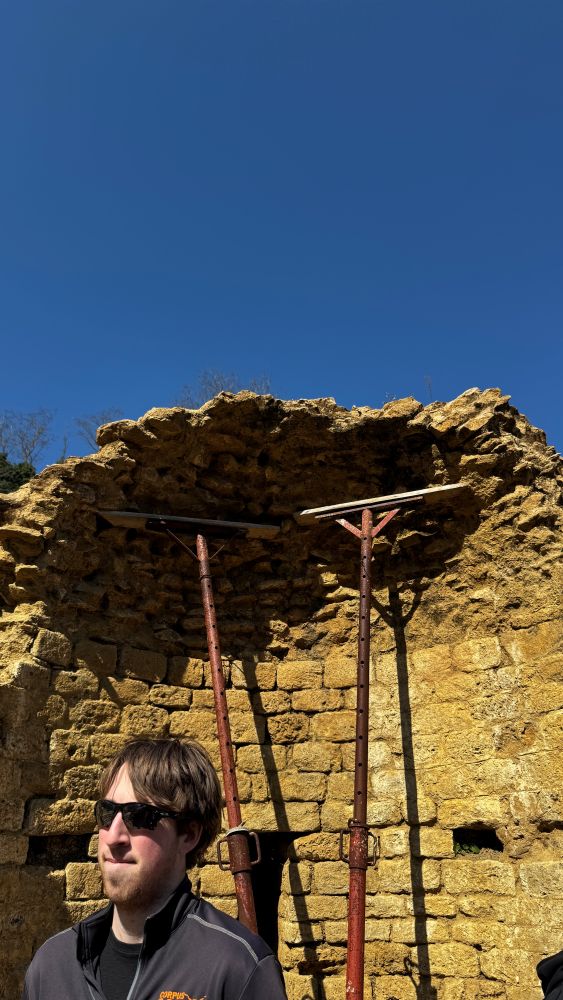
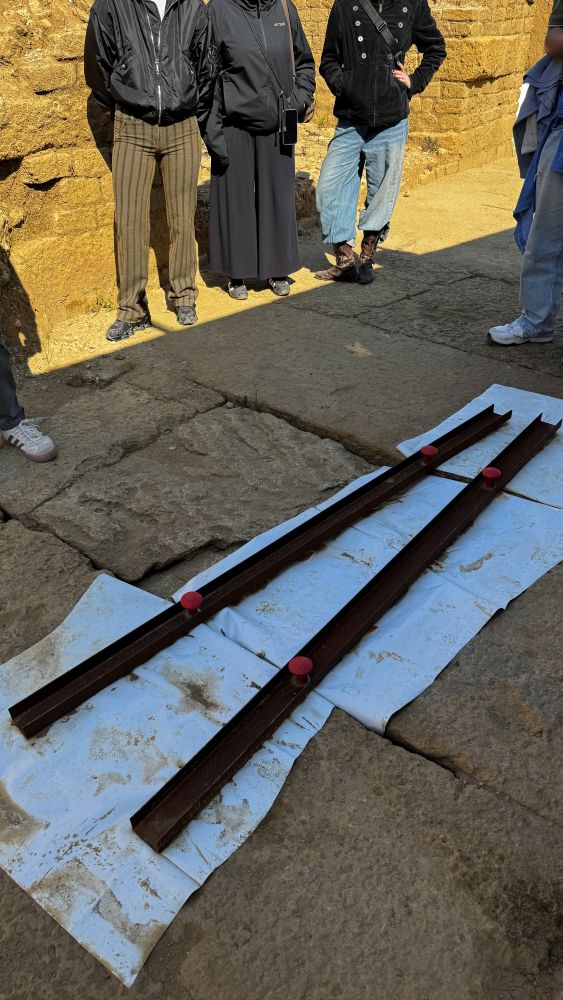
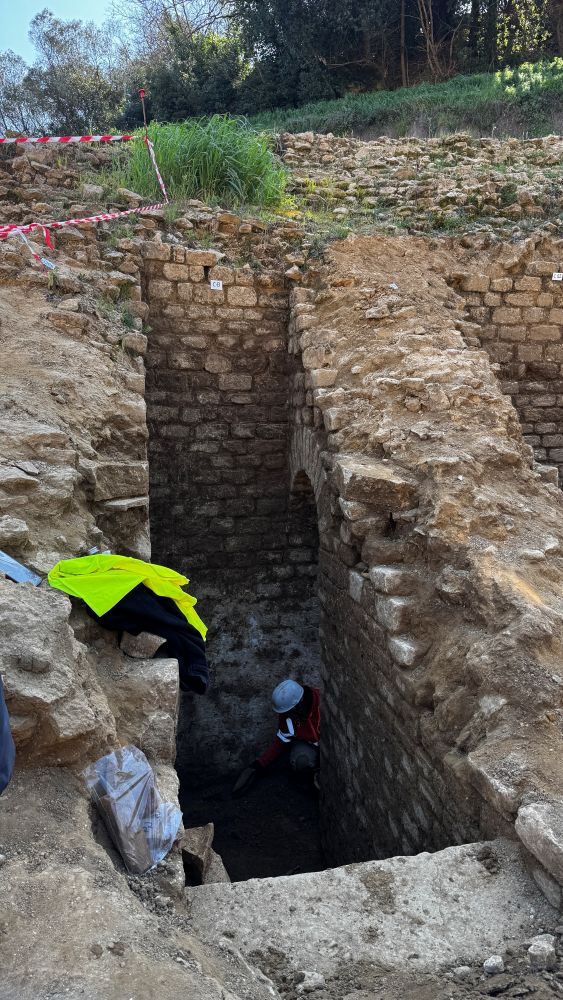
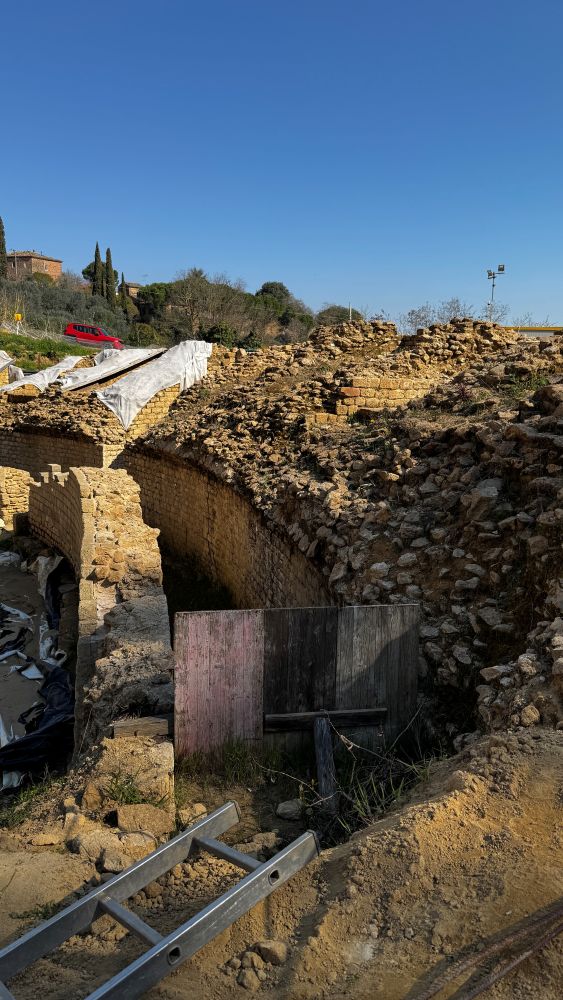
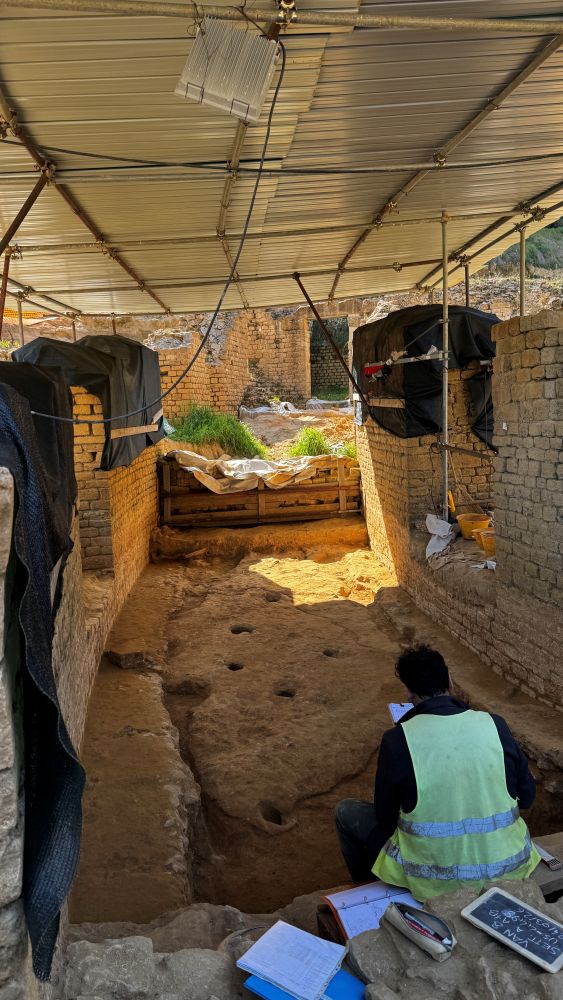
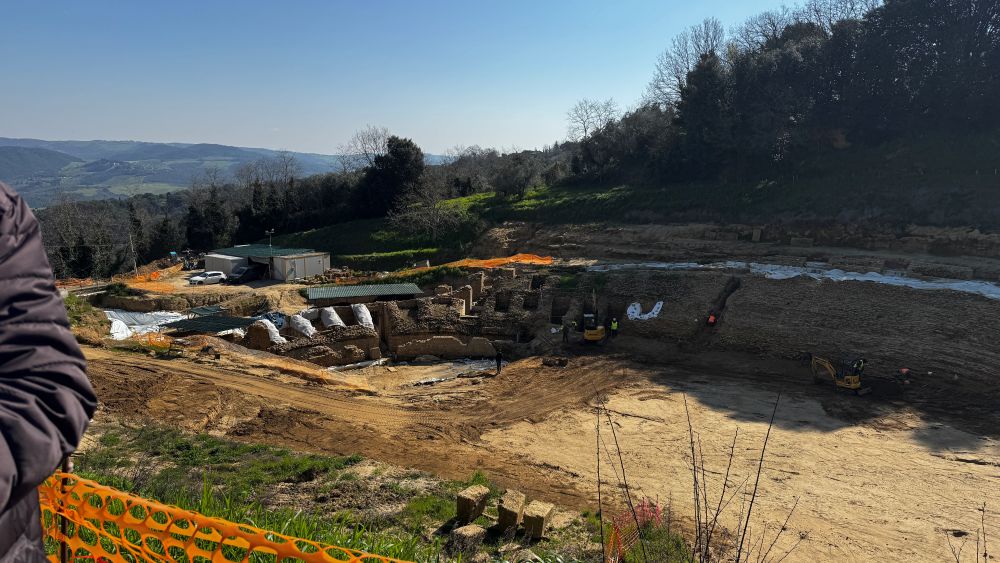
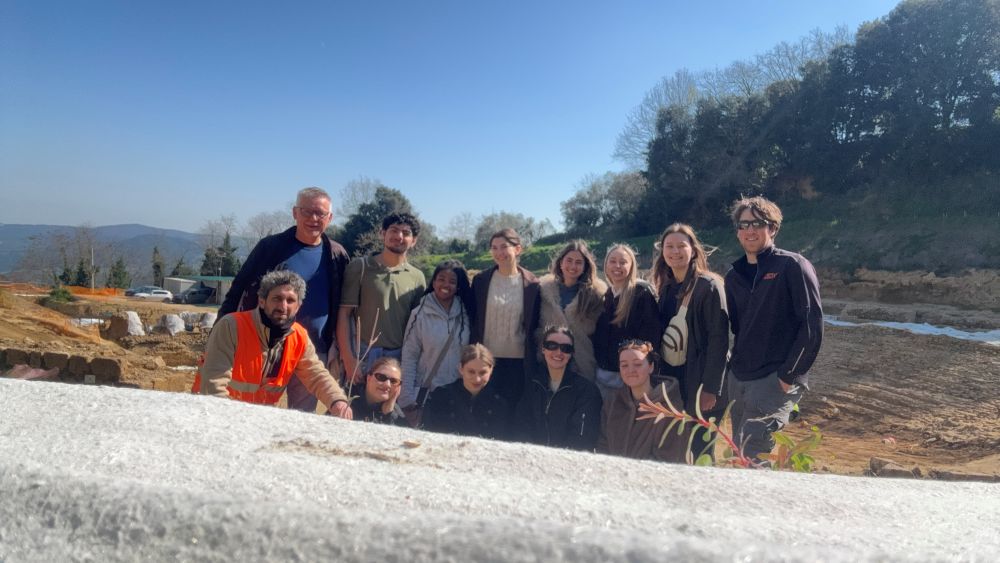
In addition, we received an exclusive tour of the ongoing excavation of the Roman amphitheater, which was discovered in 2015 by accident during construction work. It was fascinating to see how archaeologists carefully stabilize the structure as they continue uncovering it.
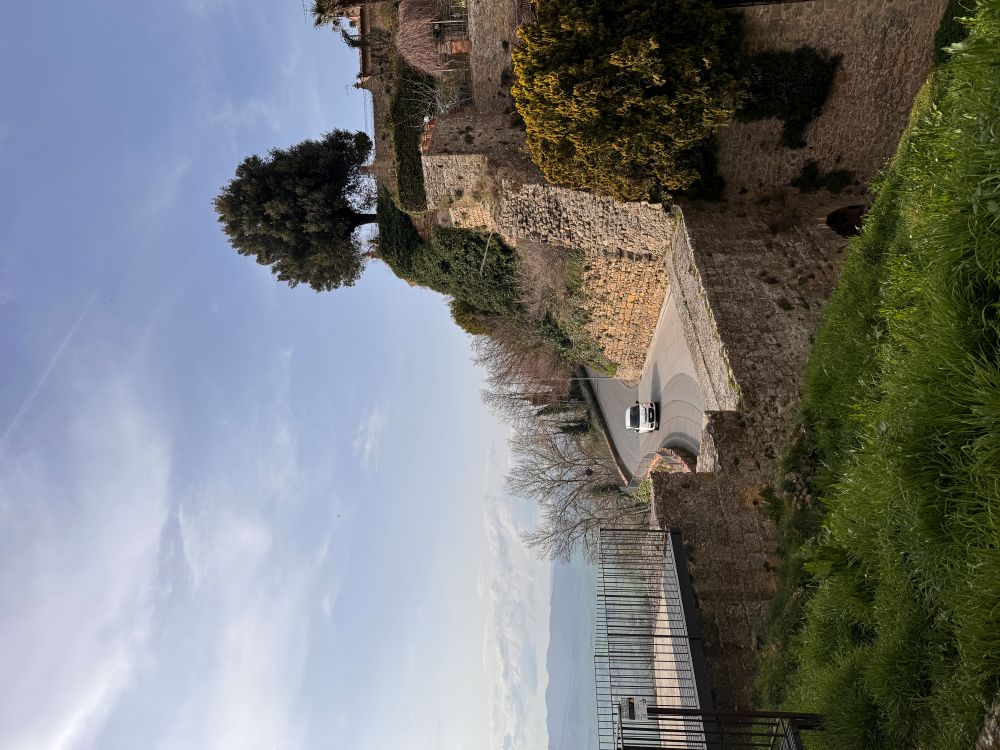
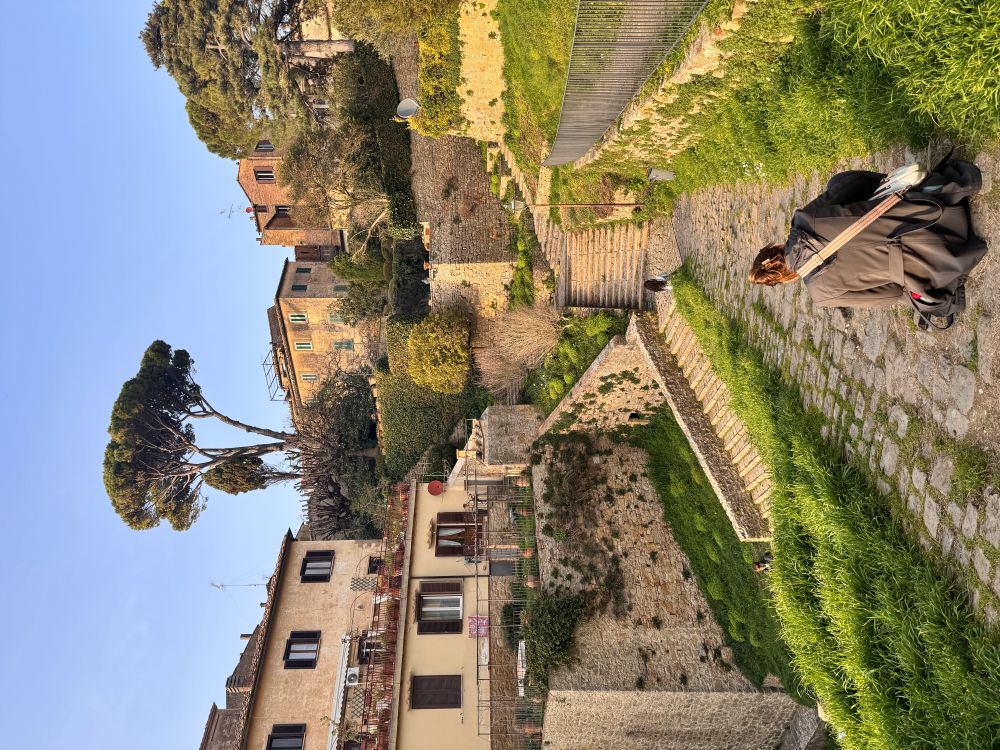
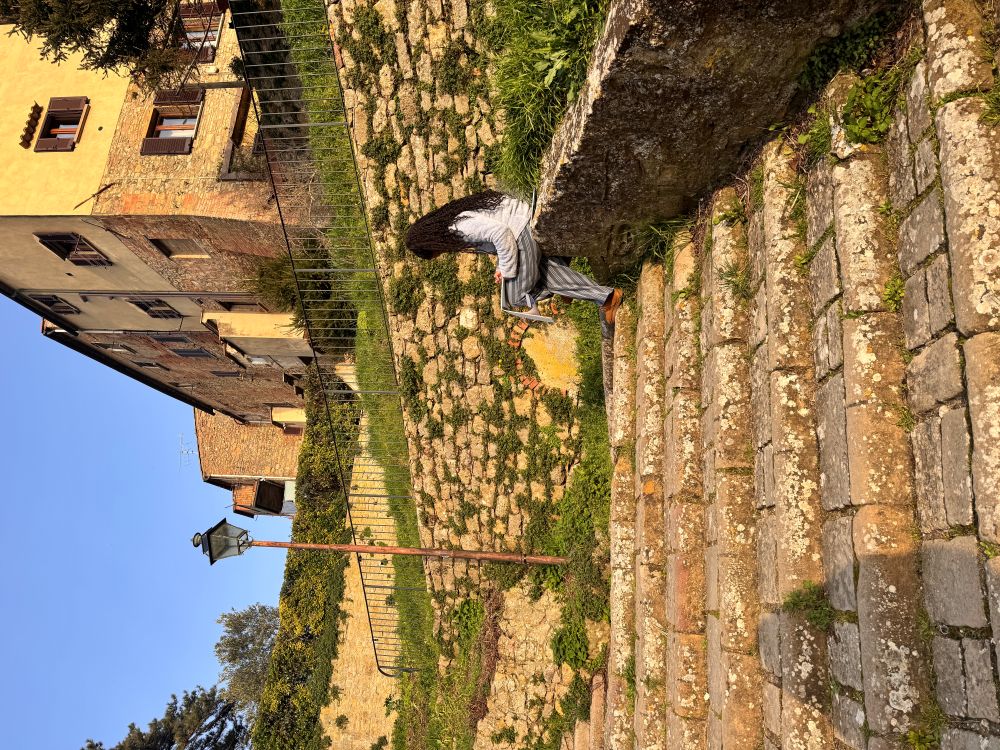
The sketching portion of our class brought us to many beautiful locations around Volterra. One of the most memorable days was when we visited Porta San Felice. It was one of the first warm days of the winter season, and we spent the entire class sketching, chatting, and taking in the scenery of the city.
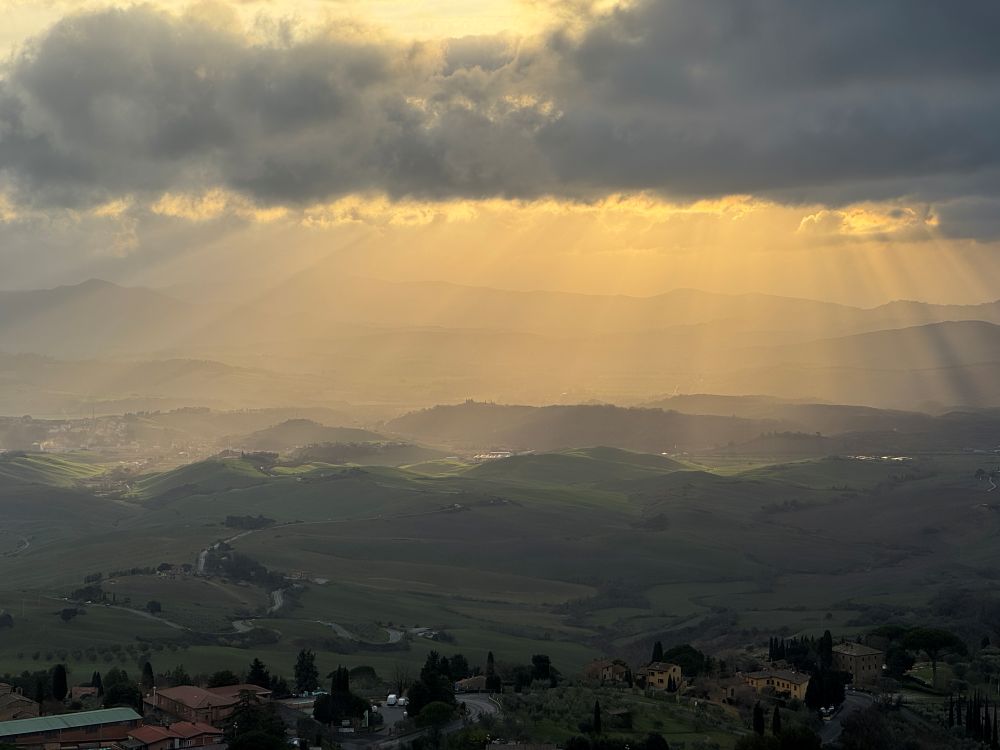
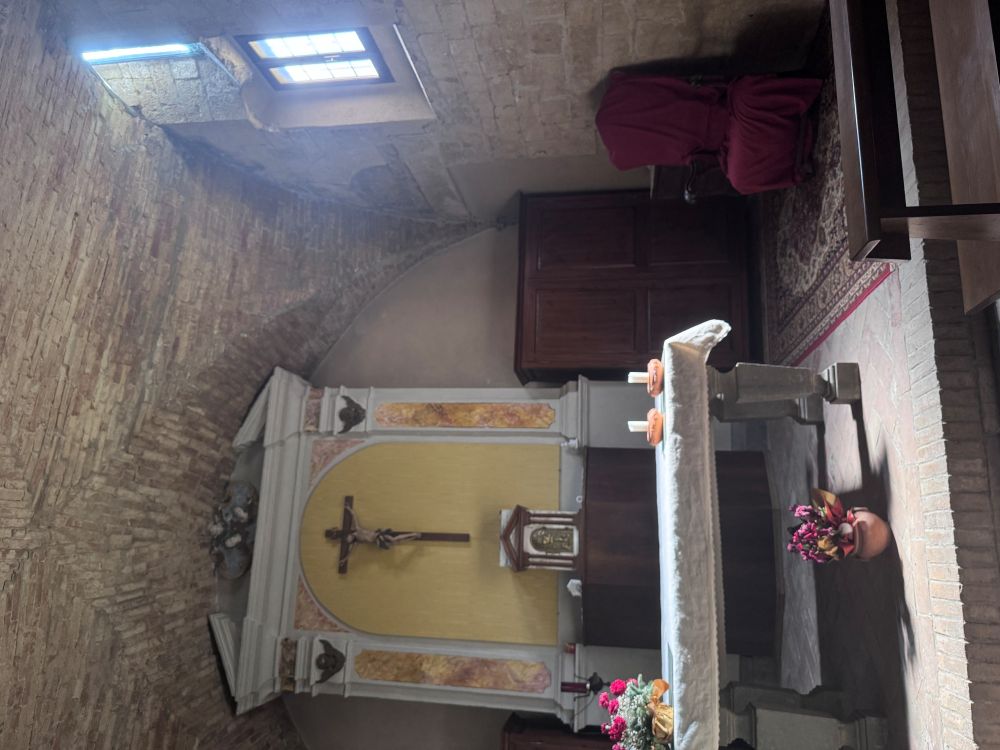
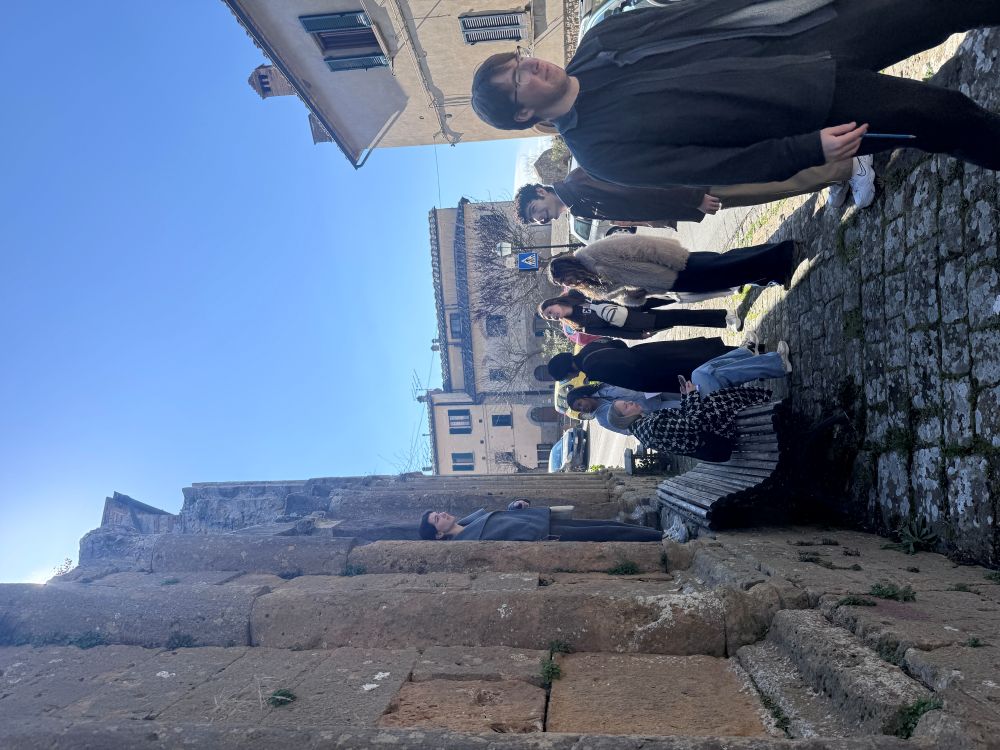
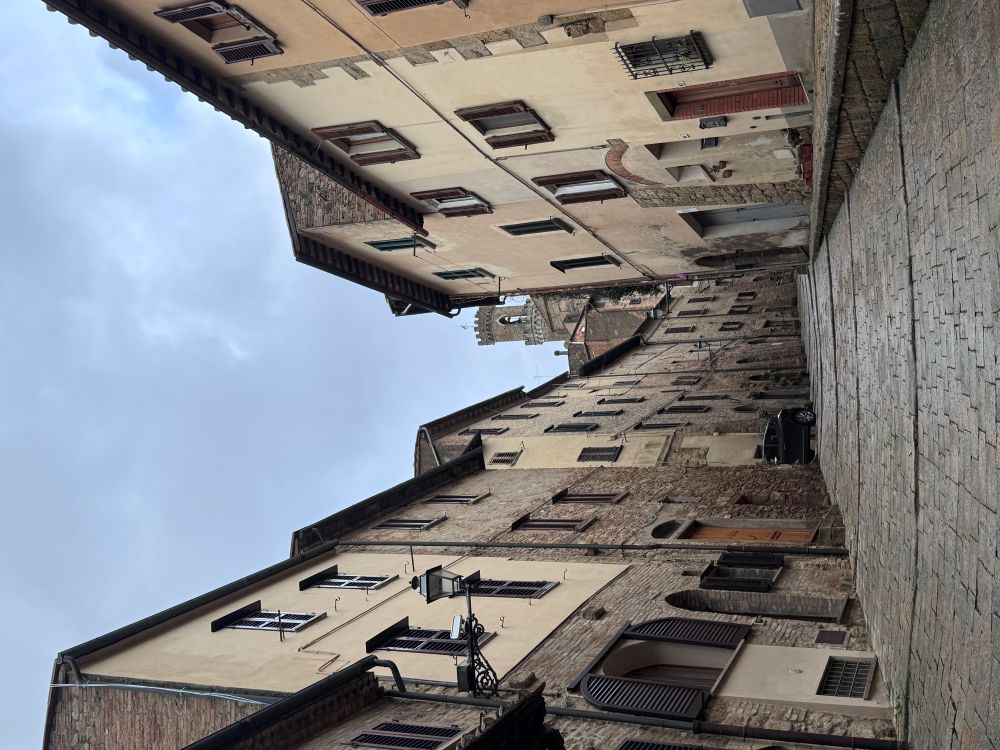
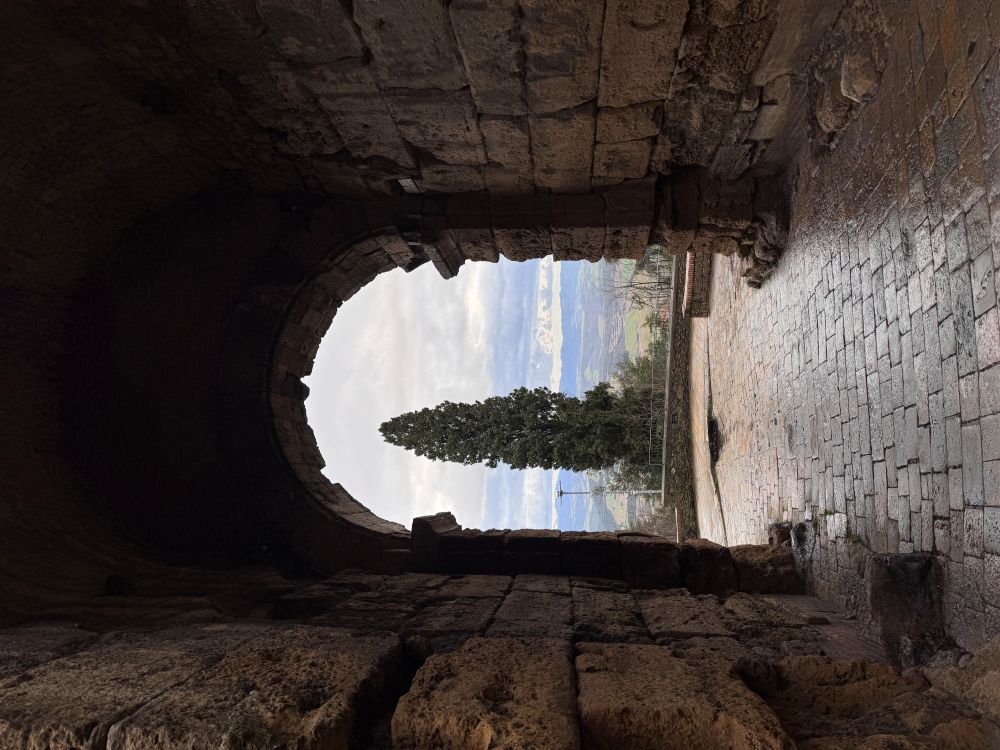
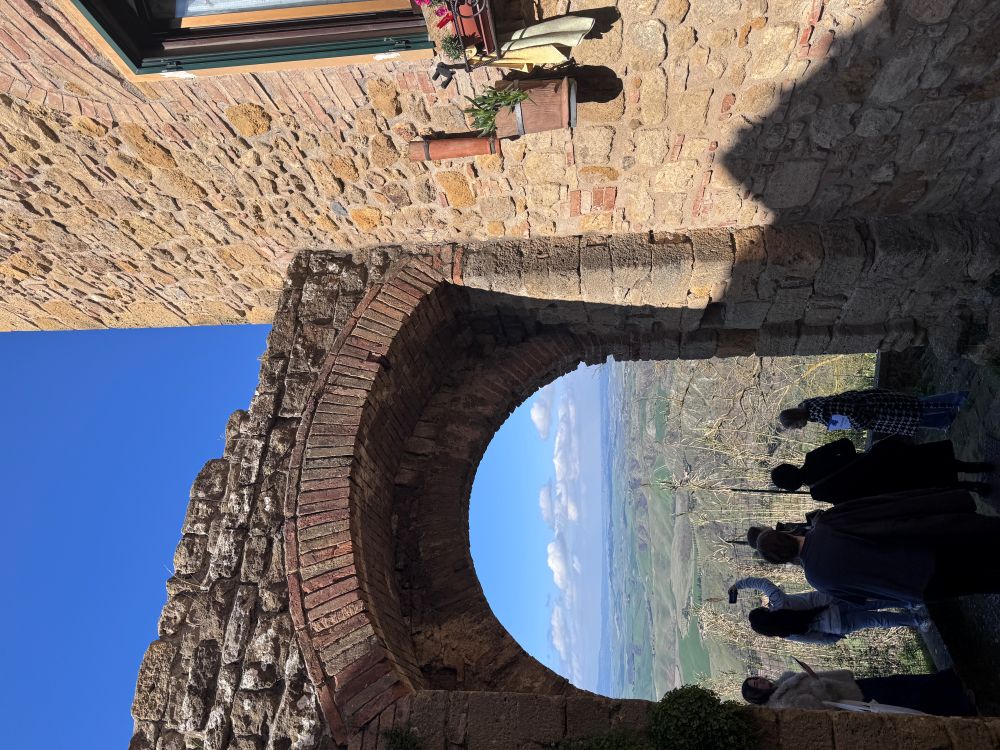
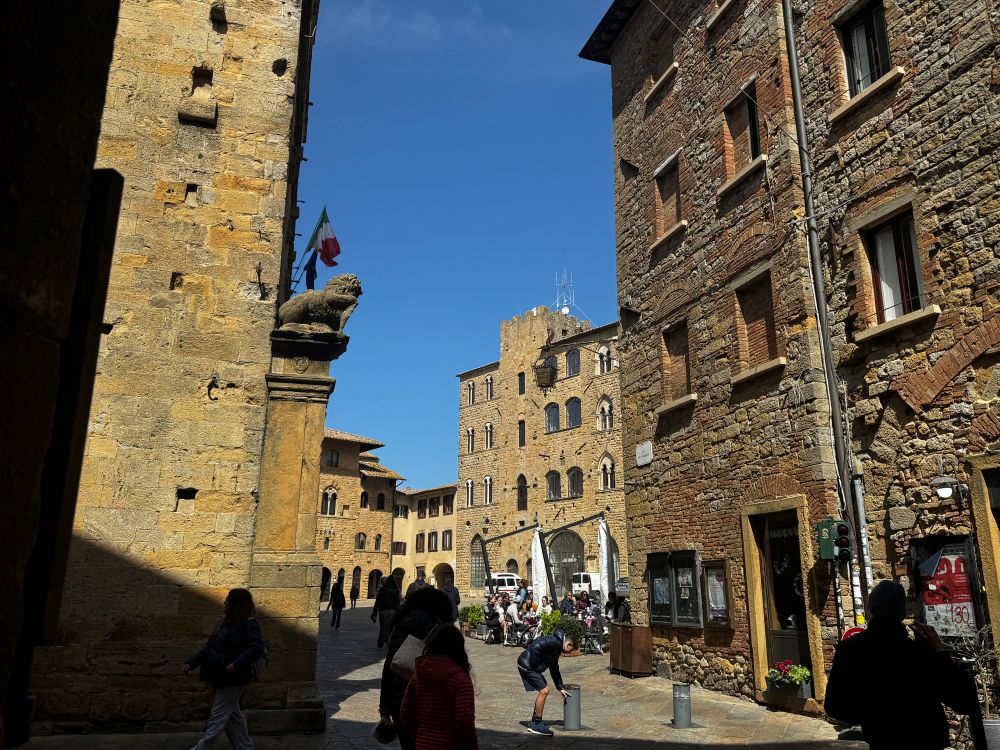
Our Italian Language and Culture class also took us on walks throughout Volterra, allowing us to explore both the city and the surrounding areas beyond the medieval walls.
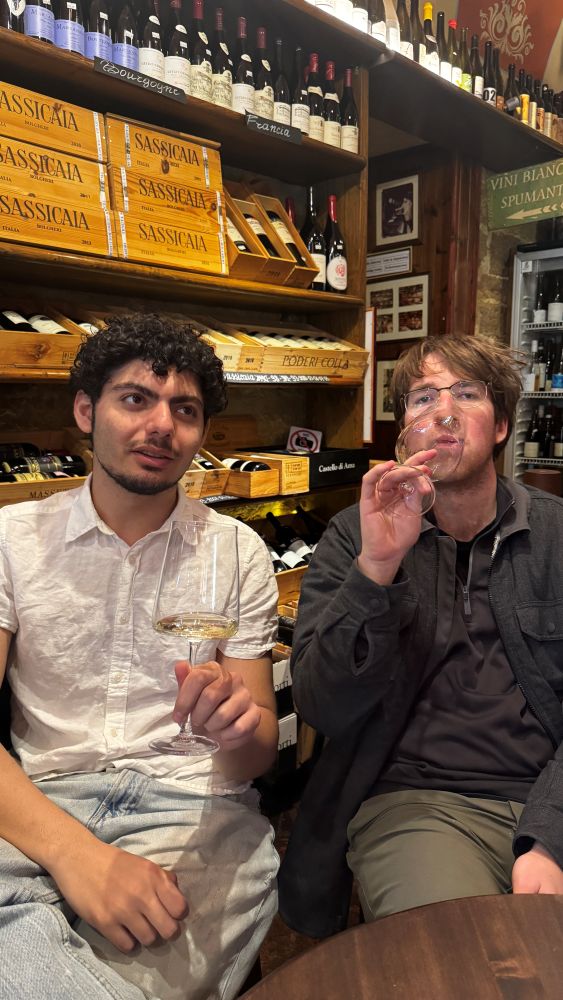
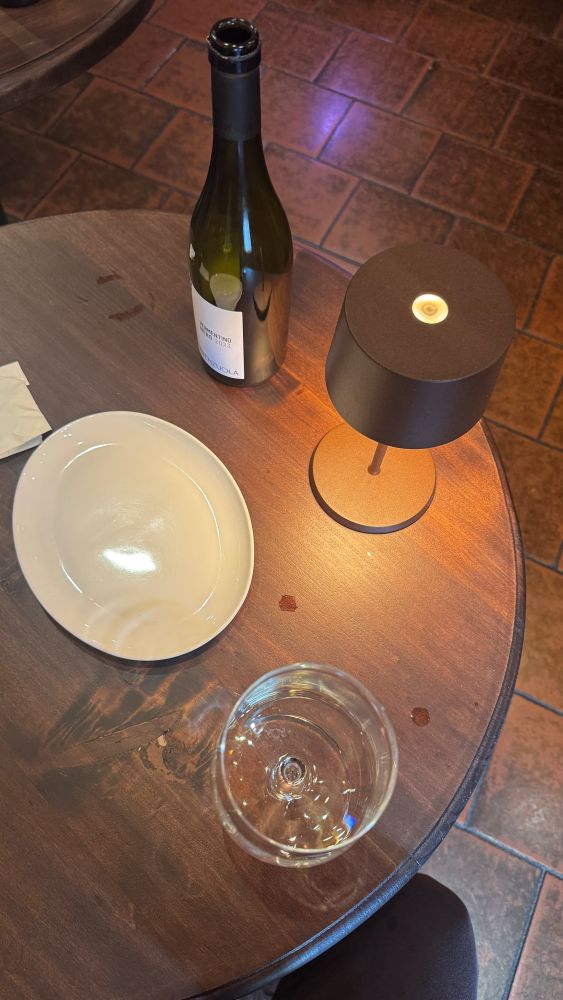
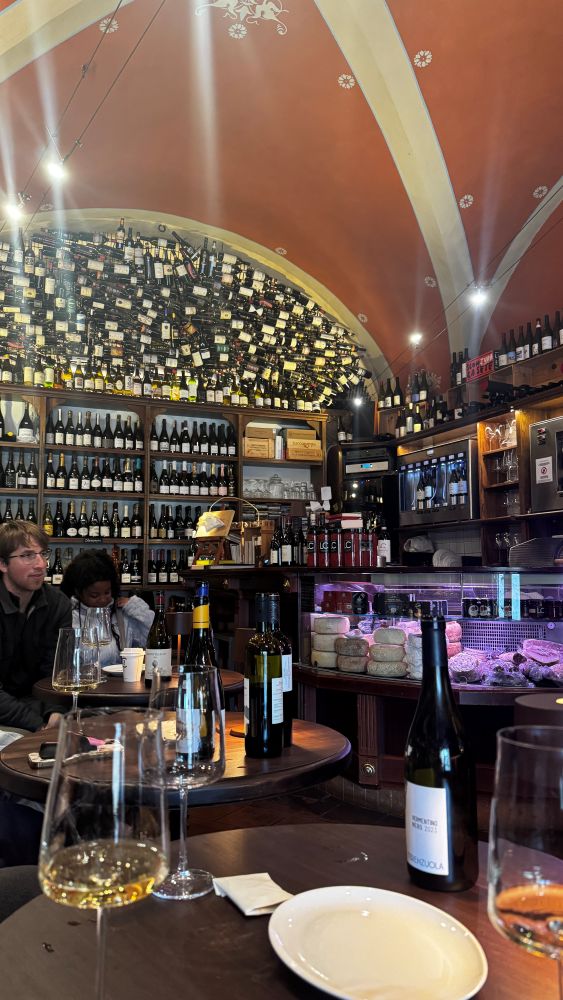
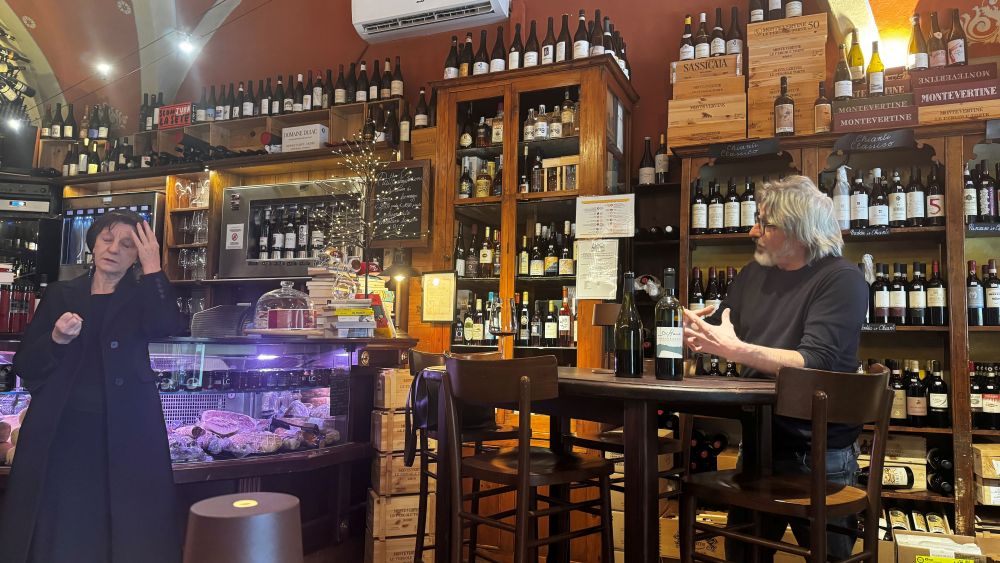
One of the highlights was participating in a wine tasting hosted by Massimo, which gave us a deeper appreciation for local culture and traditions.
Overall, our class time in Volterra was an incredibly meaningful and memorable part of the trip. From hands-on learning in museums and archaeological sites to sketching in the open air and exploring the city’s rich history, every experience helped bring our studies to life. It was a unique opportunity to connect with the past in a real and tangible way, while also enjoying the culture, scenery, and everyday moments that made our time so special.
Until next time,
The Volterra Group