
A Trip Worth Taking: Siena in a Day
With an early morning train and a bus transfer, our group finally made it into Siena!
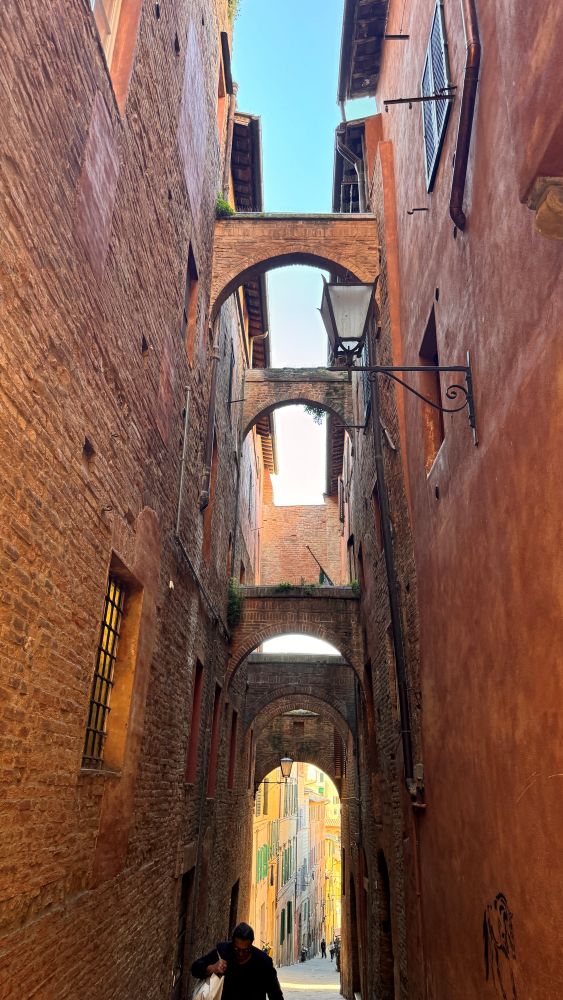
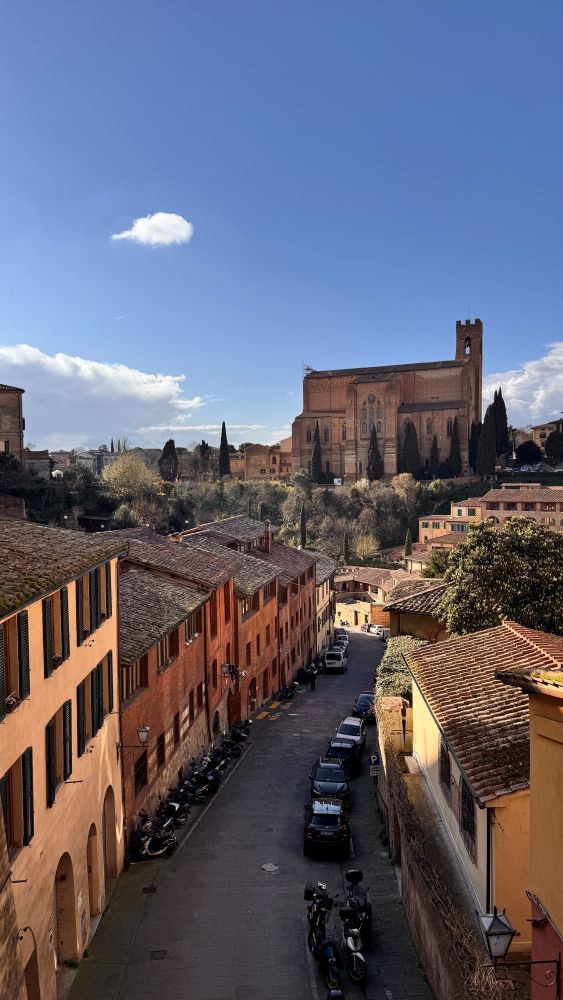
As soon as we arrived, we were immediately struck by the iconic ‘burnt Siena’ buildings, this is actually where the color gets its name. Reddish-brown clay found in the region was heated, or ‘burnt,’ to create a deeper, richer red-brown pigment known today as burnt sienna.
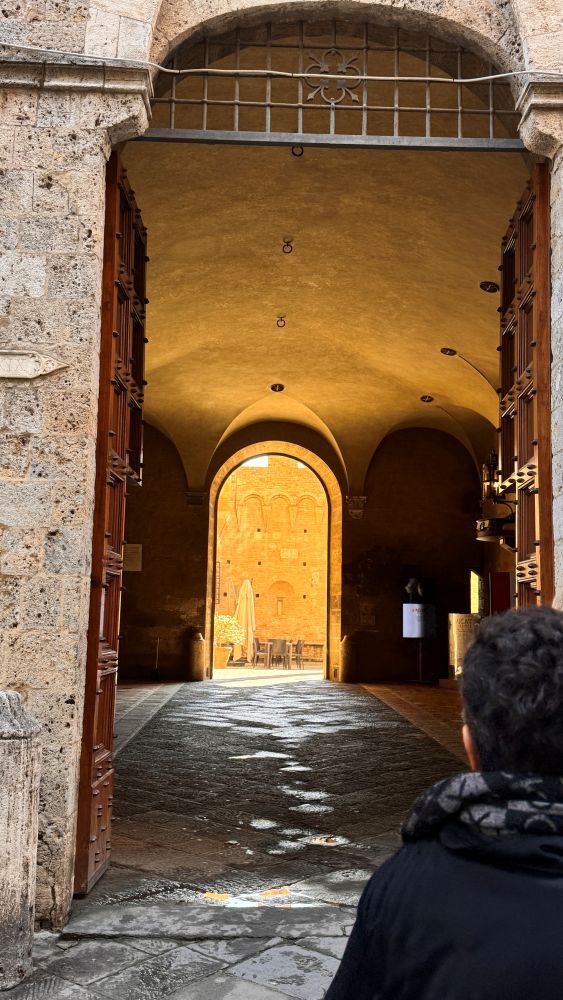
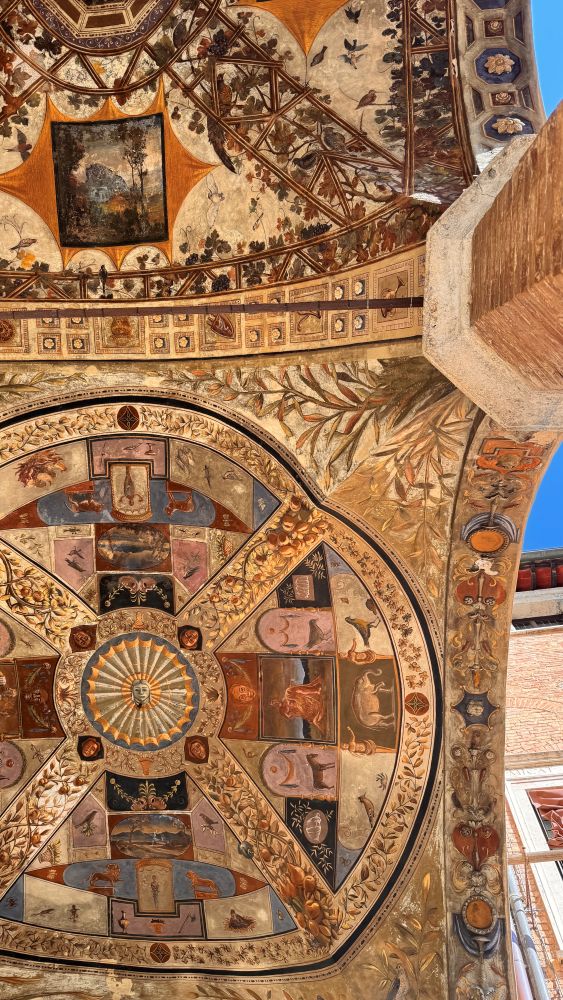
We began by peeking into Palazzo Chigi-Saracini, a striking palace built by the Marescotti family in the heart of Siena. Today, it is home to the Accademia Musicale Chigiana, a prestigious music institution.
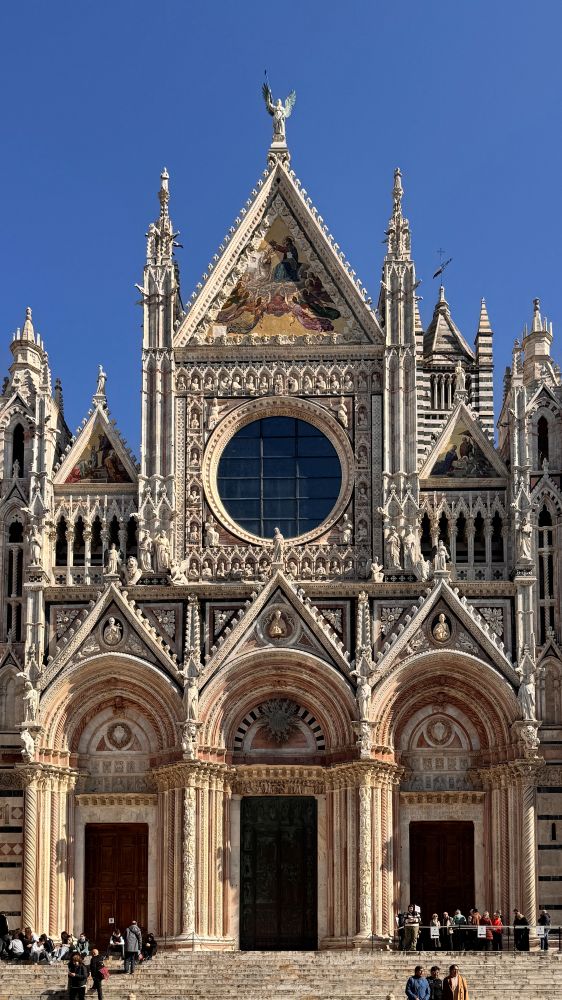
Next, we visited the cathedral, where the façade required careful observation and admiration. You can clearly see how long the cathedral took to construct through its changing architectural styles. The lower portions and areas around the doors reflect Romanesque characteristics, such as thick walls, round arches, and bold sculptural elements. Upwards, the style shifts toward the medieval Gothic, with pointed arches and a stronger emphasis on verticality. One subtle but helpful clue to this transition is the slight off centering of the columns.
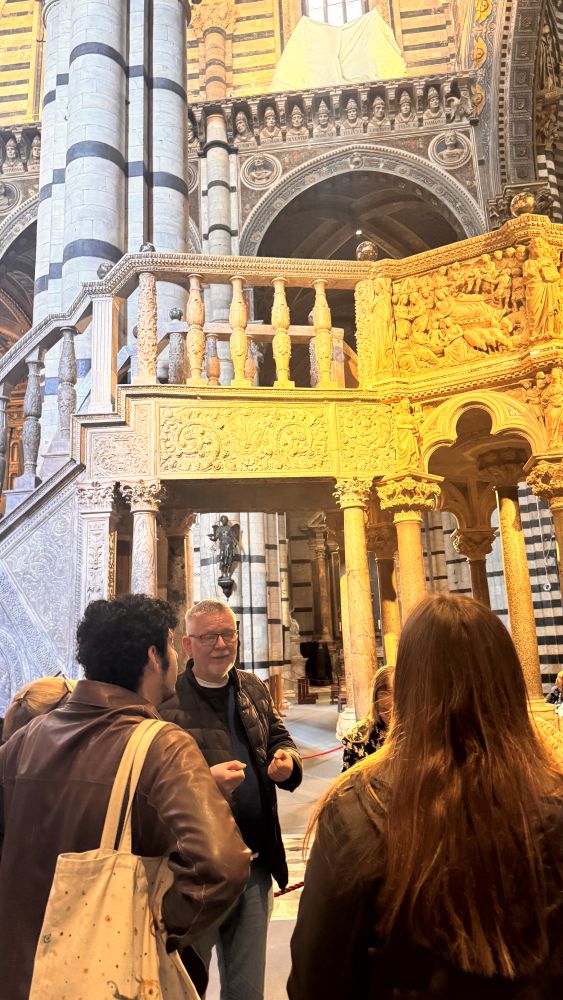
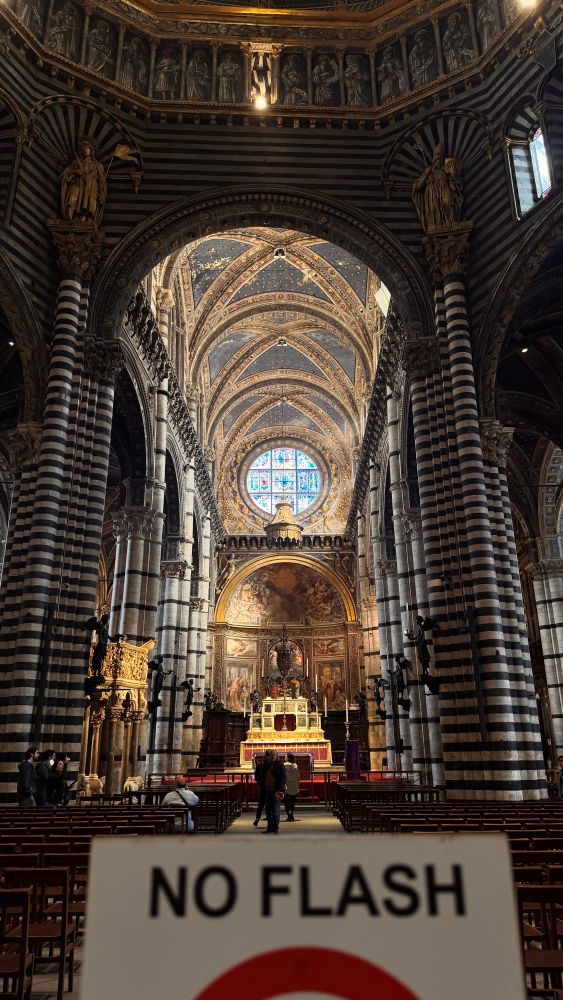
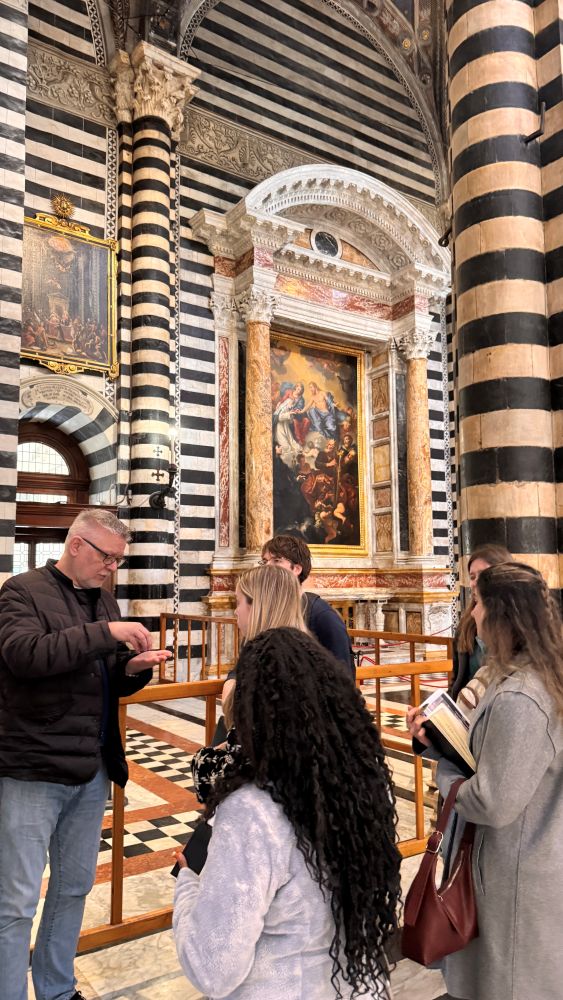
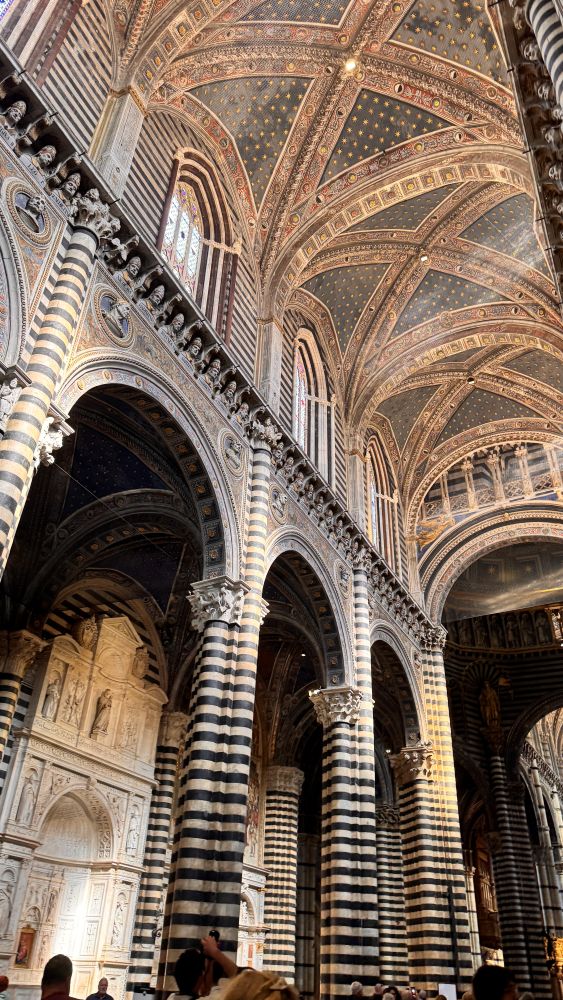
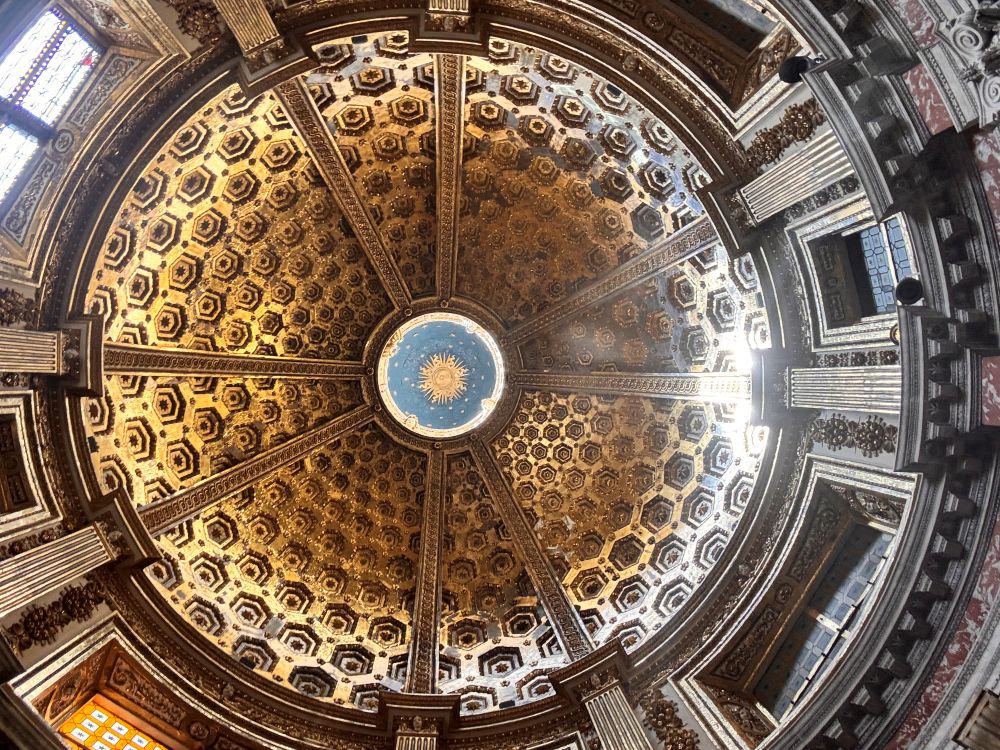
Inside, the cathedral is richly decorated and visually stunning. Black and white striped marble walls and columns define the space, while the intricately detailed inlaid marble mosaic floors feature symbolic scenes. Light filters through the windows and reflects off the painted ceiling, which is covered in gold stars, creating a dramatic contrast between dark and light materials. The overall effect feels layered and almost theatrical.
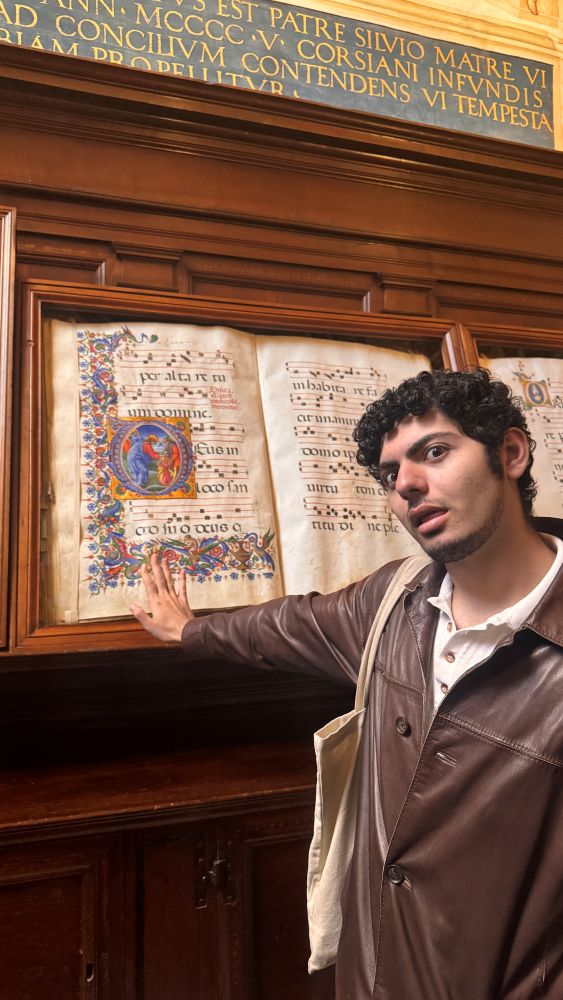
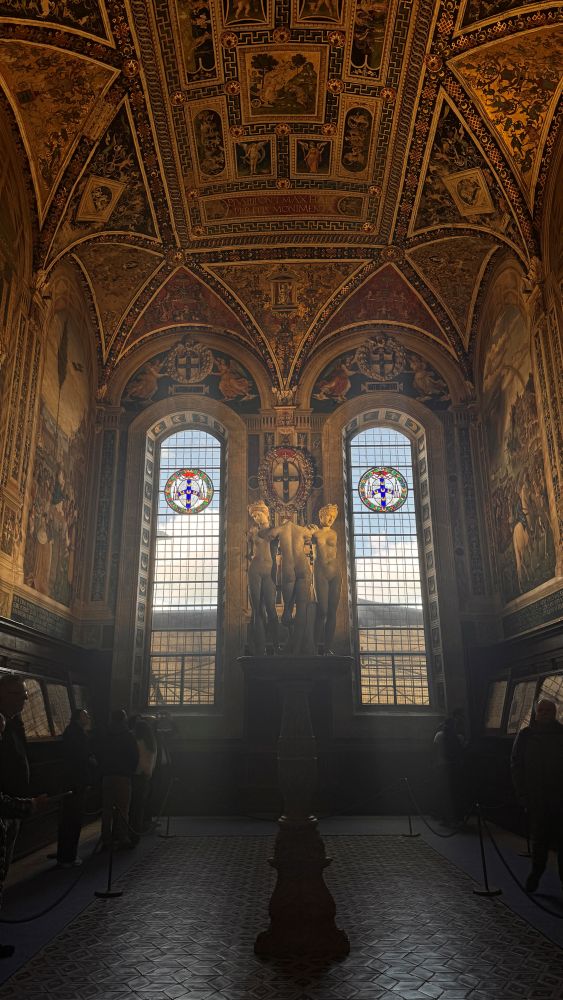
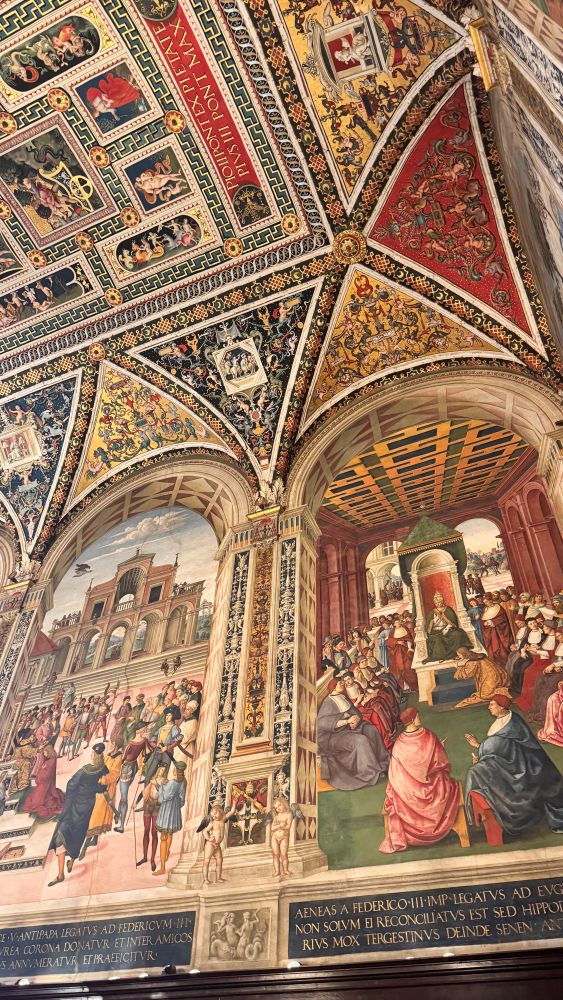
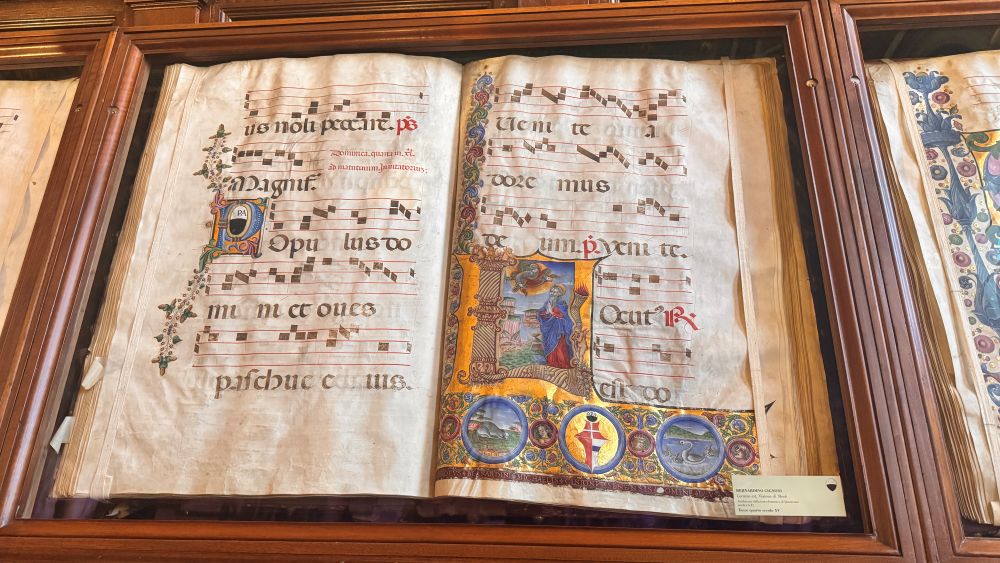
One of the most memorable spaces for our group was the Piccolomini Library. The massive choir books were almost comically large. Because books were so expensive to produce, only one copy would be made, so the text had to be large enough for the entire choir to read at once.
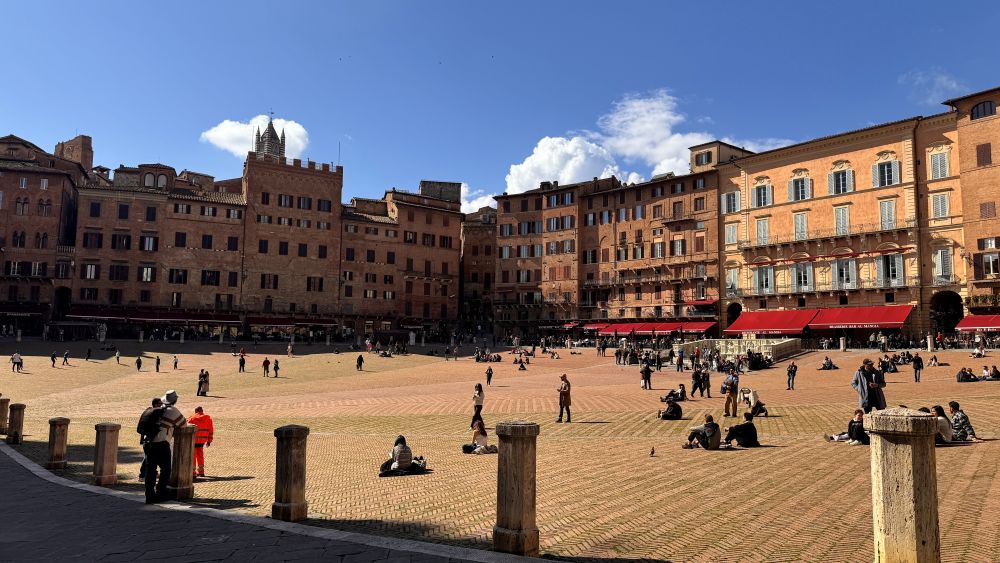
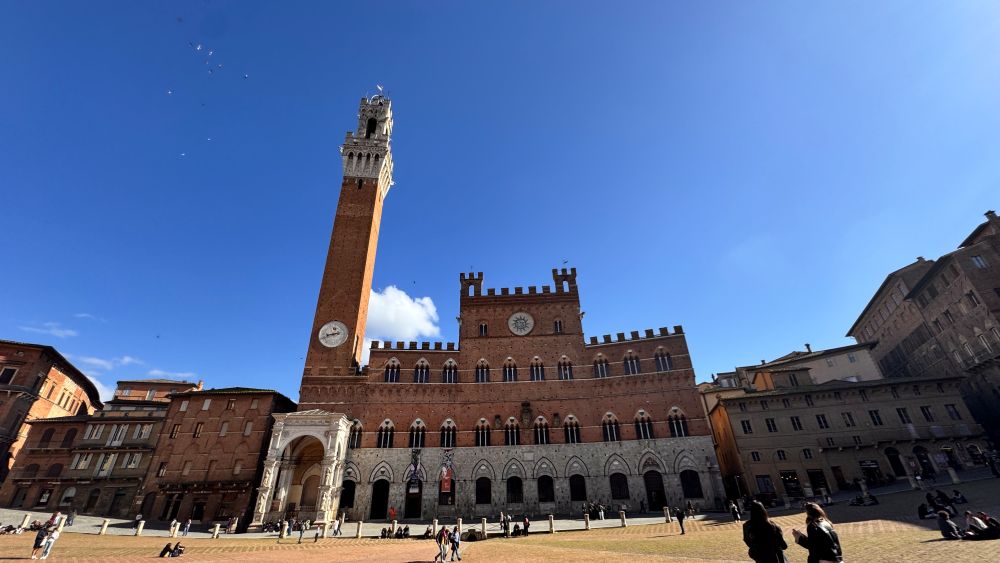
We then made our way to the town hall, the Palazzo Pubblico. Historically, it served as the center of political power, where officials governed the city and managed public affairs, and it still functions as Siena’s town hall today. In front of it lies the Piazza del Campo, a uniquely designed shell-shaped space that slopes gently toward the palace, creating a natural amphitheater. It has long been a gathering place for markets, celebrations, and political events, and it continues to play a central role in the city’s life. The piazza is also home to the famous Palio di Siena, a traditional horse race held twice each summer.
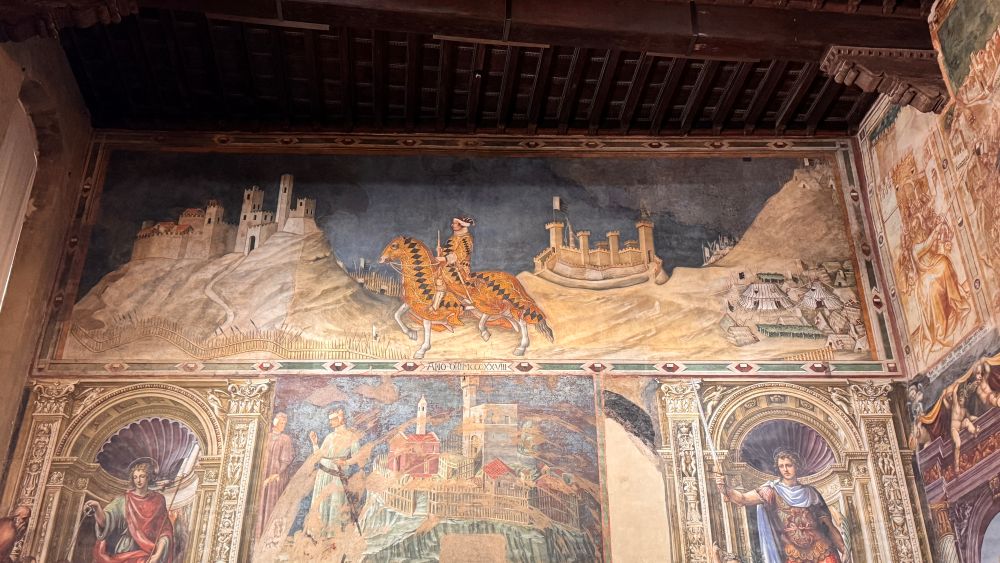
Inside the Palazzo Pubblico are remarkable frescoes, including the Allegory of Good and Bad Government by Ambrogio Lorenzetti, which illustrates the effects of just and unjust rule on society. One piece our group especially liked featured what is considered one of the earliest depictions of a civilian man on horseback. Unlike typical works of the time, it doesn’t portray a saint or noble figure, but rather a soldier. His colorful, detailed clothing suggests pride and skill, highlighting a shift in subject matter.
We ended the day with gelato, walking, and relaxing in the piazza. Siena made for an incredible day trip, and we would absolutely recommend adding it to any travel list. The community clearly takes pride in its heritage, and that pride is beautifully reflected throughout the city.
Until next time,
The Volterra Group