
Lost in the Forum: Rome Day 3 + 4
Rome was already awake, even if we weren’t after yesterday.
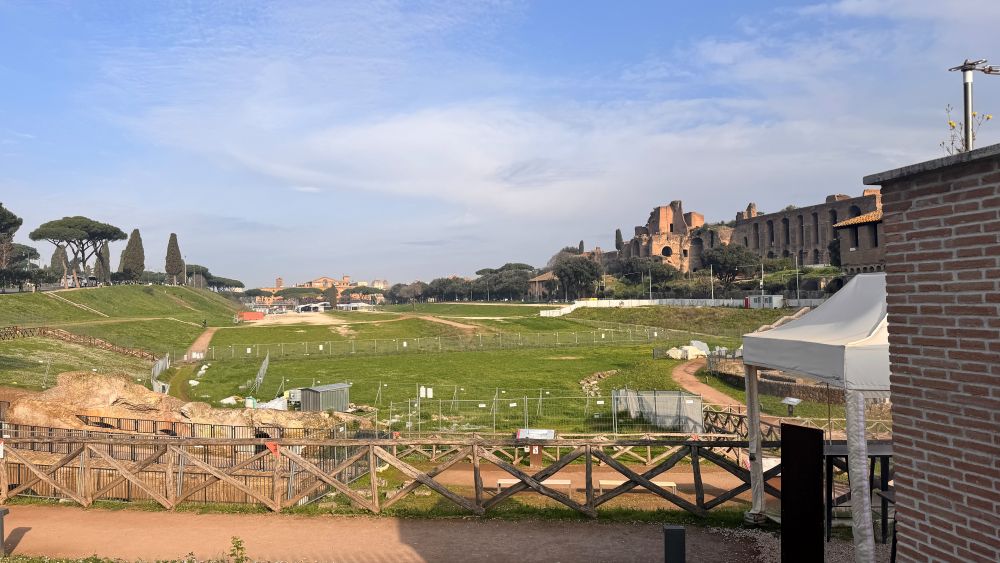
We began by passing the Circus Maximus, located right near where we were staying. Once the largest stadium in ancient Rome, it was primarily used for chariot races and public games. Today, it’s a wide open space rather than a preserved structure, where people can walk freely. During our stay, we even noticed a golden retriever that seemed to frequent the park for playtime.
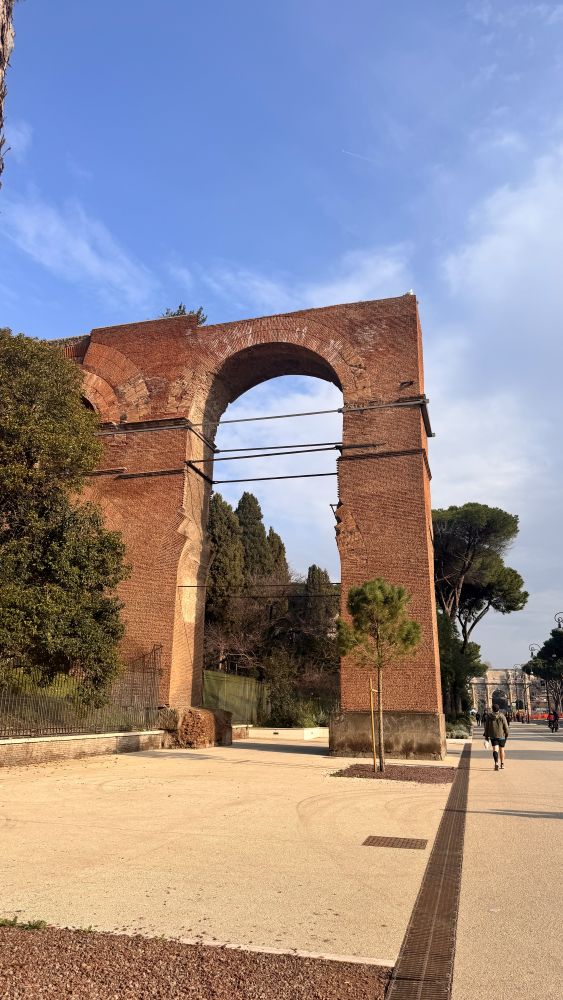
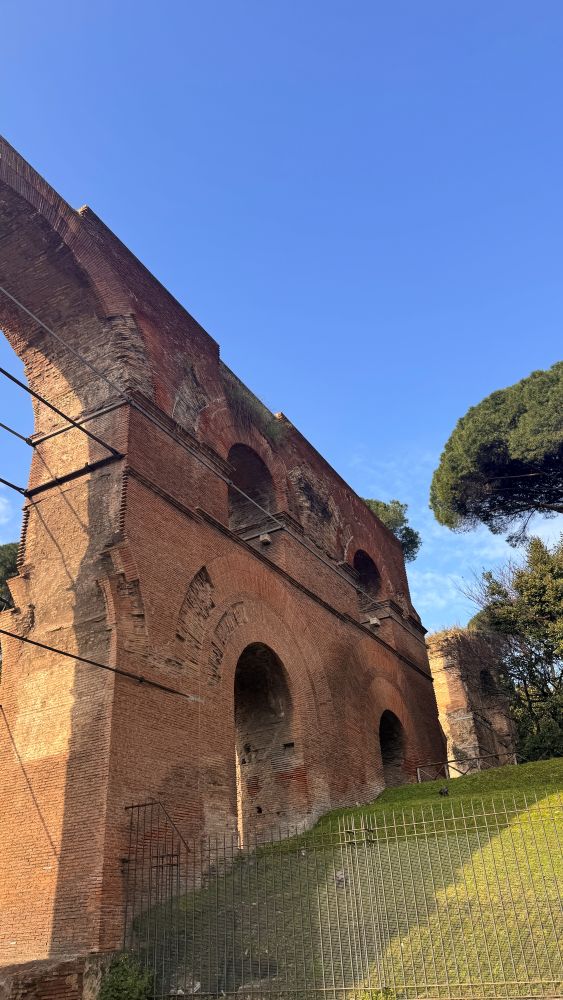
As we continued walking, we passed ancient aqueducts, large, arched conduits that transported water from distant sources into cities and towns. Carefully sloped, they supplied water to public baths, fountains, latrines, and private homes.
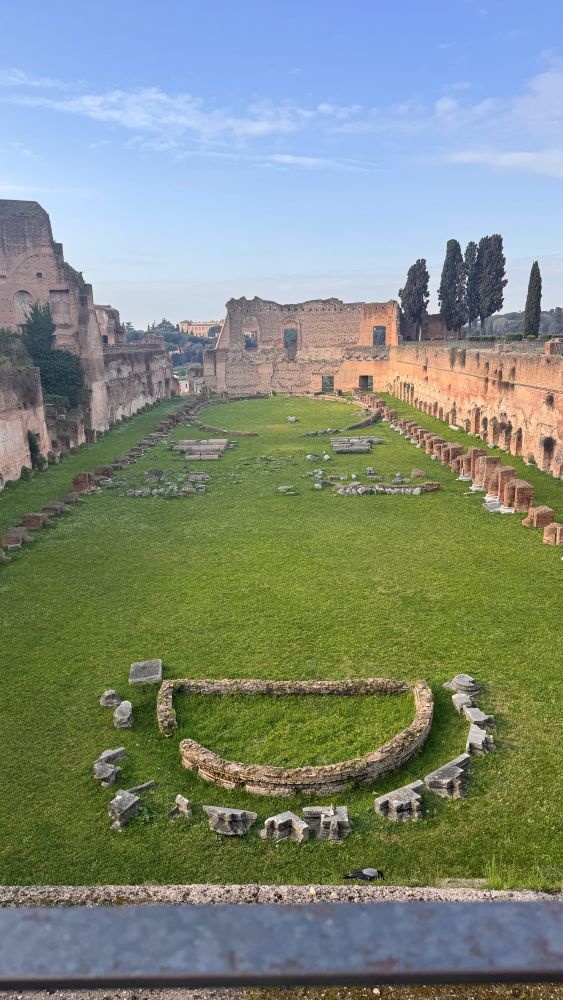
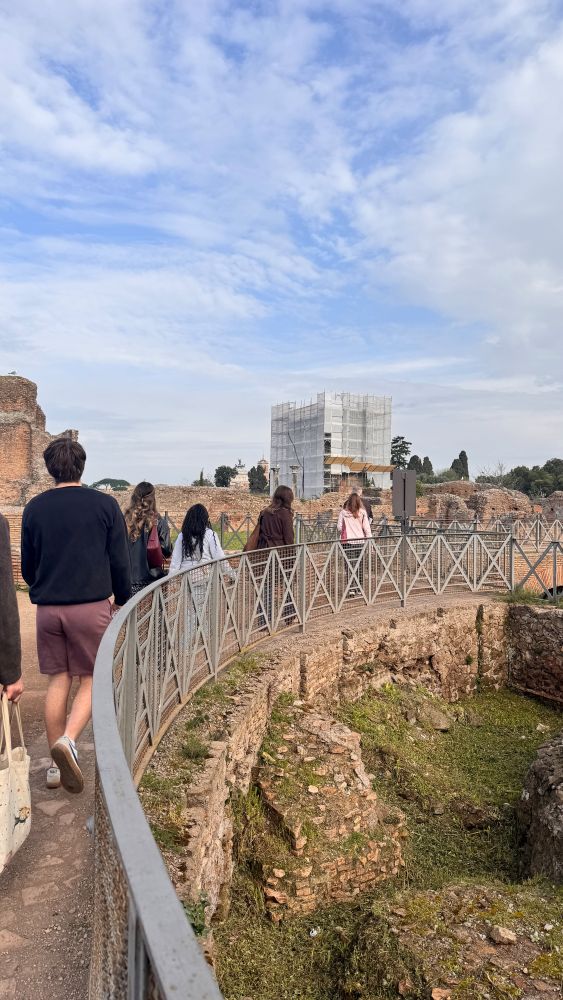
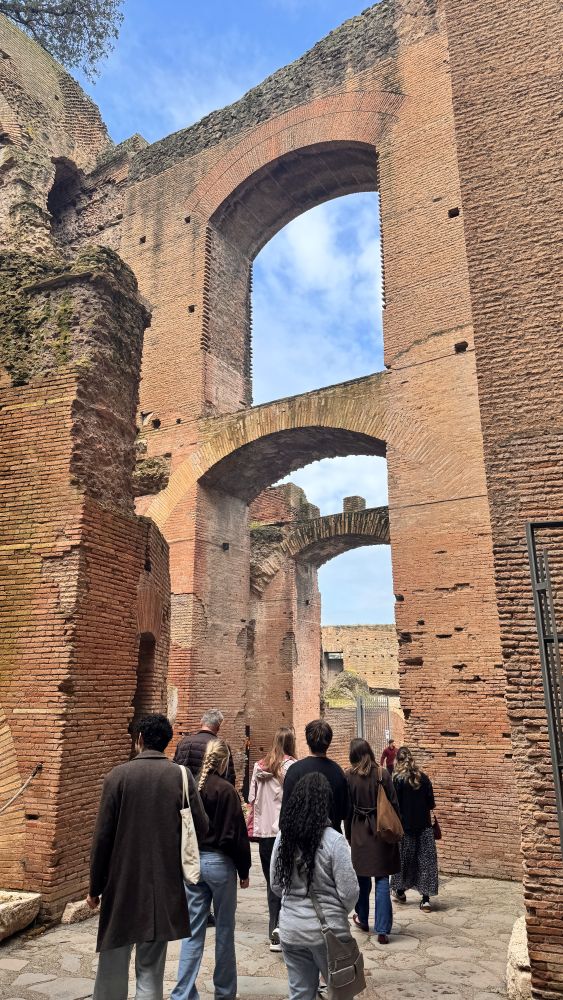
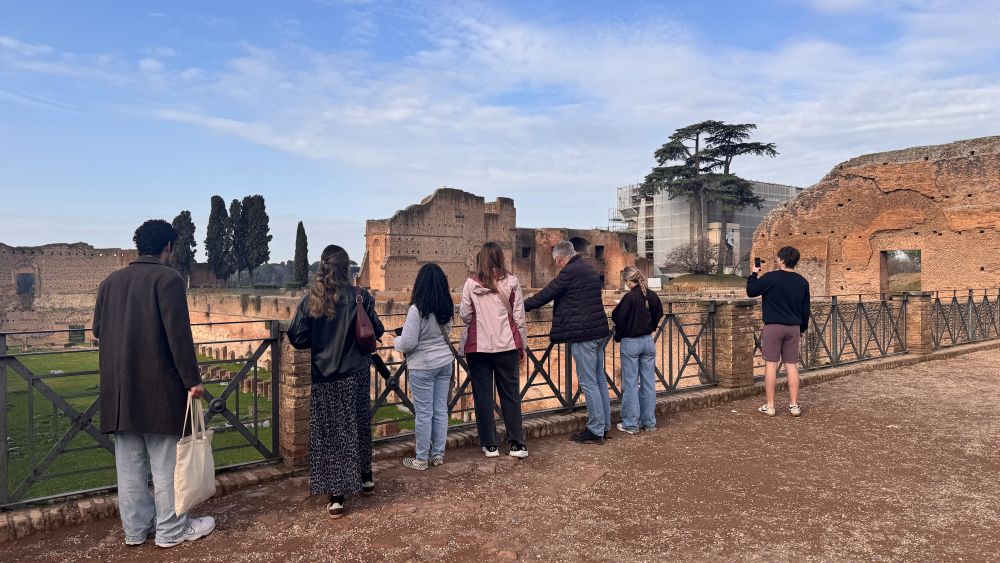
We then arrived at Palatine Hill, or according to the group next to us, the “Beverly Hills of Rome.” One of the city’s seven hills, it is known as the birthplace of Rome and was home to emperors due to its prime location overlooking the Forum. Rulers like Augustus, Tiberius, and Domitian built grand palaces here, complete with spaces for both public use and luxurious gardens.
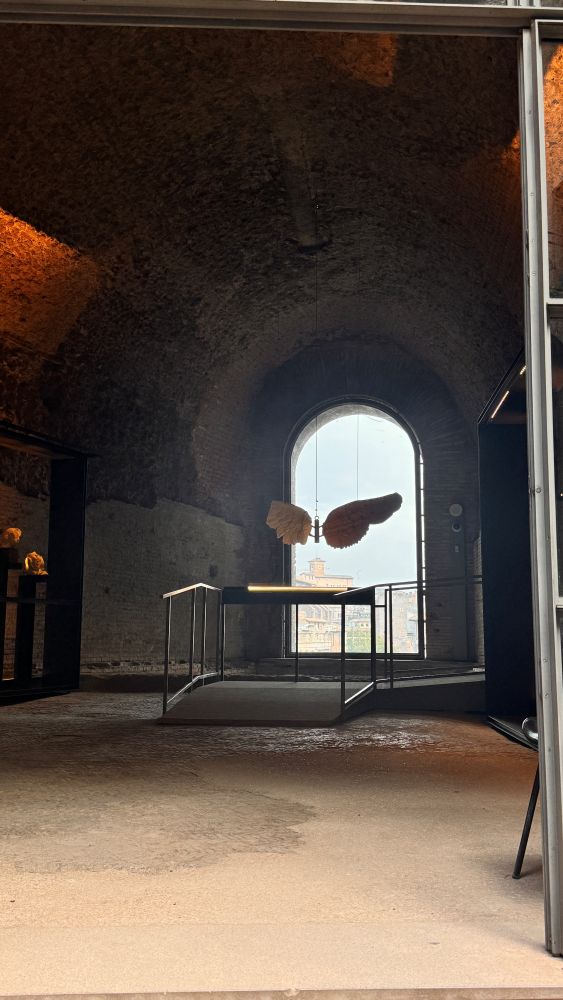
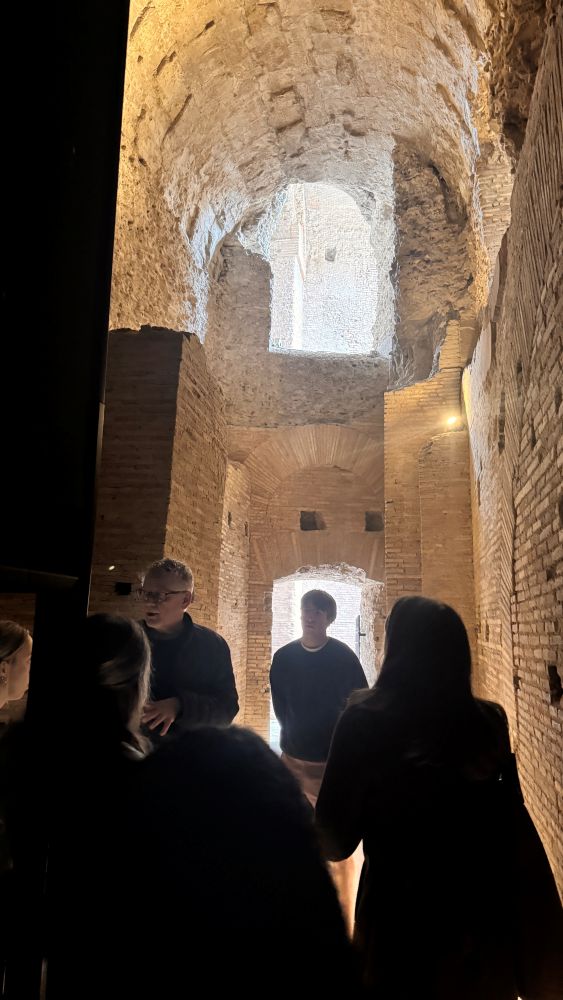
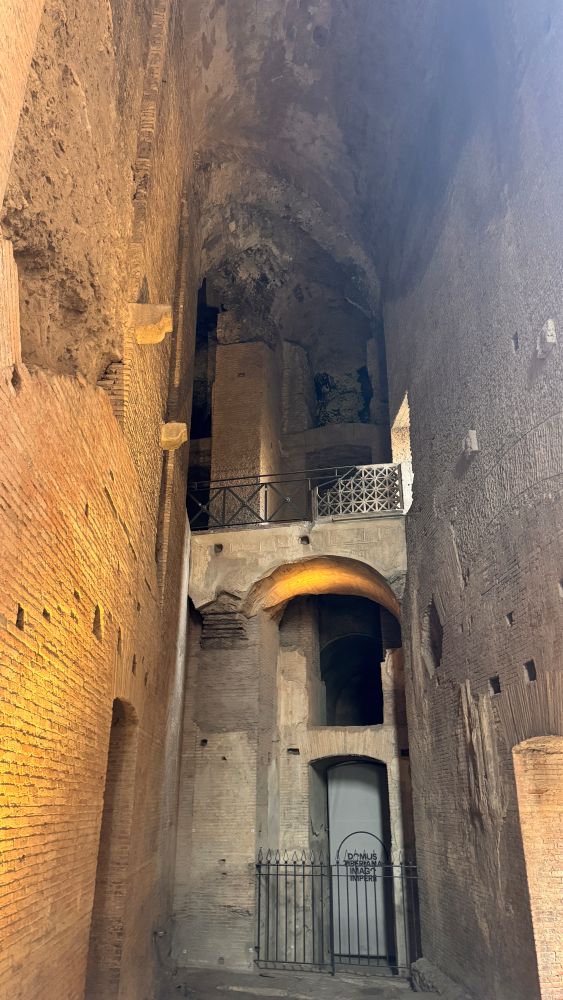
As we made our way down the hill, we were treated to beautiful views that showed how the Romans used this space both within and around the hill. Along the way, we passed a display of a statue of Nike, or what remains of it. The way it was presented, with dramatic backlighting, was stunning and brought our entire group to a stop.
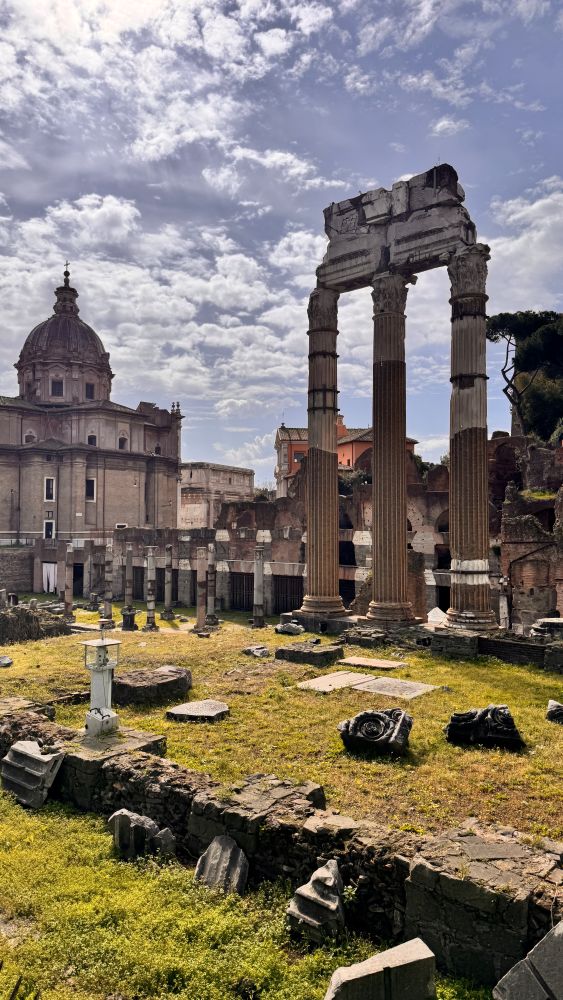
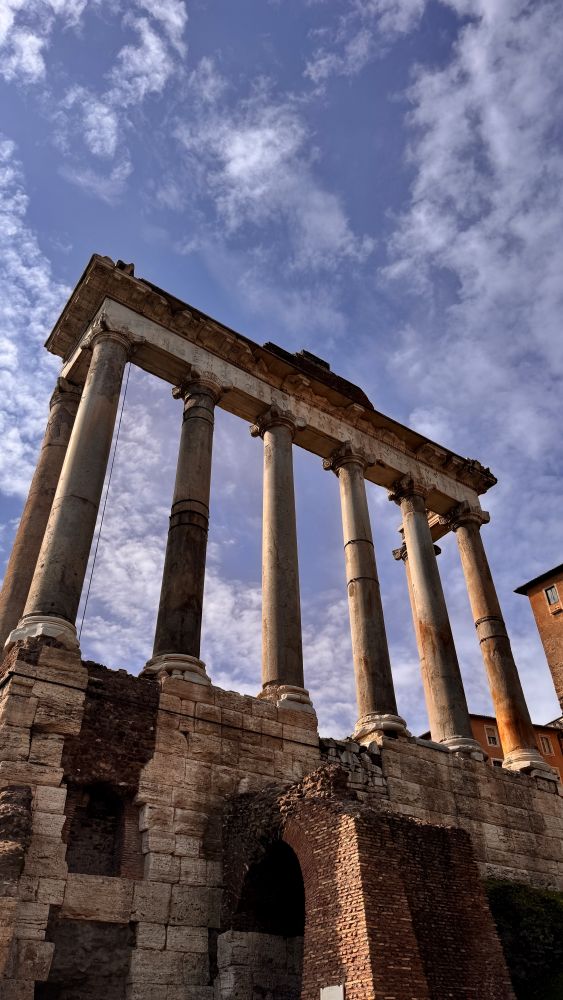
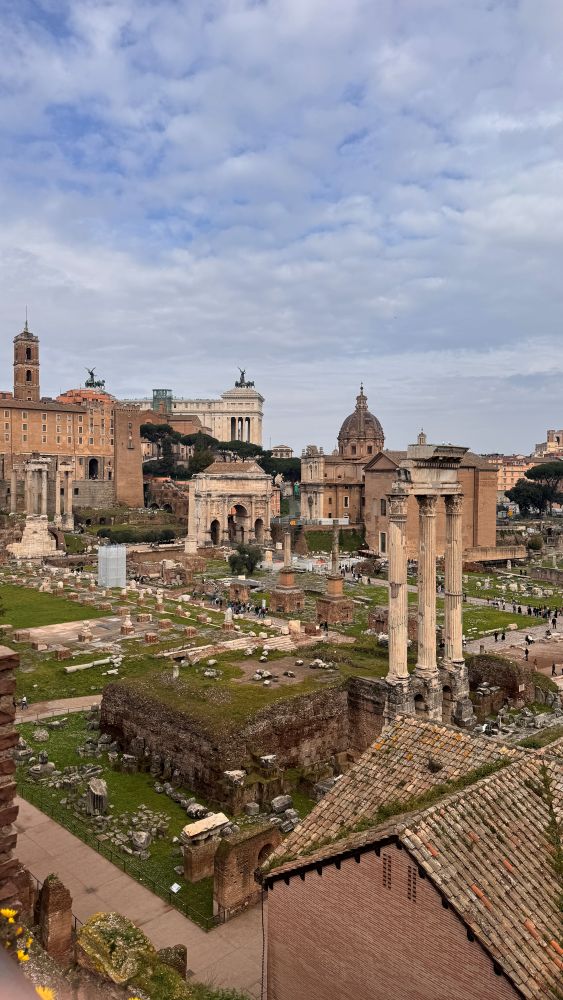
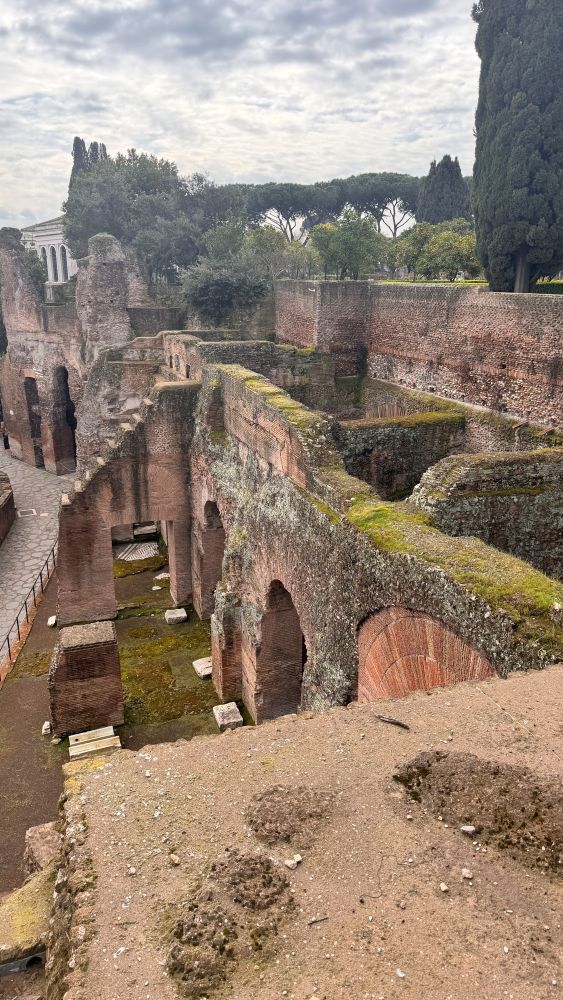
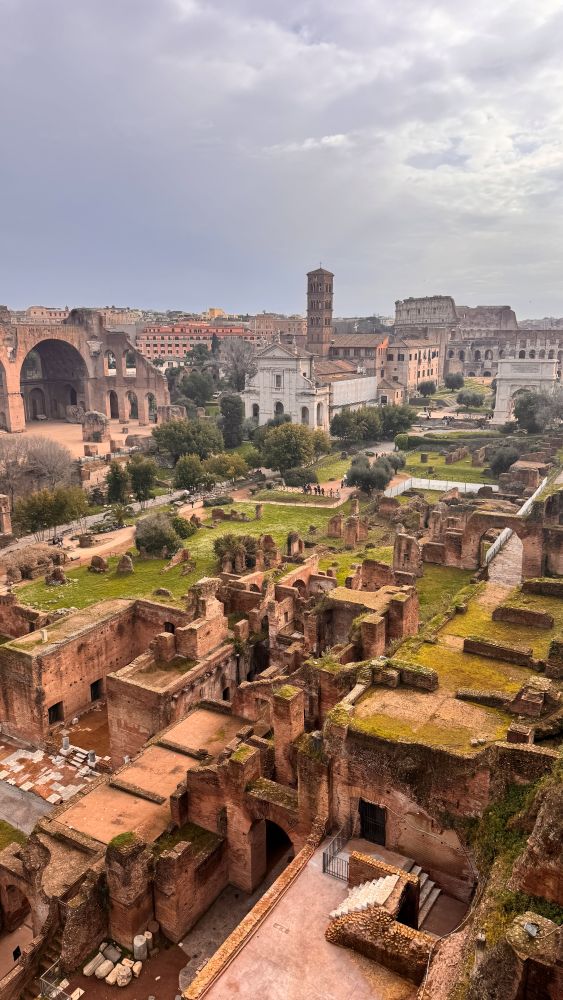
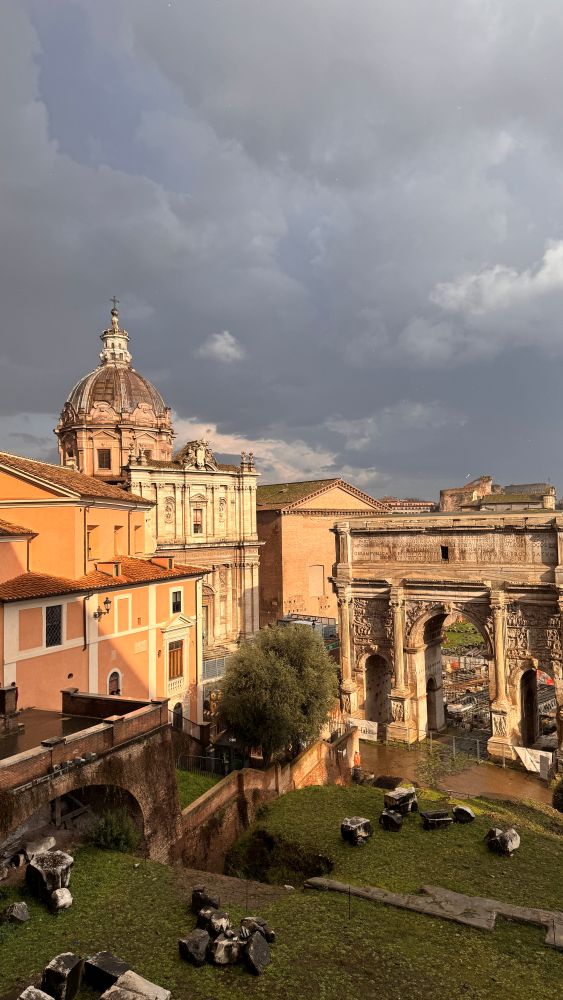
At the bottom, we reached the heart of the Roman Forum, the valley between the Palatine and Capitoline Hills. We passed the Temple of Saturn, a classic example of Roman architecture, as well as the House and Temple of the Vestal Virgins. The Vestal Virgins were priestesses who served the goddess Vesta by maintaining the sacred eternal flame and taking vows of chastity. For over a thousand years, the Forum was the center of Roman life. Here, people conducted business, held trials, honored their gods, and listened to speeches. Leaders like Julius Caesar and Cicero spoke to the public, making it a hub of political activity.
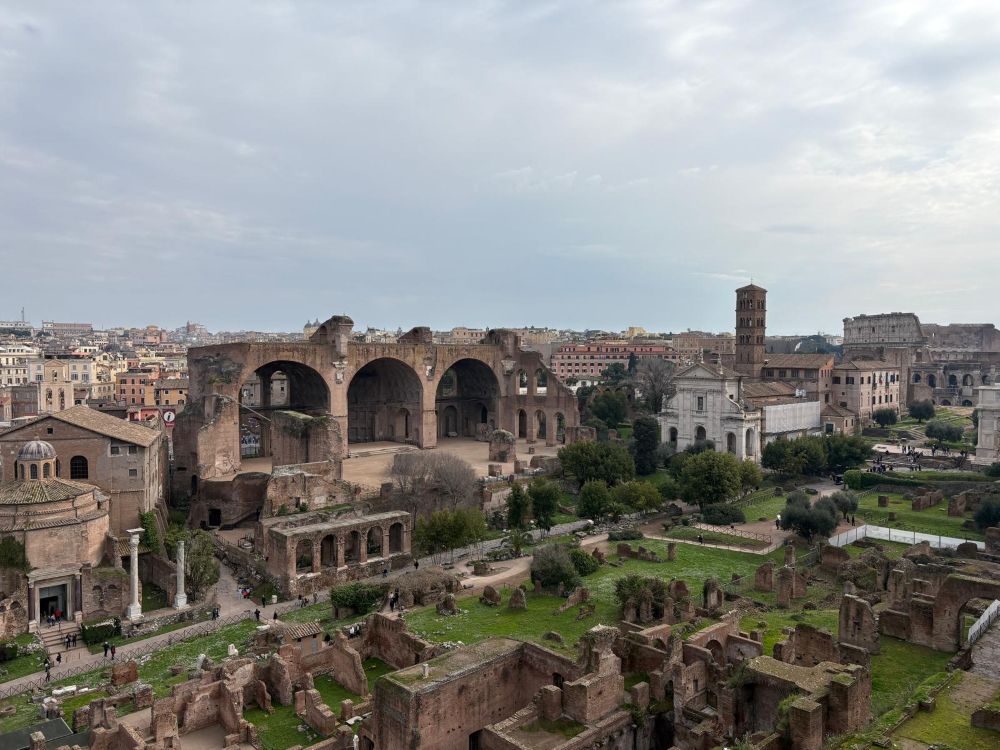
The Forum contained nine temples and three major basilicas, the most impressive being the Basilica of Maxentius and Constantine, built in the 4th century CE. Unlike earlier basilicas that relied on rows of columns, this structure used massive concrete vaults inspired by Roman bath complexes, with a central nave rising to about 25 meters, an incredible feat of engineering for its time.
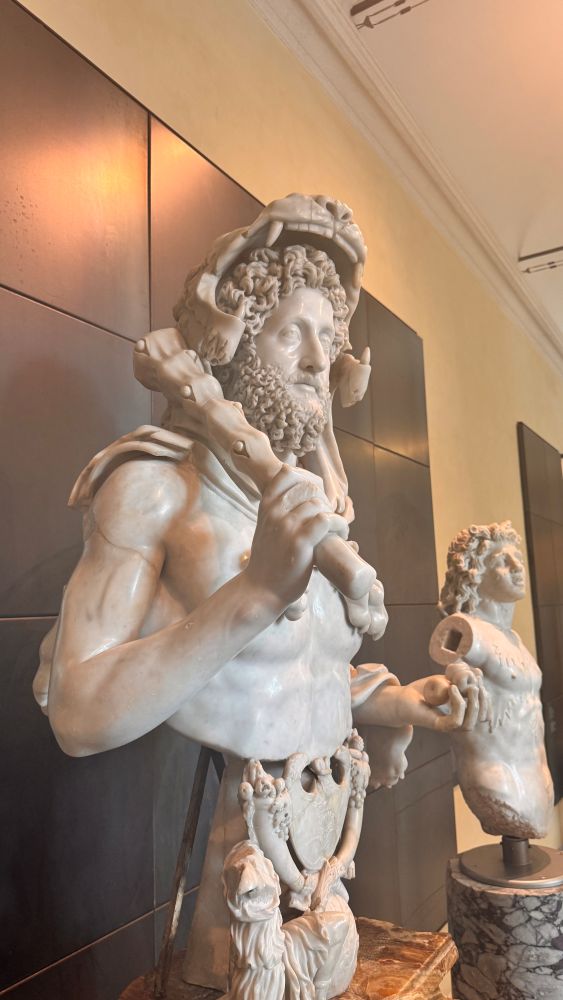
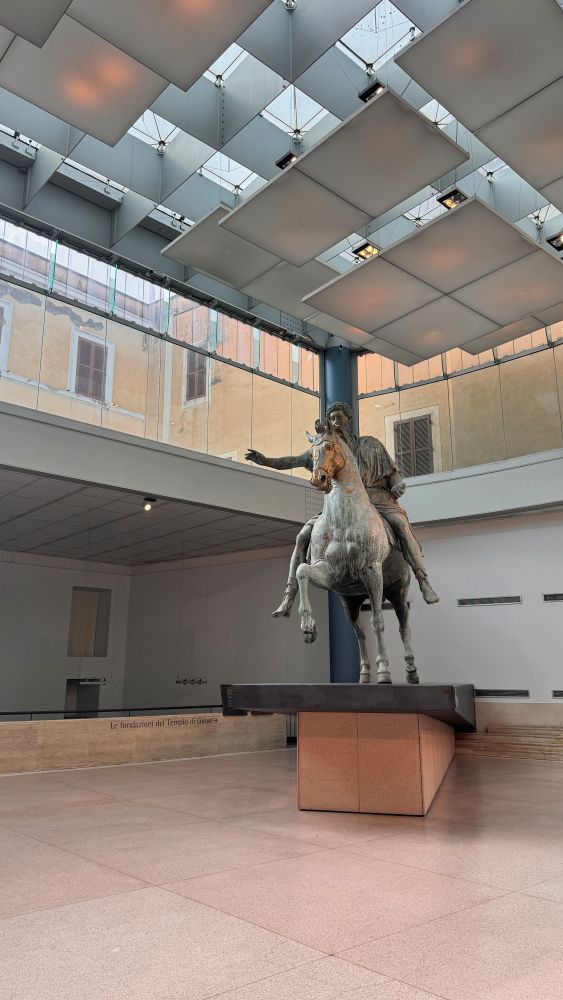
Our next stop was the Capitoline Museums, an art and archaeological museum located on Capitoline Hill, overlooking the Roman Forum. The museum preserves the remains of the Temple of Jupiter Optimus Maximus, including architectural fragments, decorative elements, and parts of its foundation. It was incredible to learn that this grand temple is believed to have been more Etruscan than Roman in style, a fact that made us Volterrians feel especially proud.
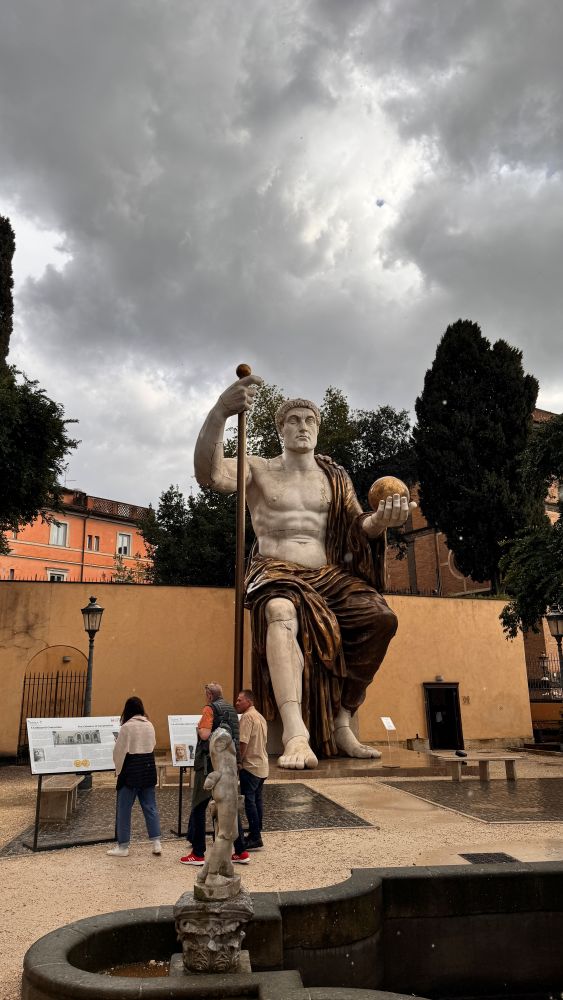
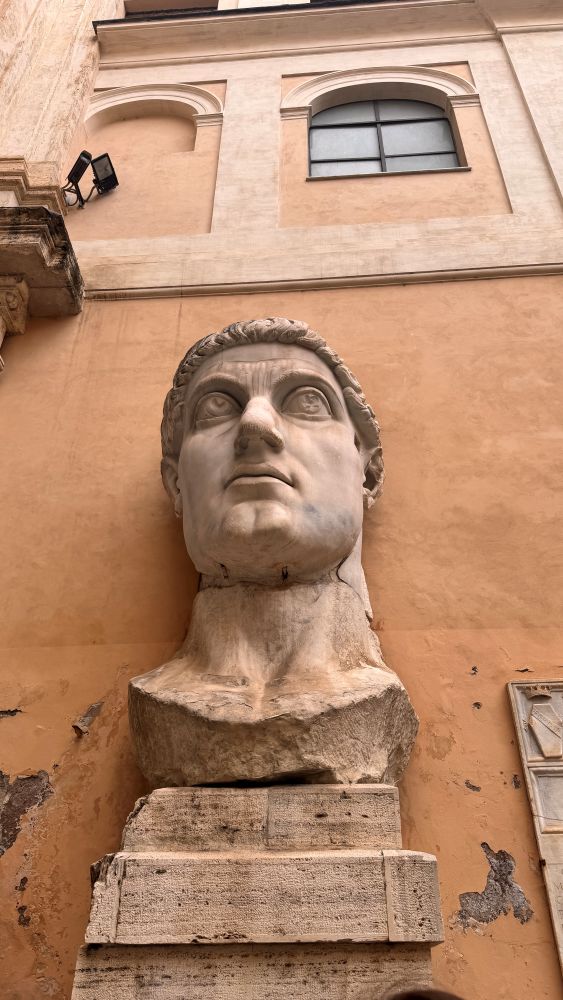
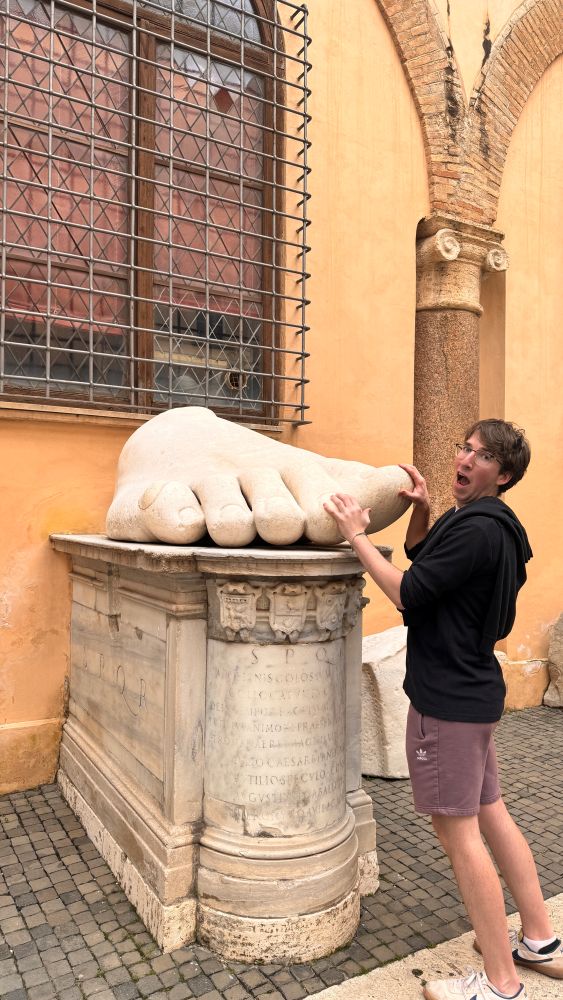
A particularly memorable part of the museum was the Colossal Statue of Constantine. Inside, visitors can see the recovered remnants of the statue, which once stood approximately 12 meters (40 feet) high. Outside, a fully reconstructed version gives a true sense of the figure’s immense scale and power. In its original form, the statue stood in the apse of the Basilica of Maxentius and Constantine, serving as a striking symbol of imperial authority.
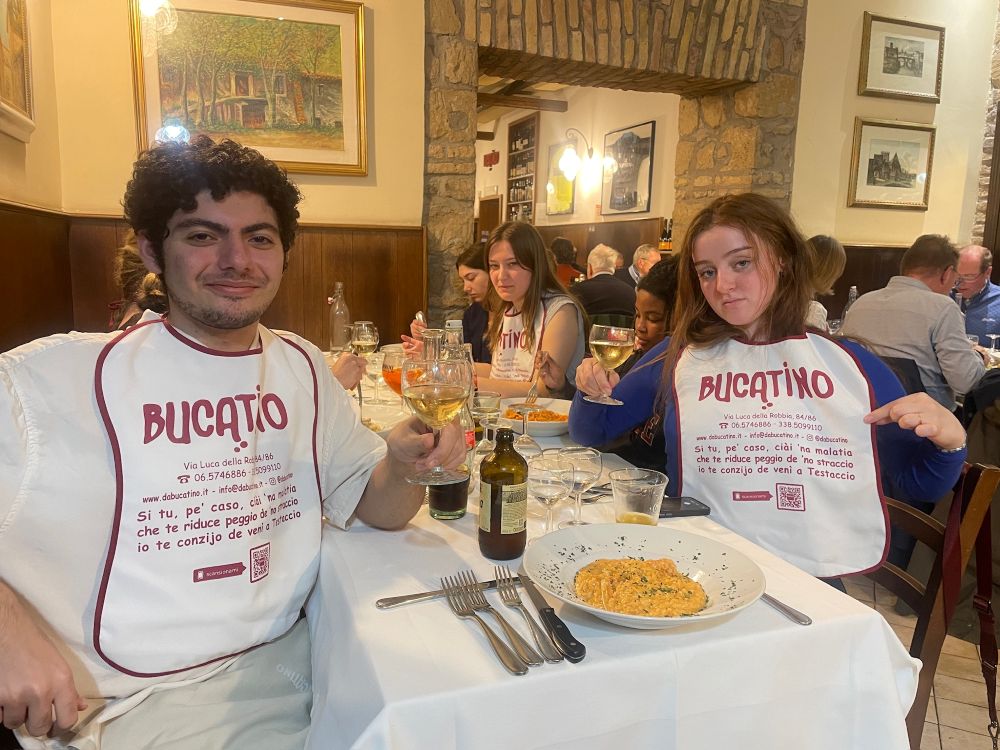
After class was over, the students went to a hidden gem for dinner called Da Bucatino. There, we ordered the house pasta. We were expecting a great pasta dish, but not the bibs that came with it. After a great meal, we had to head back and hit the hay to get up early for our final day.
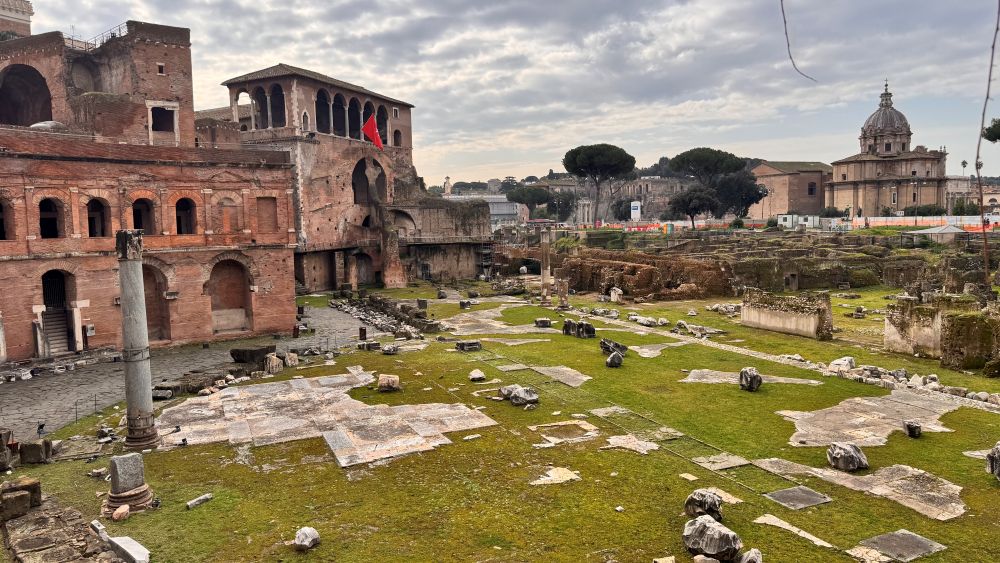
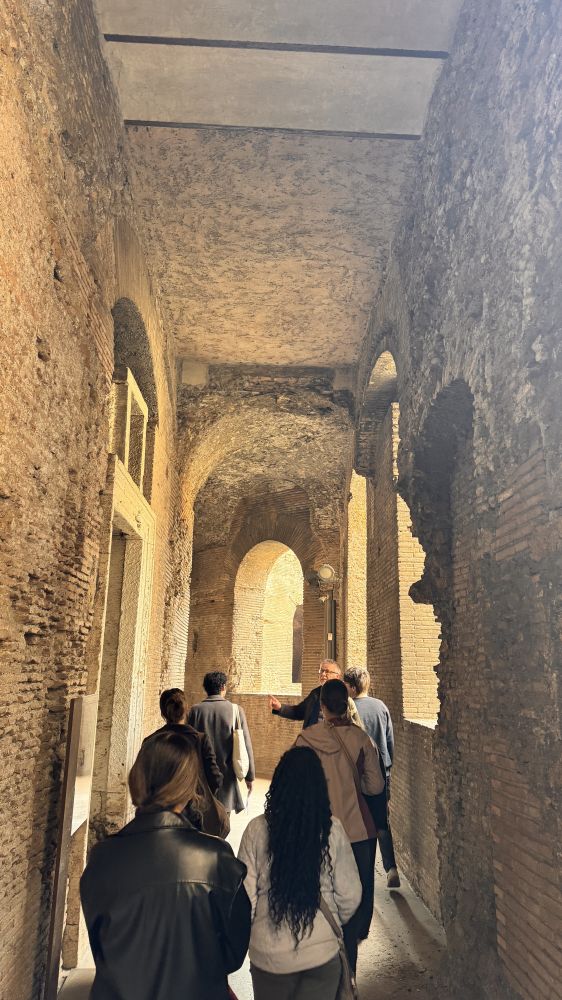
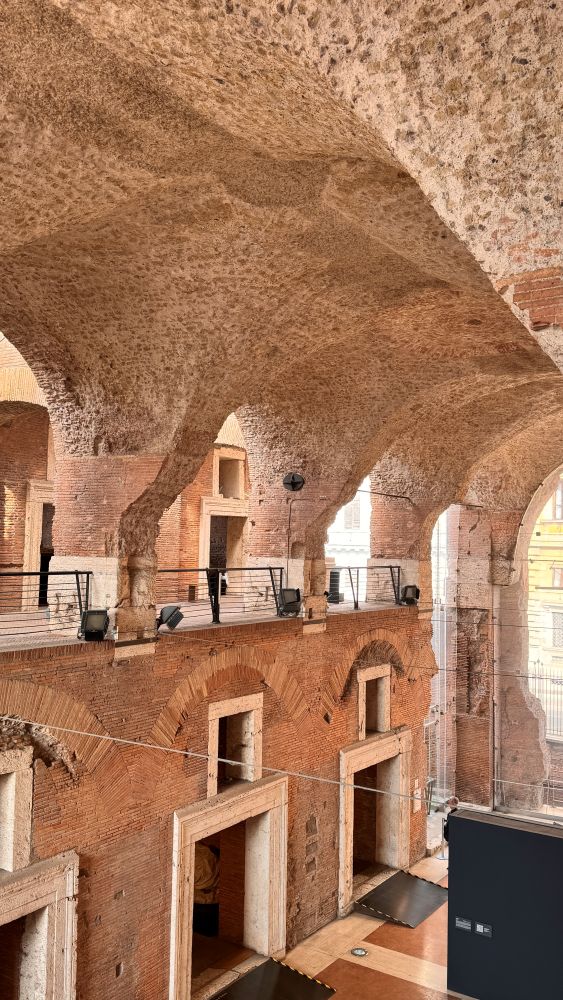
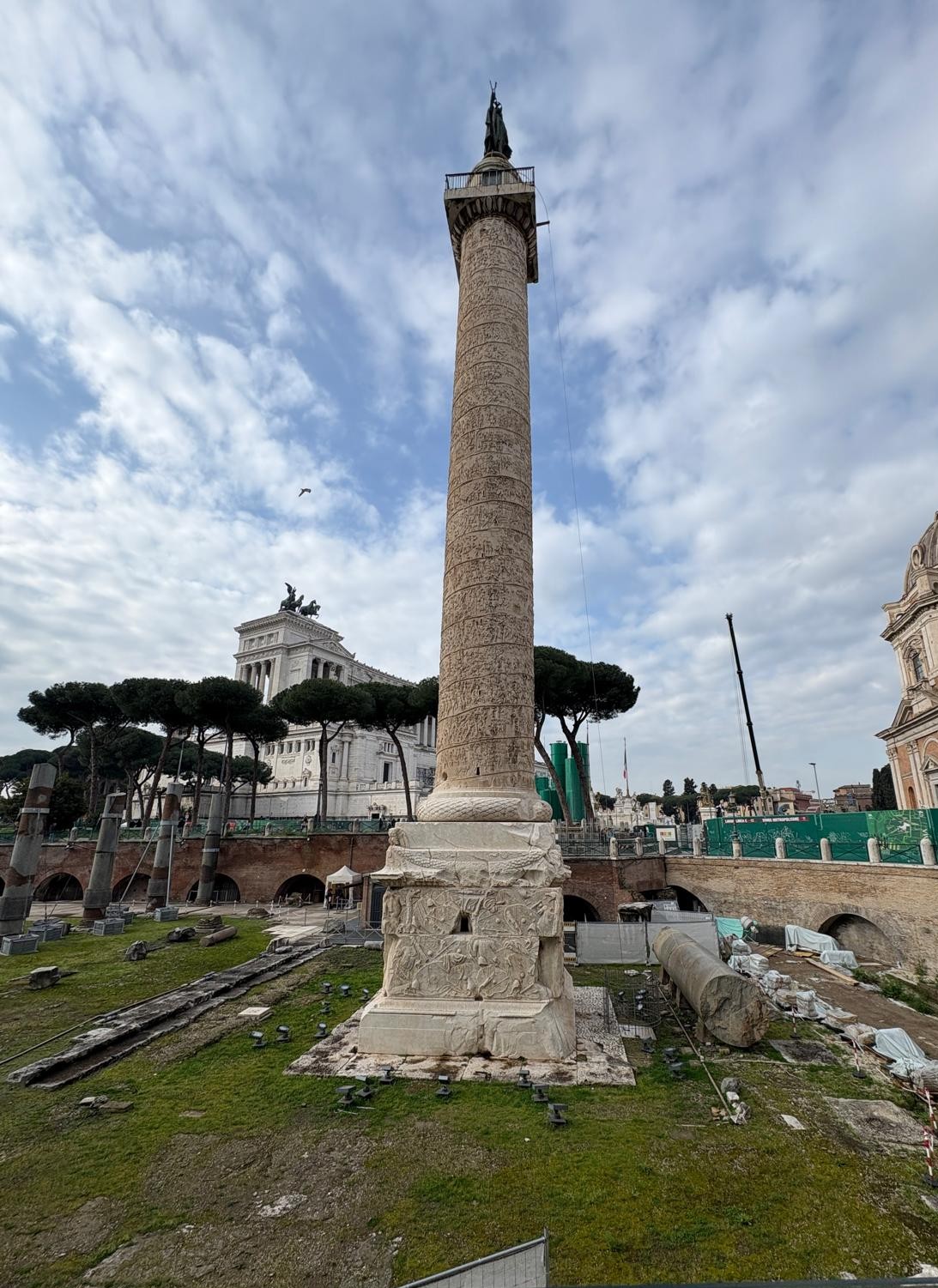
The next morning came quickly, where out group headed out to a surprise museum. On out way we stopped by Trajan’s column, a towering marble column built to commemorate the military victories of Trajan, famously wrapped in a detailed spiral relief depicting scenes from the Dacian Wars. Right next door was the surprise, the Trajan Markets. Located just adjacent to Trajan’s Forum, it was a massive multi-level complex built in the early 2nd century CE during the reign of Trajan, often considered one of the world’s earliest shopping centers. We are pretty sure Jonna and Wladeck noticed out group’s natural ability ot shop basically anywhere.
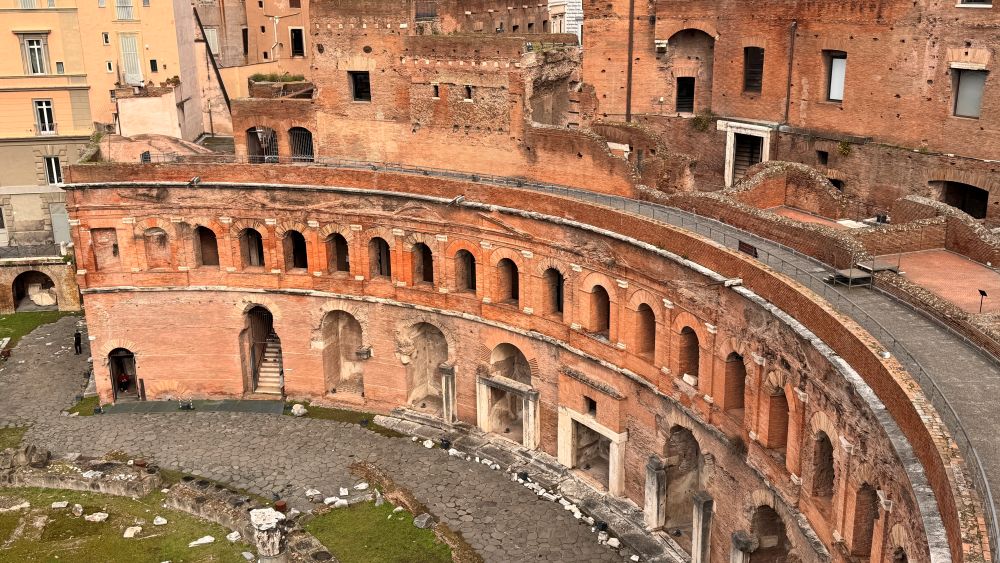
The markets housed shops, offices, and administrative spaces, reflecting the sophistication of Roman urban planning and economic life. Their semicircular shape allows the structure to fit into the slopes of the Quirinal Hill and provides magnificent views of the excavation projects and beautifully preserved Roman roads. Our group’s favorite part was walking through all the different levels of the structure, passing through the series of arcades, making the experience feel both massive in scale and incredibly well engineered.
Our group eventually made our trains and safely got back to Volterra. This weekend in Rome really reinforced some of the things we learned in our class. One of the coolest parts was gaining a deeper understanding of how Roman society functioned and what was happening at the time, which helped us appreciate the art and its significance even more. Four days is not enough time to explore a city like this, so for now, we say Arrivederci.
Until next time,
The Volterra Group