
Wow it’s like … really leaning!
We were finally able to go on our first class trip for Social, Culture, and Art History of Italy with Joanna and Wladyslaw. First up was Pisa, a simple bus to Pontedera, followed by a quick train transfer. Originally an Etruscan settlement, Pisa later became a Roman colony and developed into a significant port because of its location near the Arno River. During the Middle Ages, Pisa grew in power, with its control over important trade routes across the Mediterranean. This wealth allowed the city to build impressive monuments. Today, Pisa is known for its rich history, architecture, and cultural heritage.
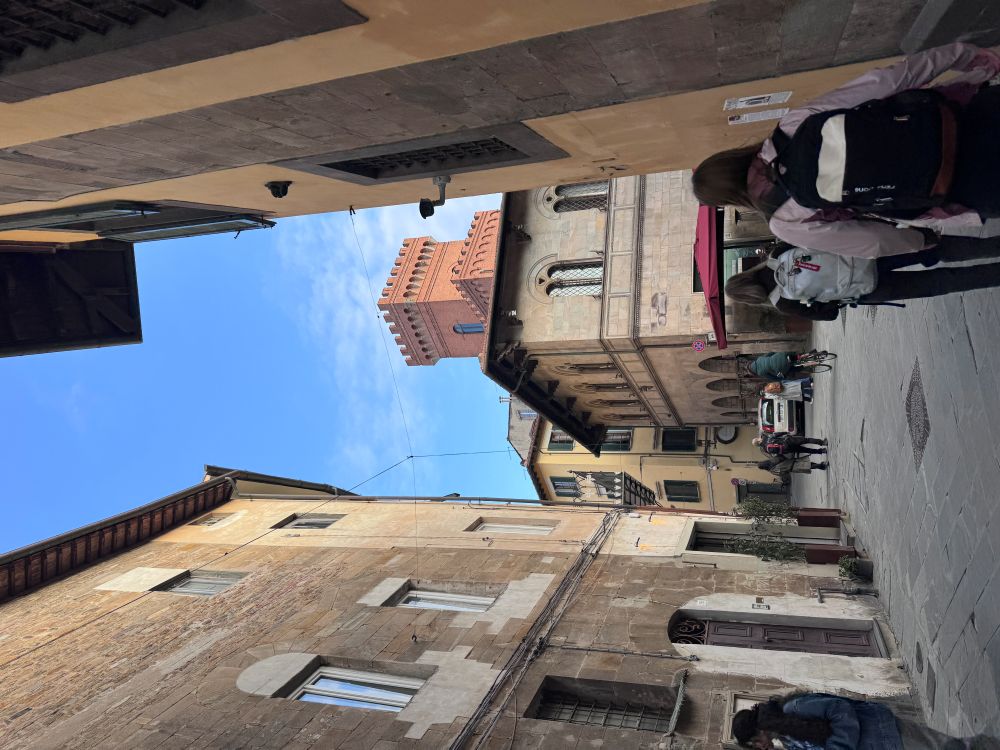
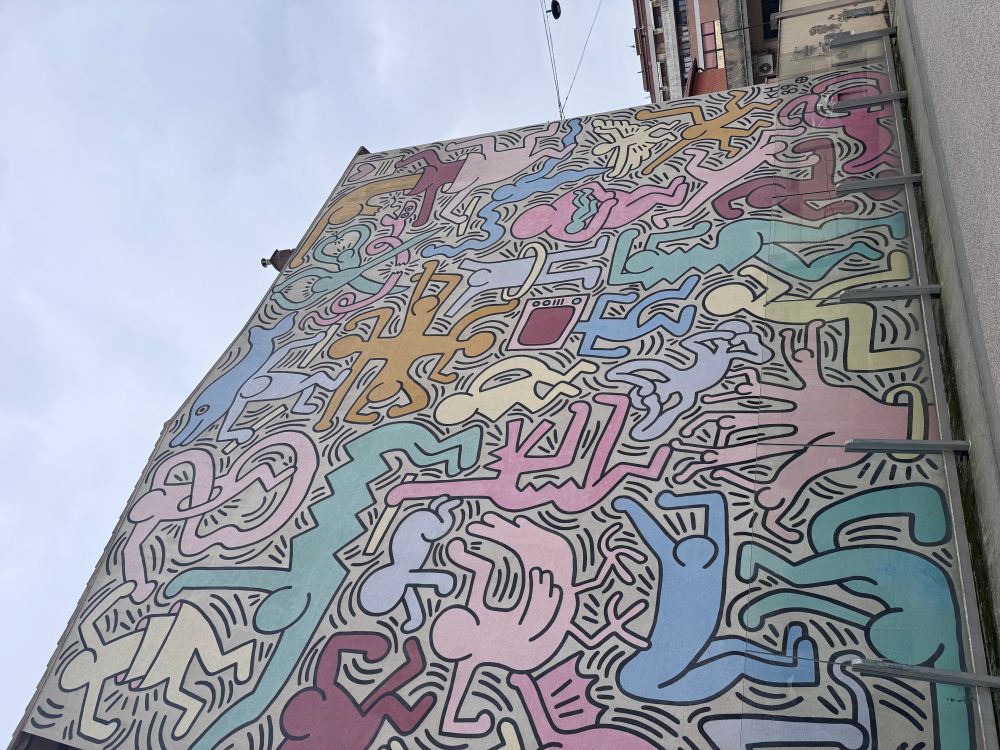
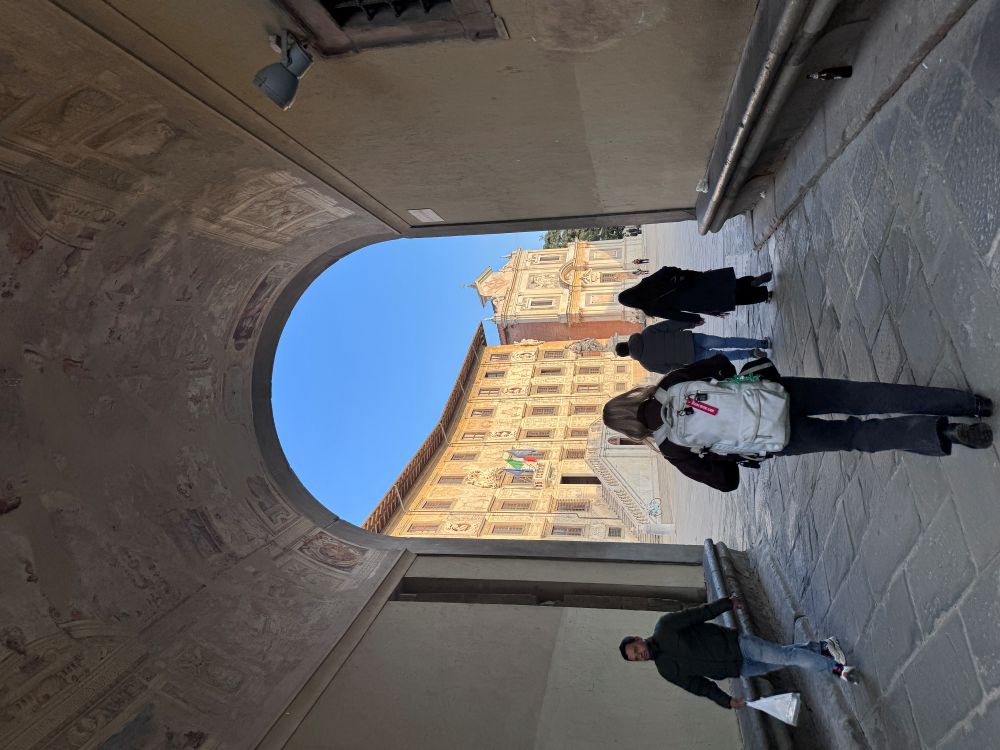
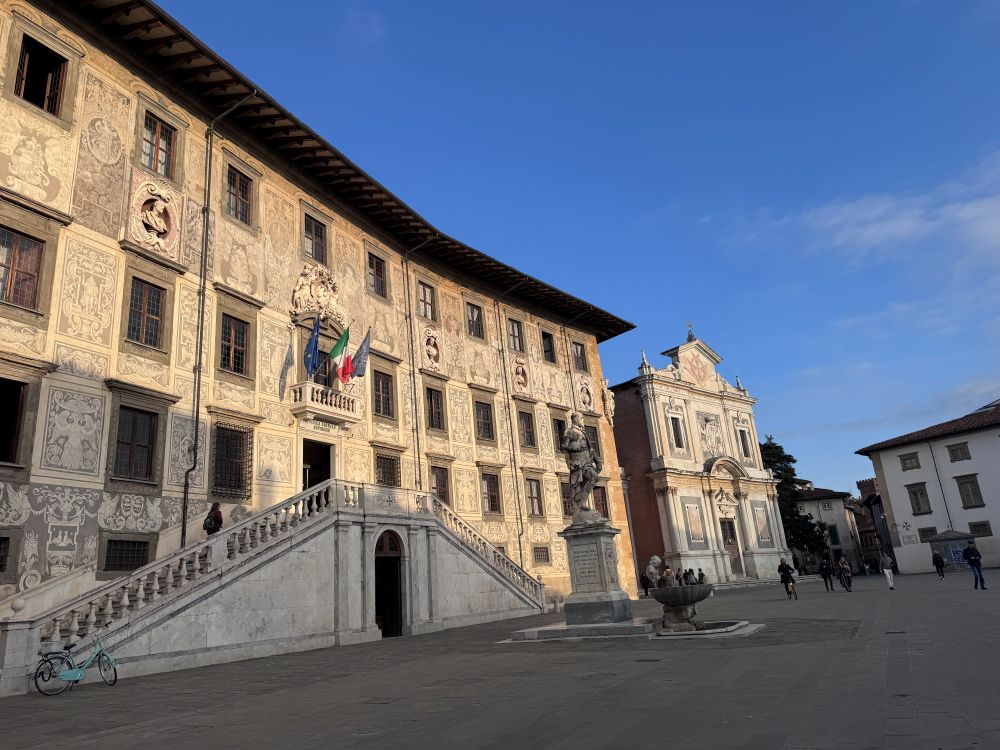
Our class first walked from the train station to the old medieval city, where we were able to follow the city’s timeline and admire the layers of architecture before us. The city’s plan is organic and compact, shaped by the original medieval walls that once surrounded it. We took a stroll through Piazza dei Cavalieri, where we saw great examples of sgraffito building decoration. Sgraffito is a style where artists scratch patterns and images into layers of plaster to create detailed designs on the outside of buildings. The great example is shown on the façade of the Scuola Normale Superiore di Pisa.
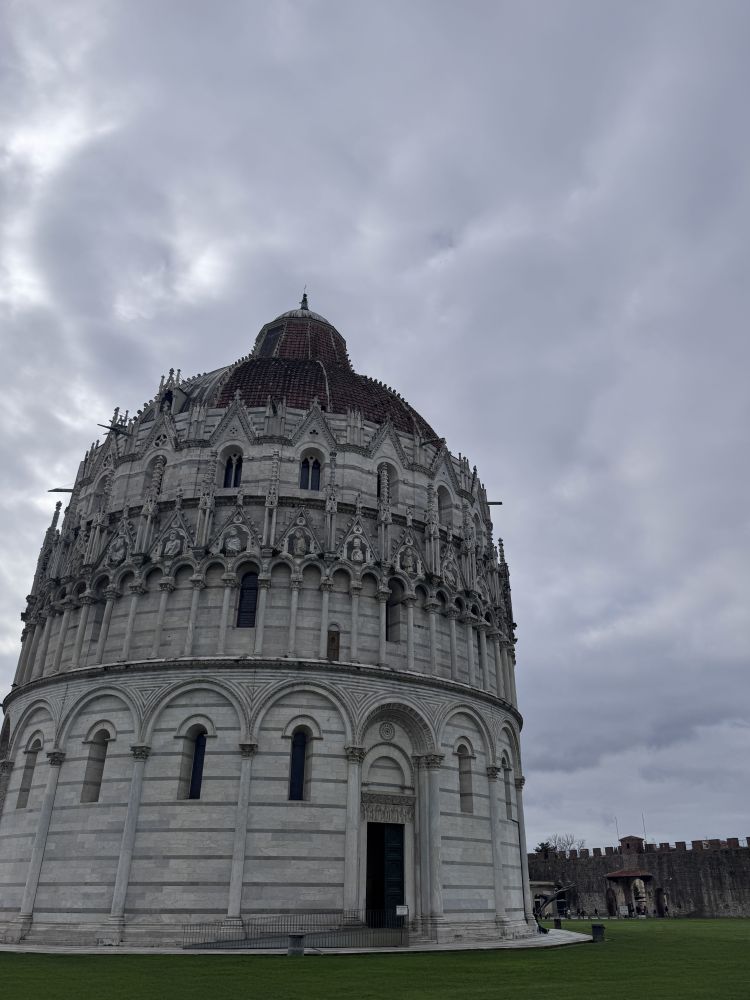
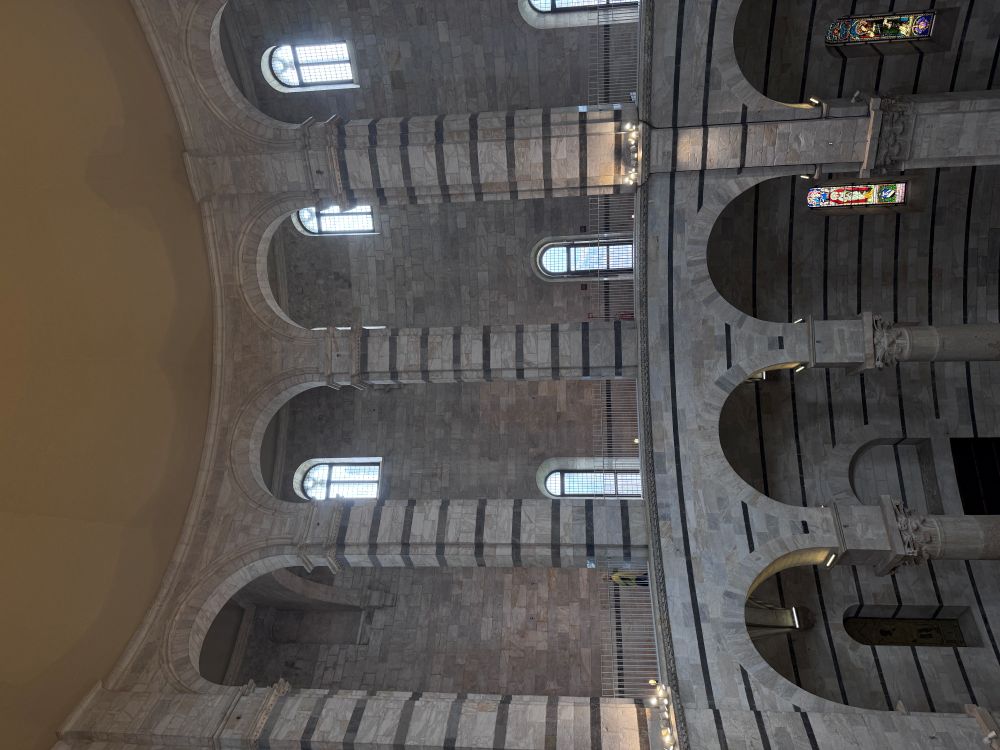
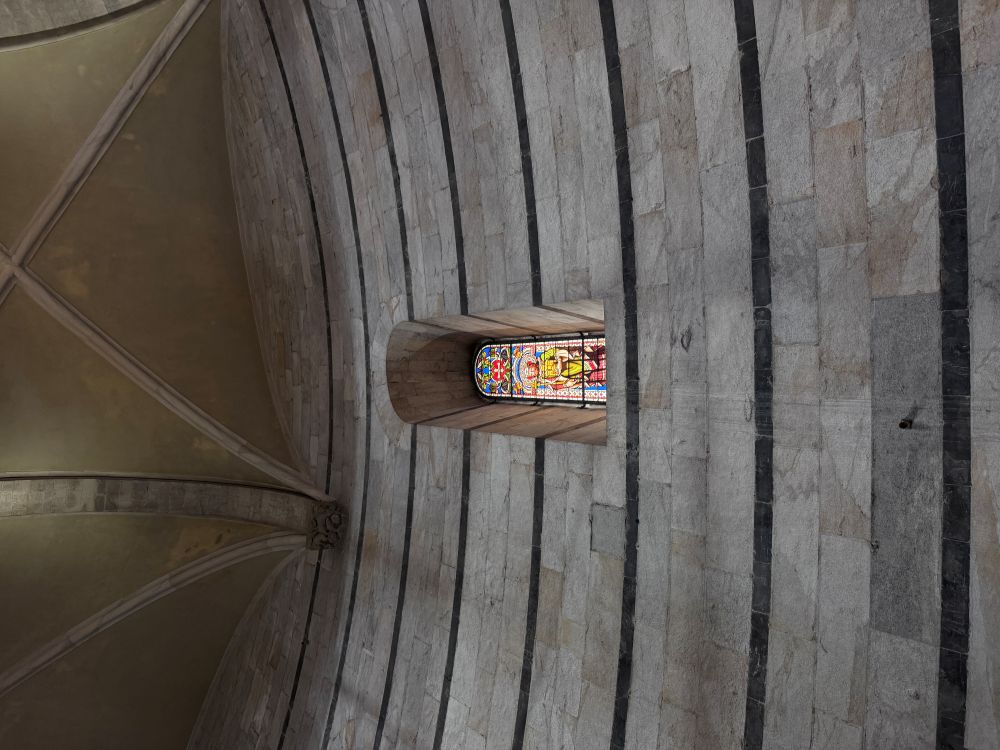
We then arrived at the heart of Pisa, where the Cathedral, Baptistery, Tower, and Camposanto are located on bright green lawns. We entered the Baptistery first. Built in 1152, the building shows a mix of Romanesque and Gothic architectural styles. The Baptistery is circular in shape and built from white marble, containing a beautifully carved pulpit designed by the sculptor Nicola Pisano. Its exterior is decorated with arches, columns, and detailed sculptures, while the upper level features pointed Gothic elements added later in construction. The large dome creates excellent acoustics inside the building, and we were lucky enough to get a demonstration.
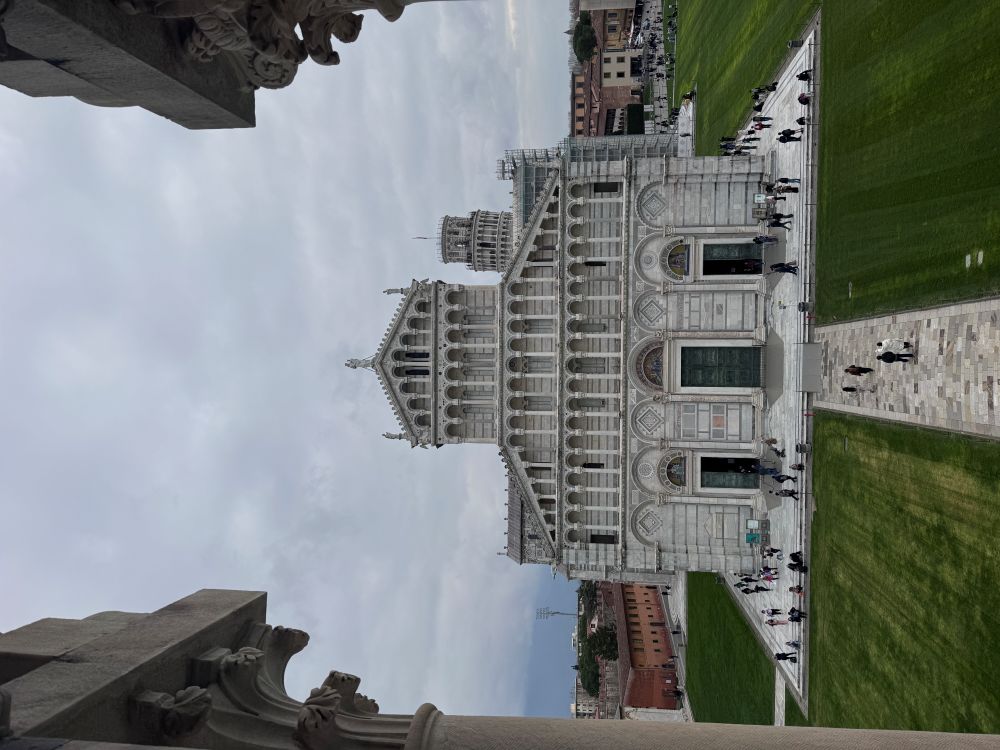
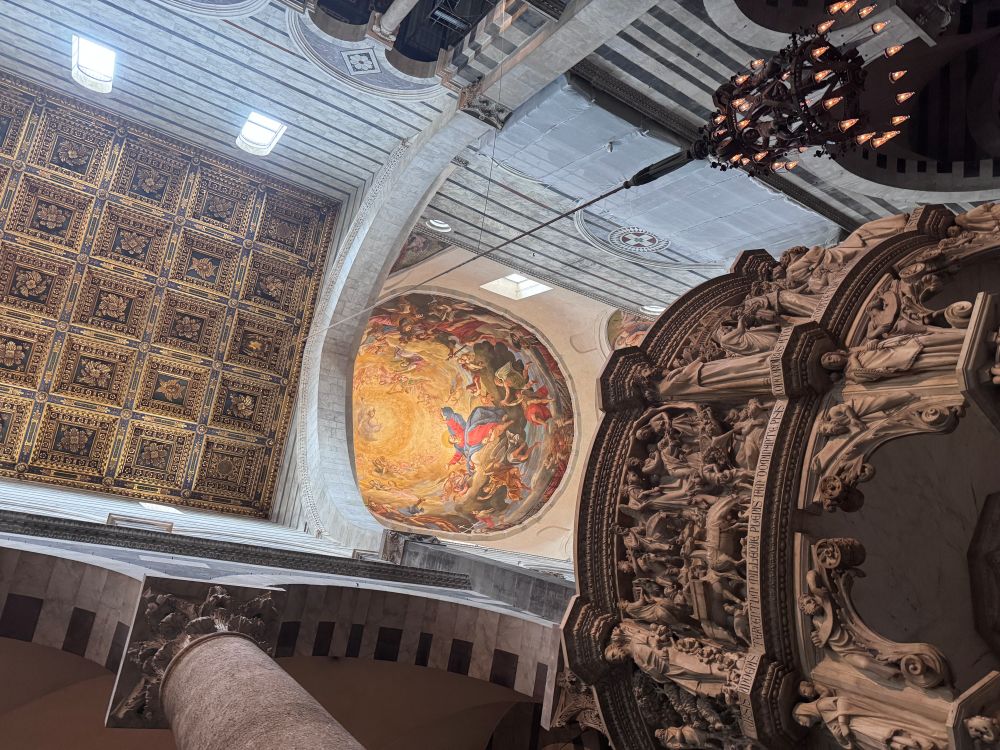
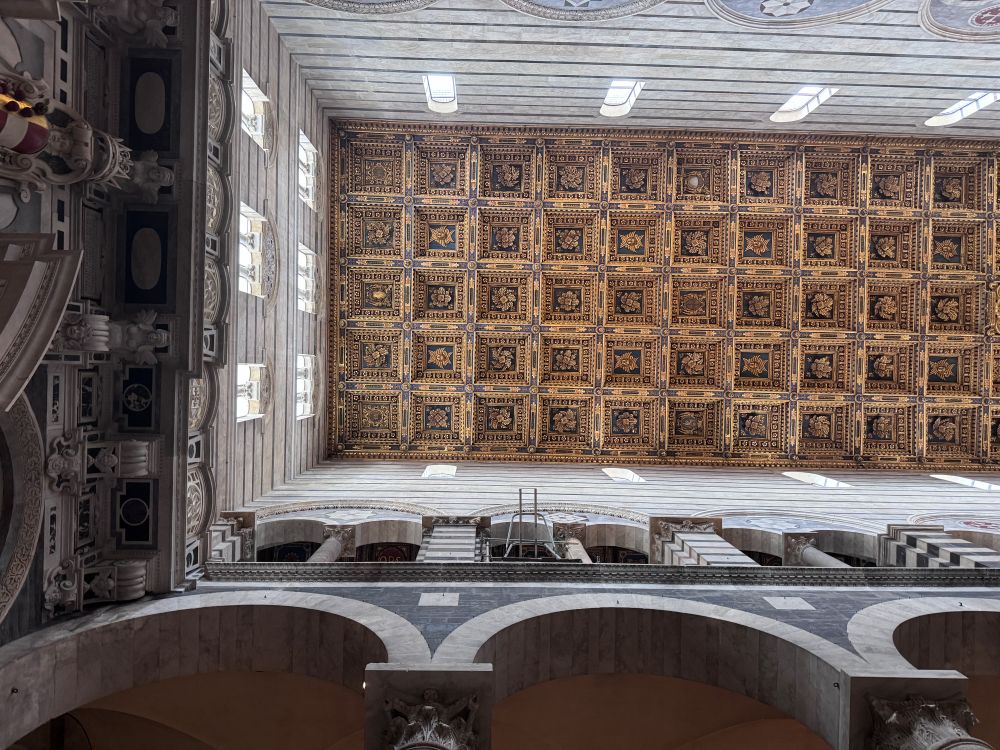
After the Baptistery, we headed into the Cathedral. Construction began in 1064, primarily using white and gray marble. It features a large basilica plan with five naves, side aisles, and a transept that forms a cross shape. The interior is filled with beautiful paintings and mosaics that make the space feel grand and historic. The apse has a large, striking mosaic of Christ, surrounded by angels and saints. On the walls, several frescoes depict scenes from the lives of Jesus, Mary, and other saints. Together with the Cathedral’s marble columns and decorative details, the interior feels bright, detailed, and full of history.
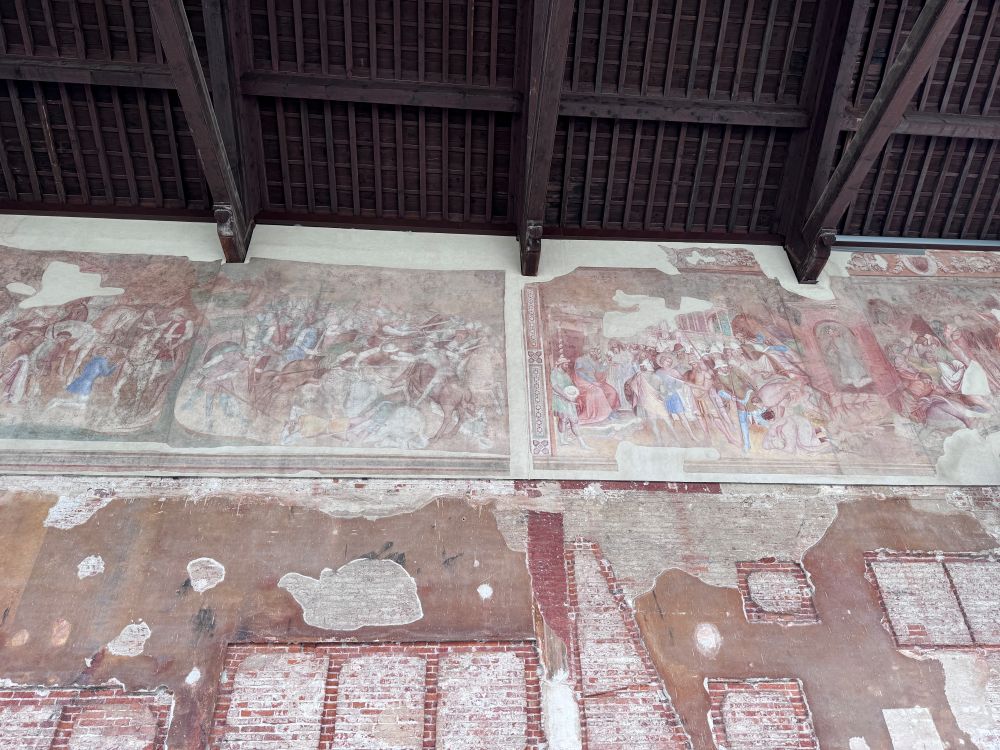
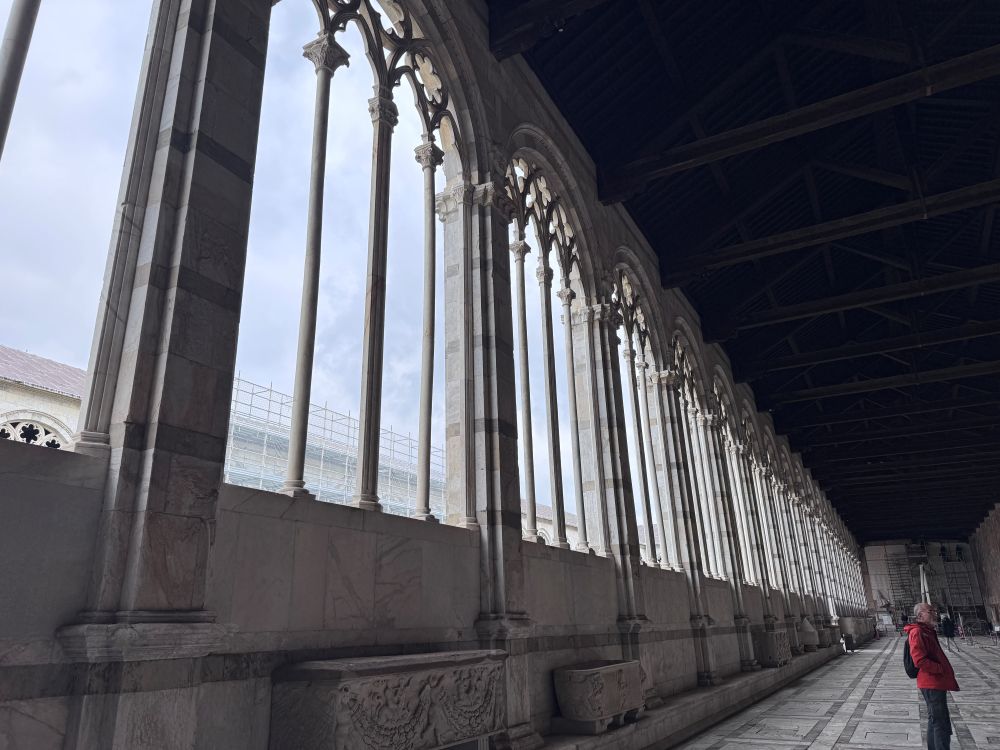
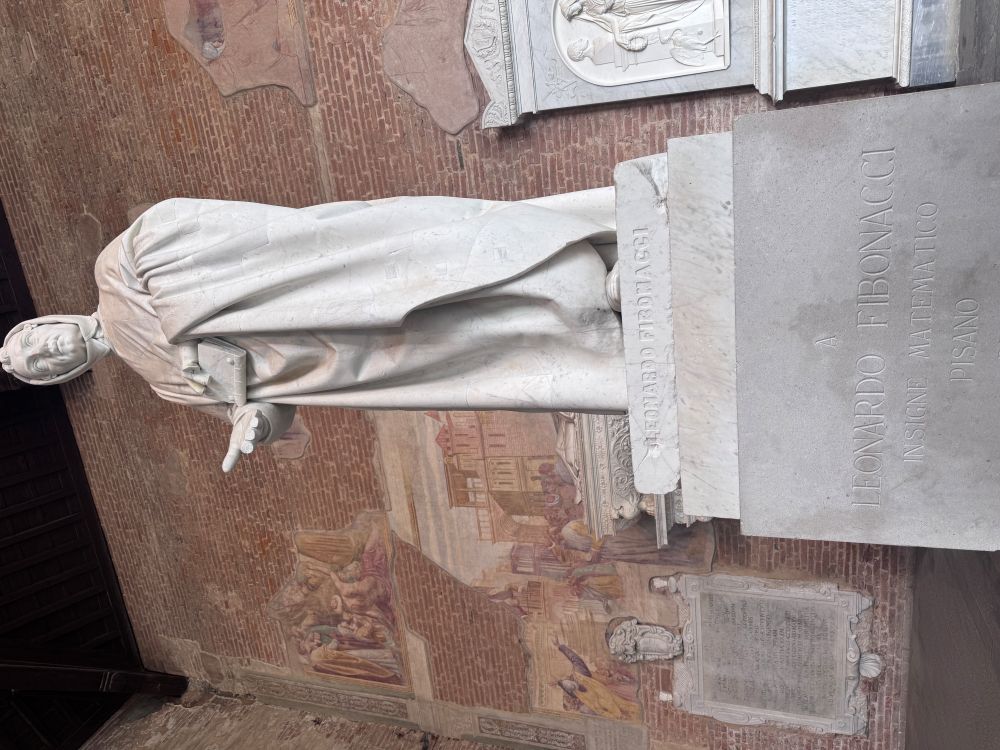
Next, we visited the Camposanto, a historic cemetery famous for its peaceful courtyard and beautiful artwork. Built in the 13th century, it has a large rectangular cloister surrounded by arched walkways. Inside, the walls are decorated with frescoes showing religious scenes, including stories from the Bible, which give visitors a sense of the city’s medieval art. Many of the original paintings were damaged during World War II, but restorations have preserved much of their detail. The Camposanto is a quiet, reflective place that also showcases the artistic skill and history of Pisa.
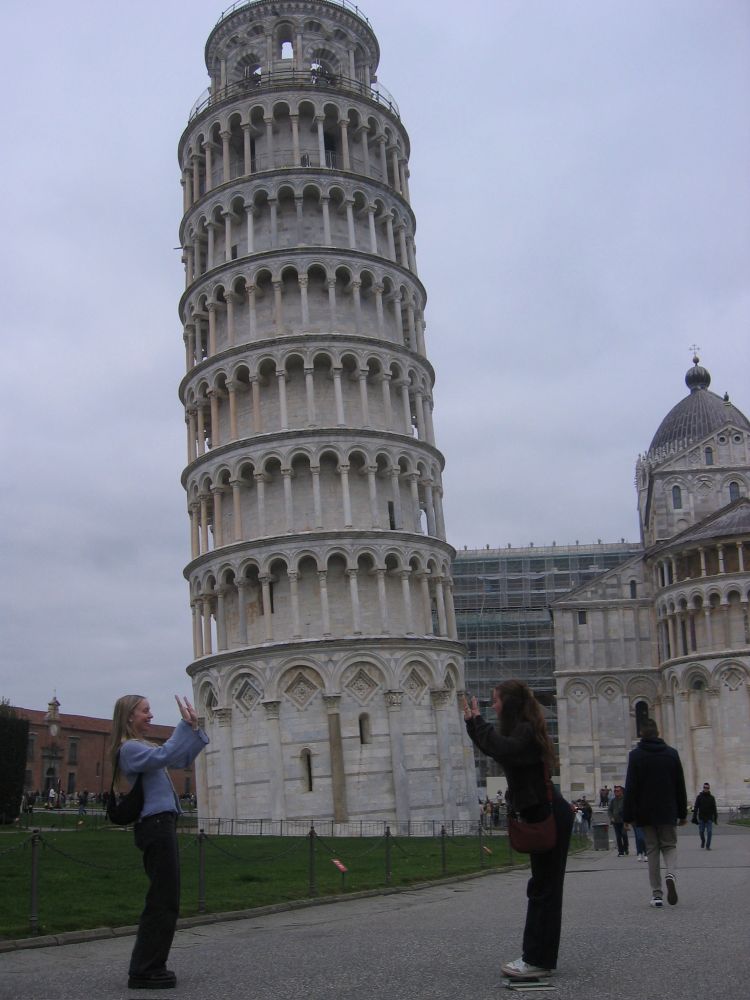
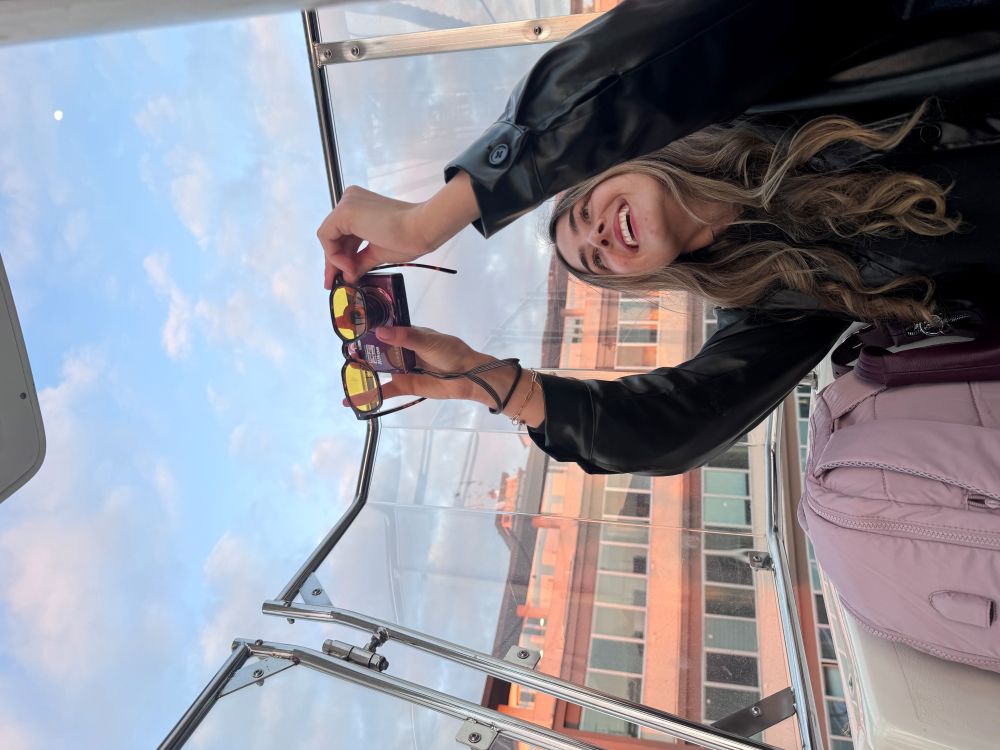
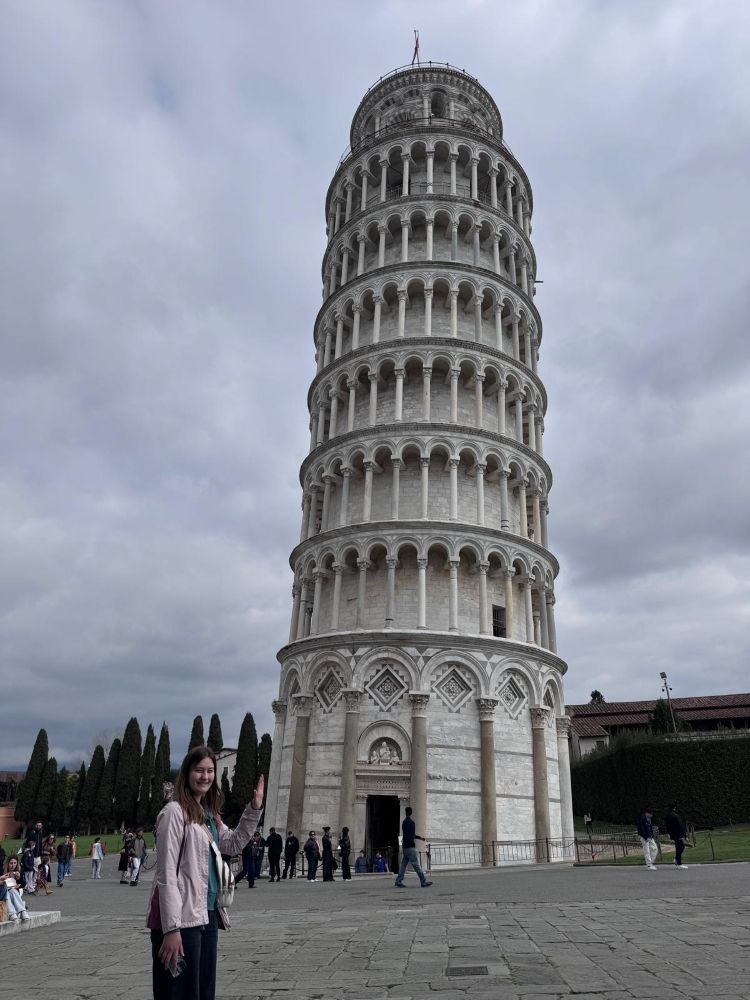
Class was officially over, which meant we could make our way to the Tower and be tourists. Our first class trip for Social, Culture, and Art History of Italy was an unforgettable experience. The most memorable part for many of us was entering the Cathedral for the first time, it felt like stepping into an entirely different world. Stumbling across the sgraffito decorations was also a highlight, especially since Mario plans to use this style in a future project. The day ended perfectly with a group lunch, an evening stroll, and a Ferris wheel, leaving us inspired by the beauty, history, and culture that make Pisa such a remarkable place.
Until next time,
The Volterra Group